/ramadan-calendars-for-kids · season
Ramadan calendar for kids: countdown, moon tracker, lantern path
Make your ownRamadan calendars for kids
Describe yours. We'll remake the whole pack your way.
More like this
the whole catalog →


every sample — three subjects, three styles ↓
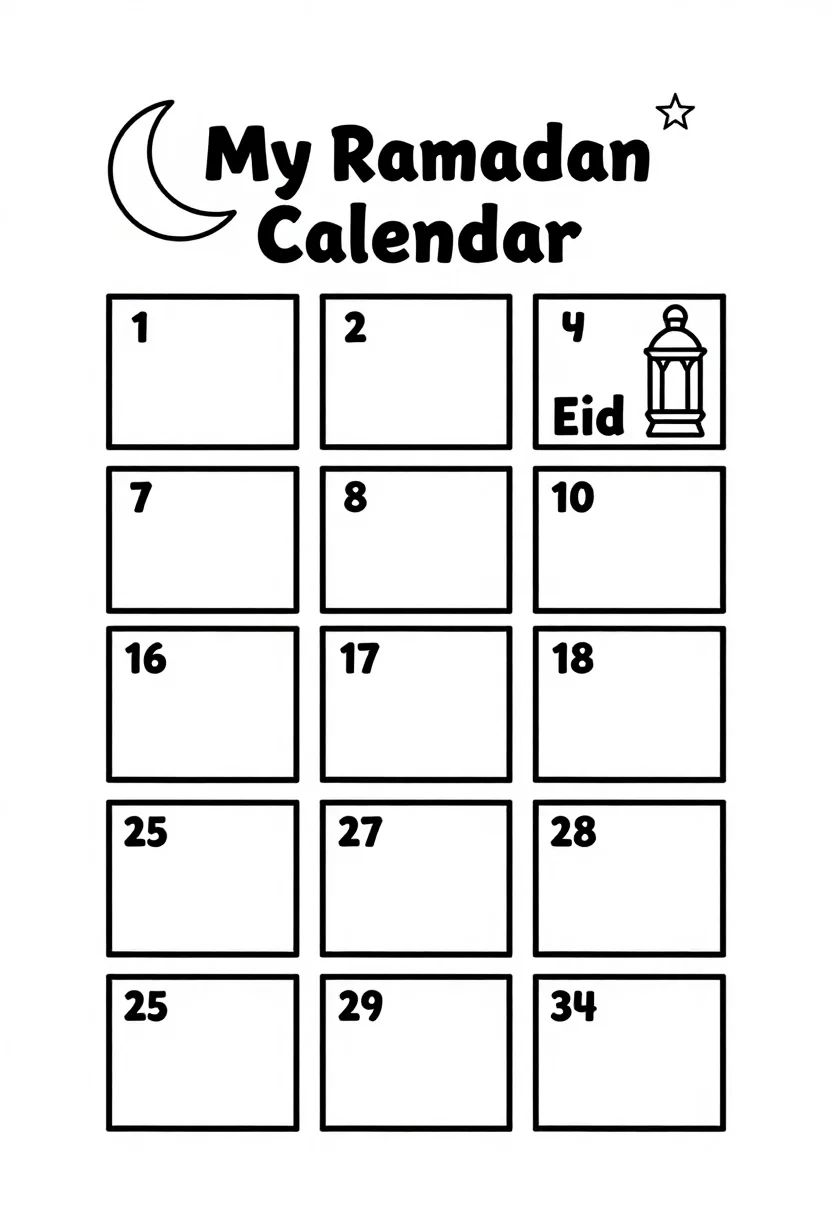
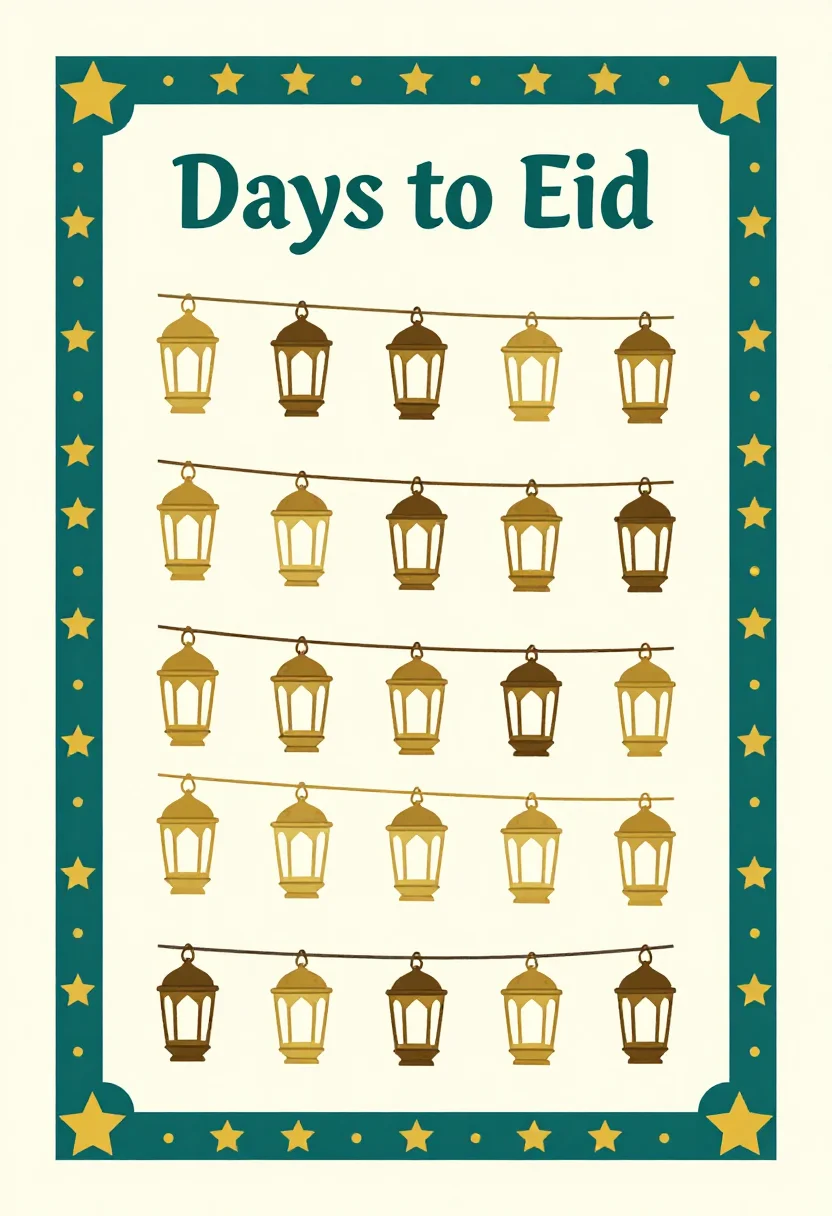
A printable countdown for the thirty days of Ramadan, from the first crescent to Eid. Each page has thirty numbered spaces for a child to colour or tick: a grid under a lettered title, a moon tracker to shade night by night, or a path of lanterns that leads to Eid. Print one for the fridge or the classroom wall. Type a different subject or a direction, such as stickers or Arabic numerals, and the same layout carries it.
- a fridge calendar for a child at home
- a classroom countdown on the wall
- a weekend class or Sunday school
- a family countdown to Eid
Frequently asked questions
- How many days does the calendar cover?
- Thirty numbered spaces, one for each day of Ramadan. The countdown design marks Eid in the last box.
- What is the difference between the three styles?
- Outline is black ink to colour in, crayon has coloured drawings with white boxes, and geometric has a border of eight-pointed stars in solid colours.
- Can I change the subject or the design?
- Yes. Type a direction such as stickers or Arabic numerals and it is drawn in the same layout. That is a request, not a promised result.
- What shape is the page?
- A tall portrait page with a clean margin, set up for printing.
About toile
This page is a showcase and a starting point: nine samples already rendered, three readings of the pack crossed with three styles, each shown at the size and ratio it was made for. Take any of them further on the wall with a few words, or ask for all nine again under your own direction; a sign-in keeps what you make, and it is free while Toile is new. The recipe behind each sample — the subject, the style, the palette, the framing — travels with the image rather than staying private to the render: it is in the alt text of every sample and in the page's own structured data, so a search engine reads the same handles a person would.