/rangoli-stencils · faith
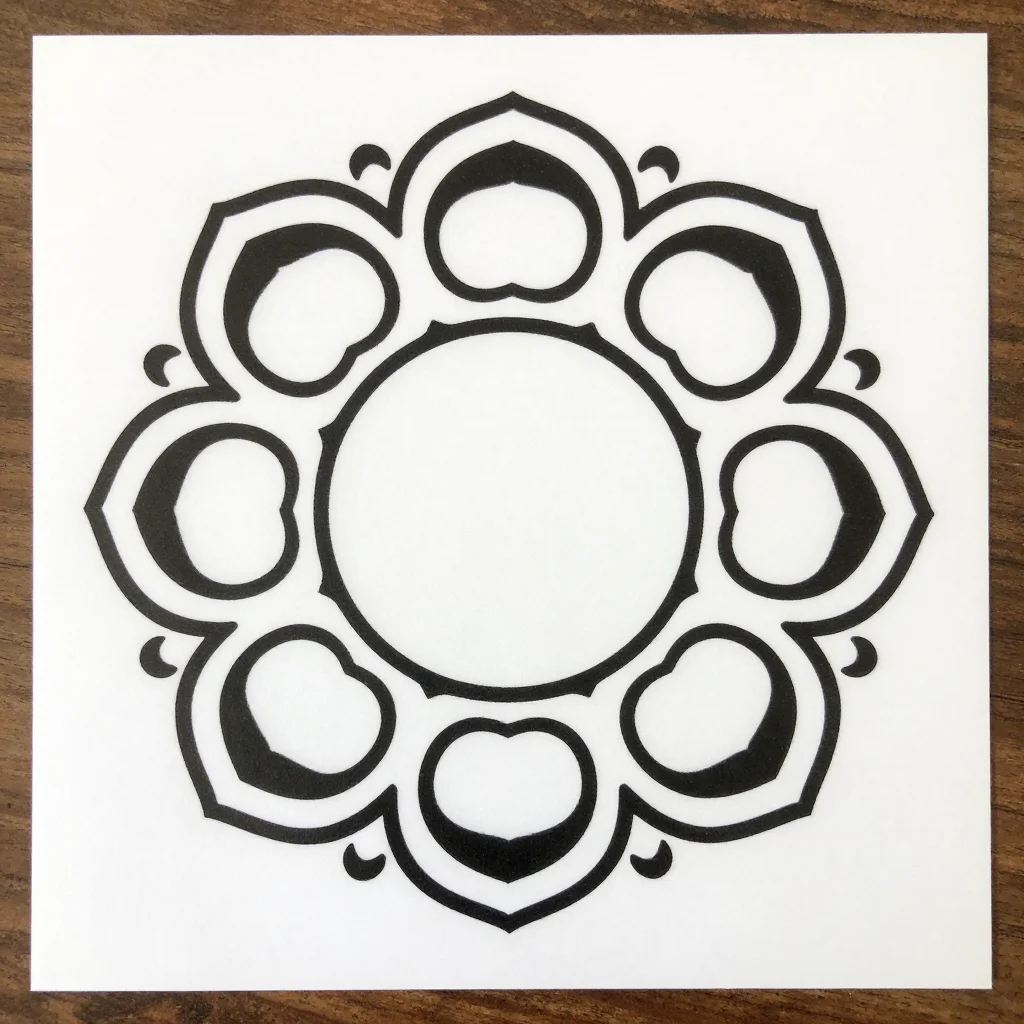
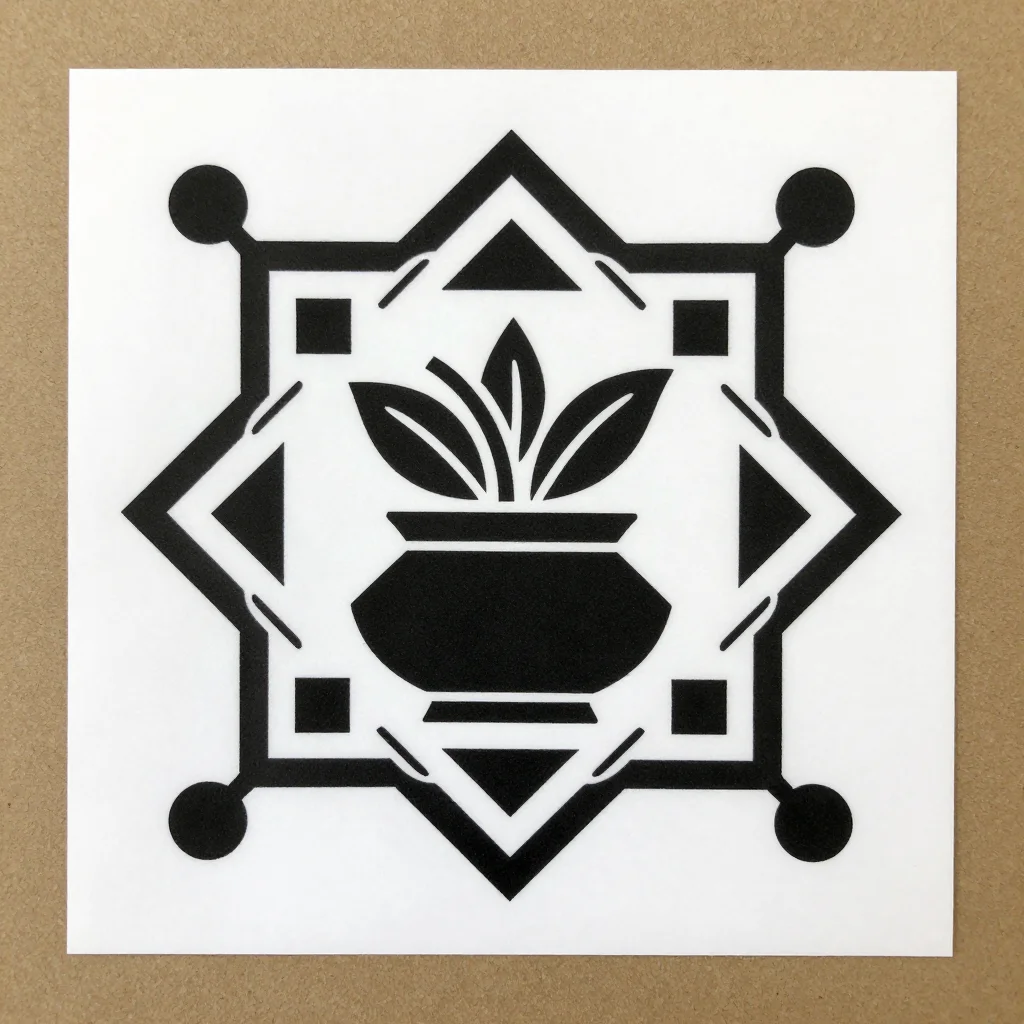
Rangoli stencils: round mandala, border strip, swastik and kalash
Make your ownRangoli stencils
Describe yours. We'll remake the whole pack your way.
More like this
the whole catalog →
every sample — three subjects, three styles ↓
A rangoli stencil is a sheet you print, cut out and lay on the floor, so the coloured powder falls only through the openings. These are black cut shapes on white, with the bridges that hold each stencil together in one piece. The designs are a round mandala, a border strip for a doorstep or a path, and a swastik with four dots above a kalash. Each comes as a bold cut for beginners, a fine lace or a geometric.
- a design for a festival courtyard or a temple step
- a floor pattern for a wedding
- a border for a doorstep or a path
- a cutting exercise for a craft session
Frequently asked questions
- How do I use a stencil?
- Print the sheet, cut out the black shapes with scissors or a craft knife, lay it flat on the floor and sprinkle the powder over it. The white bridges keep the cut pieces joined.
- Which cut should I choose?
- The bold cut has a few large openings and sturdy bridges, the easiest to cut with scissors. The fine lace has many small openings and suits a craft knife.
- How large is the sheet?
- Each sheet is square with a white margin around the design, so it can be printed at a size that fits the floor.
- Can I ask for a different design?
- Yes. The direction field takes a change such as a peacock, a square tile or a design for kids. A direction you type is a request, not a promised result.
About toile
This page is a showcase and a starting point: nine samples already rendered, three readings of the pack crossed with three styles, each shown at the size and ratio it was made for. Take any of them further on the wall with a few words, or ask for all nine again under your own direction; a sign-in keeps what you make, and it is free while Toile is new. The recipe behind each sample — the subject, the style, the palette, the framing — travels with the image rather than staying private to the render: it is in the alt text of every sample and in the page's own structured data, so a search engine reads the same handles a person would.