/shape-posters · classroom
Shapes chart: 2D shapes, 3D shapes, shapes around us
Make your ownShape posters
Describe yours. We'll remake the whole pack your way.
More like this
the whole catalog →
every sample — three subjects, three styles ↓
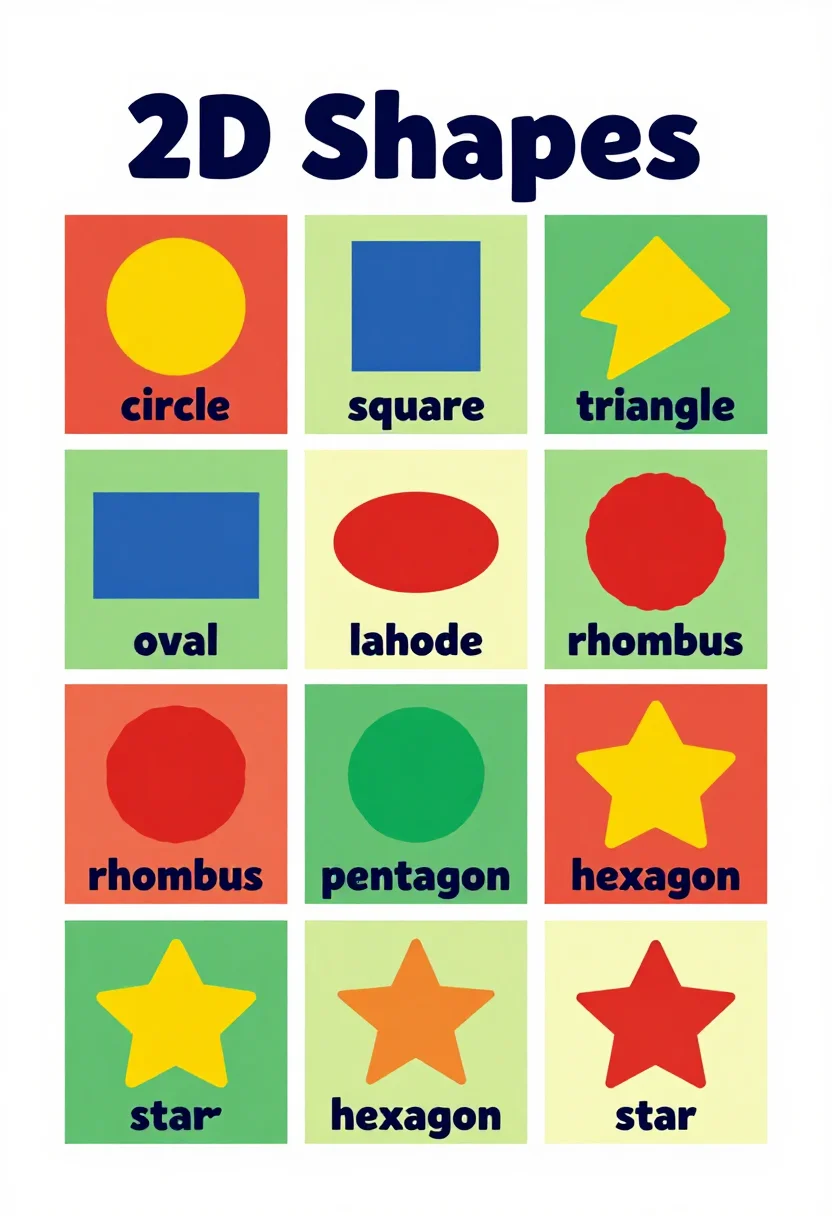
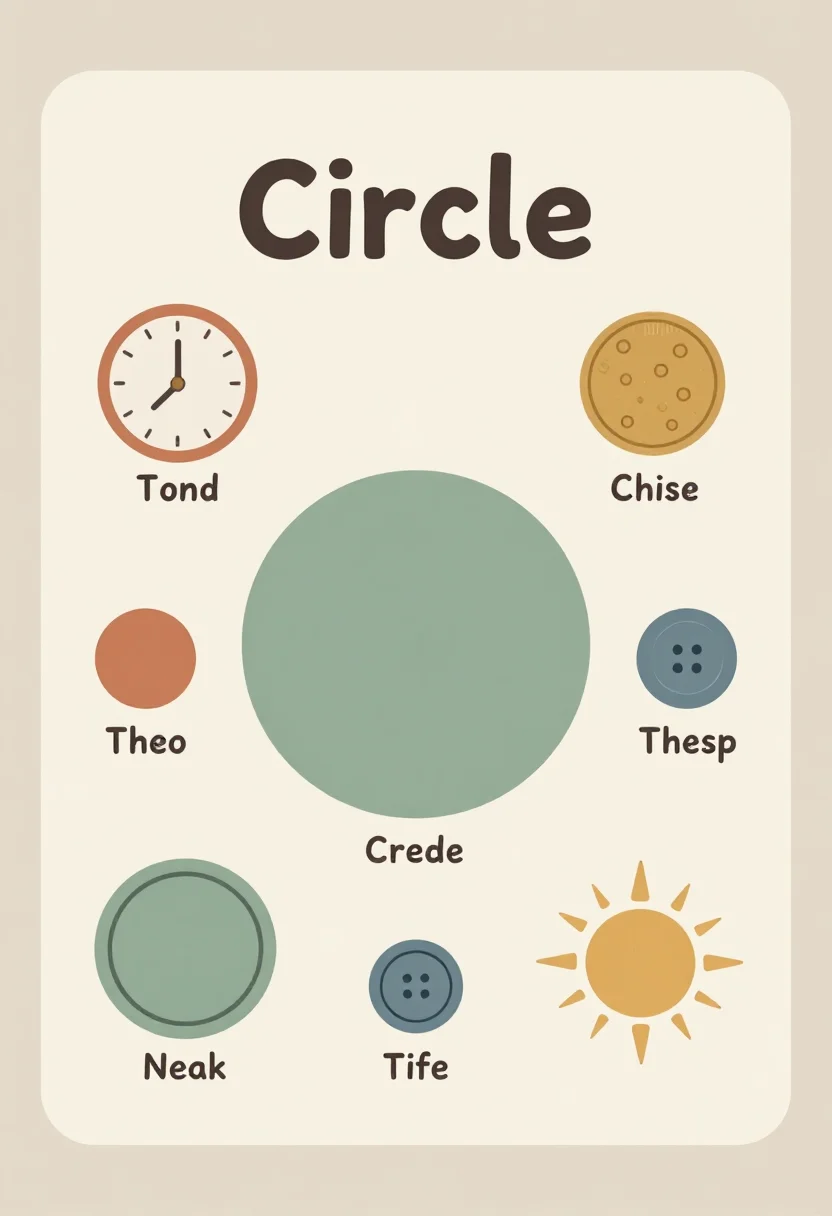
Preschool and primary teachers use shape posters to teach the names of flat and solid shapes. The three posters are a 2D shapes chart with nine shapes, a 3D shapes chart with six solids and their face counts, and a circle poster with six round everyday things. The styles are bright flat, crayon hand-drawn and boho pastel. Type a twist, such as octagon, and the same poster can take it.
- a shape wall in a preschool
- a maths corner in a primary class
- a shape-sorting display
Frequently asked questions
- Which 2D shapes are on the chart?
- Circle, square, triangle, rectangle, oval, rhombus, pentagon, hexagon and star.
- Does the 3D chart show faces?
- Yes. Each solid has a count of its faces beside its name: cube, sphere, cone, cylinder, pyramid and cuboid.
- What is on the single-shape poster?
- A large circle with six round everyday things around it, each named under its picture.
- What is the difference between the styles?
- Bright flat uses clean shapes, crayon hand-drawn looks like a marker poster, and boho pastel is soft and muted.
About toile
This page is a showcase and a starting point: nine samples already rendered, three readings of the pack crossed with three styles, each shown at the size and ratio it was made for. Take any of them further on the wall with a few words, or ask for all nine again under your own direction; a sign-in keeps what you make, and it is free while Toile is new. The recipe behind each sample — the subject, the style, the palette, the framing — travels with the image rather than staying private to the render: it is in the alt text of every sample and in the page's own structured data, so a search engine reads the same handles a person would.