/shiva-rangoli · faith
Shiva rangoli: shivling, trishul and Om, in powder, petals or a drawn chart

Make your ownShiva rangoli
Describe yours. We'll remake the whole pack your way.
More like this
the whole catalog →


every sample — three subjects, three styles ↓
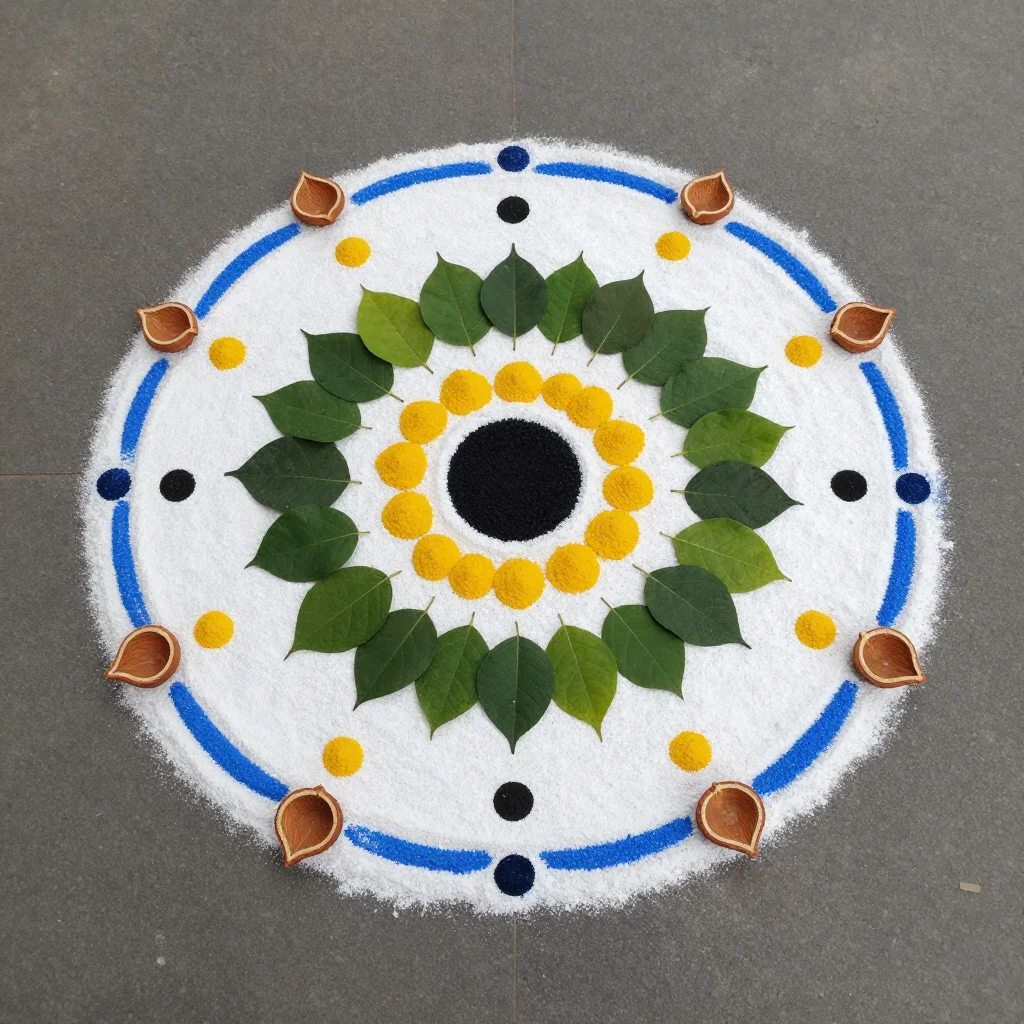
Rangoli for Maha Shivratri or a Monday of Shravan, laid at the door or before the home shrine in coloured powder, flower petals or a drawn chart. Each design is built round one of Shiva's signs: a shivling inside a ring of bel leaves, a trishul inside a lotus, or the Om sign with a crescent moon. The drawn chart is easy to copy by hand. Type a different sign and the same materials carry it.
- A rangoli at the door on Maha Shivratri
- A design for a Shravan Monday before the home shrine
- A copy-by-hand chart for a rangoli class
- A design for a temple courtyard or a community hall
Frequently asked questions
- What is the difference between the three materials?
- Coloured powder is laid in fine grainy powder, flower petals are built from marigold, jasmine and bel leaves, and the drawn chart is a flat design in four colours.
- Can I copy a design on a floor?
- Yes. The drawn chart has bold shapes and thin white separating lines, so each colour's place is easy to see and copy with chalk or paint.
- Can I ask for a different sign?
- Yes. A sign you type, such as a full moon, is a request; the nine samples stay as shown.
About toile
This page is a showcase and a starting point: nine samples already rendered, three readings of the pack crossed with three styles, each shown at the size and ratio it was made for. Take any of them further on the wall with a few words, or ask for all nine again under your own direction; a sign-in keeps what you make, and it is free while Toile is new. The recipe behind each sample — the subject, the style, the palette, the framing — travels with the image rather than staying private to the render: it is in the alt text of every sample and in the page's own structured data, so a search engine reads the same handles a person would.