/singular-plural-charts · classroom
Singular and plural charts: one and many, plural rules, irregular plurals
Make your ownSingular and plural charts
Describe yours. We'll remake the whole pack your way.
More like this
the whole catalog →
every sample — three subjects, three styles ↓
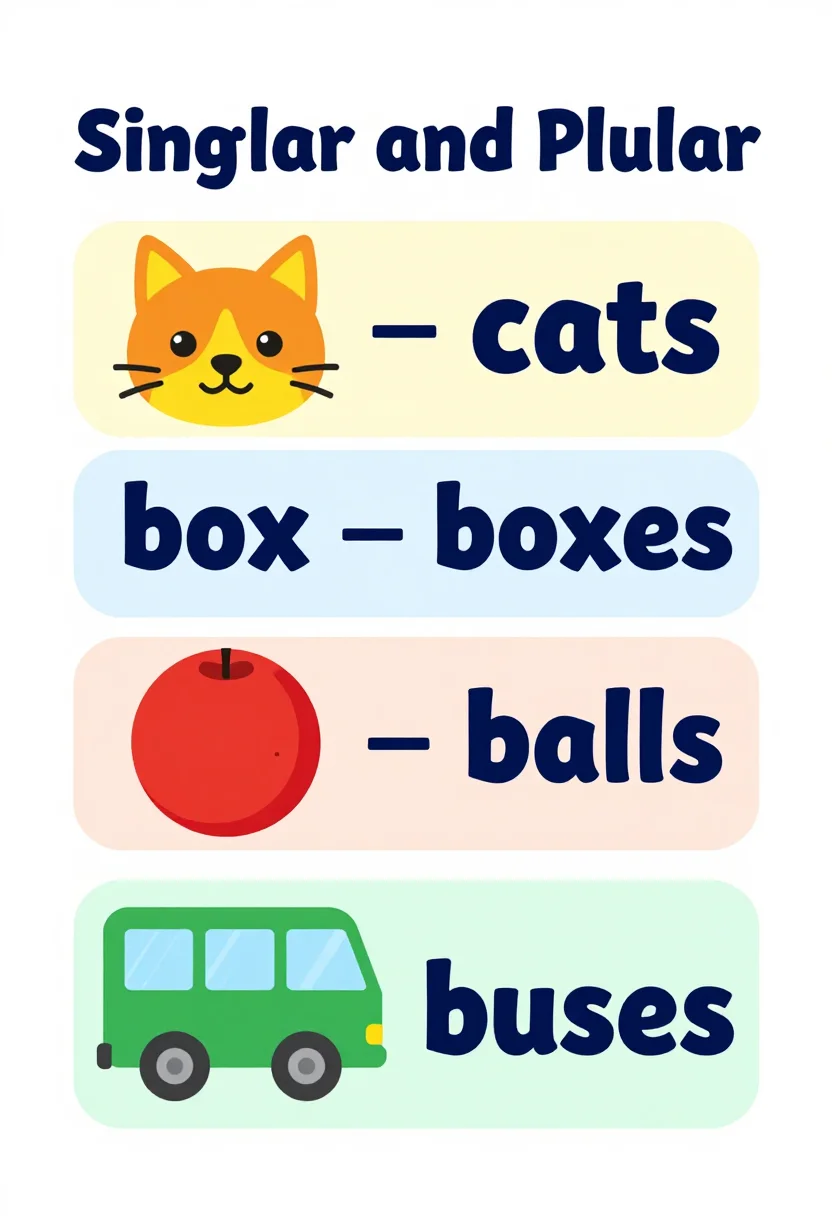
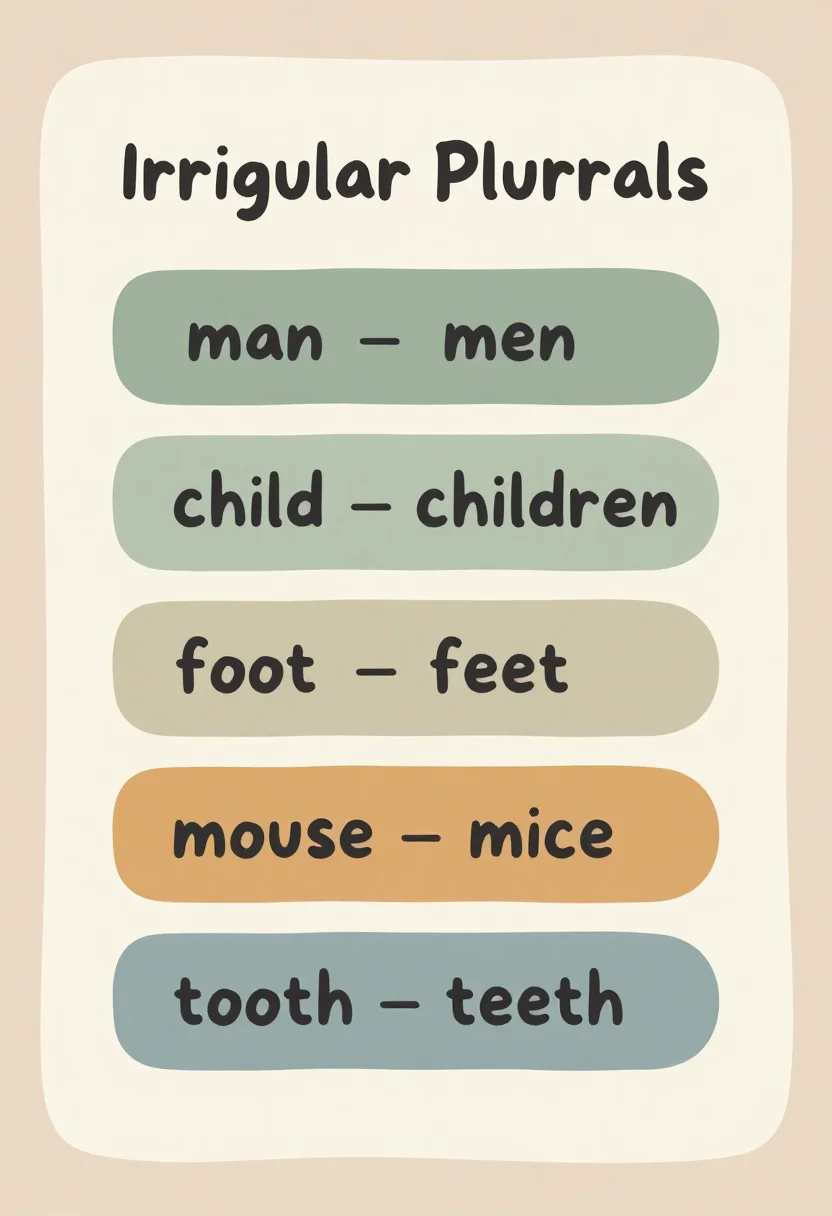
A singular and plural chart so children see one thing become many. The three charts pair one and many in pictures; set out three plural spelling rules with an example each; and list five irregular plurals such as man and men. Each comes as a bright flat poster, a crayon hand-drawn version or a boho pastel print. Type a direction such as animals, and the same three styles follow it.
- a primary classroom wall for a first lesson on plurals
- a plurals page in a workbook
- a picture card for a nursery corner
- a homework reference sheet
Frequently asked questions
- What do the nine pictures show?
- Three charts in three styles: four one-and-many picture pairs; three spelling rules, each with an example; and five irregular plurals.
- How do the three styles differ?
- Bright flat is a clean poster in red, yellow, blue and green. Crayon hand-drawn has wobbly outlines and paper grain. Boho pastel is a calmer print in sage, terracotta and mustard.
- Can I change the nouns?
- Yes. Type the direction you want, such as fruit, and the chart follows it. That is a request, not a fixed result, so check the words before you print.
- Can I print it?
- Yes. Each picture is a tall portrait page with a margin, which suits a wall or a notebook page.
About toile
This page is a showcase and a starting point: nine samples already rendered, three readings of the pack crossed with three styles, each shown at the size and ratio it was made for. Take any of them further on the wall with a few words, or ask for all nine again under your own direction; a sign-in keeps what you make, and it is free while Toile is new. The recipe behind each sample — the subject, the style, the palette, the framing — travels with the image rather than staying private to the render: it is in the alt text of every sample and in the page's own structured data, so a search engine reads the same handles a person would.