/size-comparison-worksheets · classroom
Size comparison worksheets: big and small, tall and short, order by size
Make your ownSize comparison worksheets
Describe yours. We'll remake the whole pack your way.
More like this
the whole catalog →
every sample — three subjects, three styles ↓
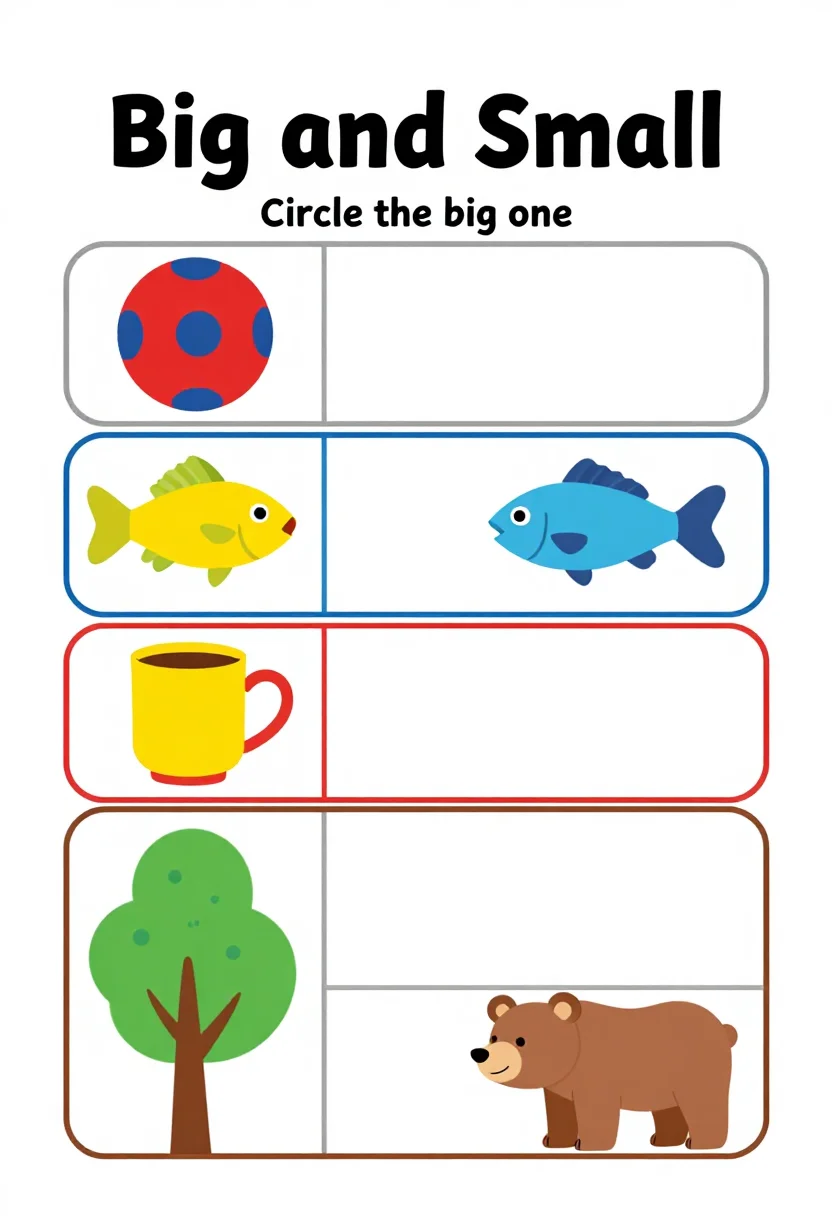
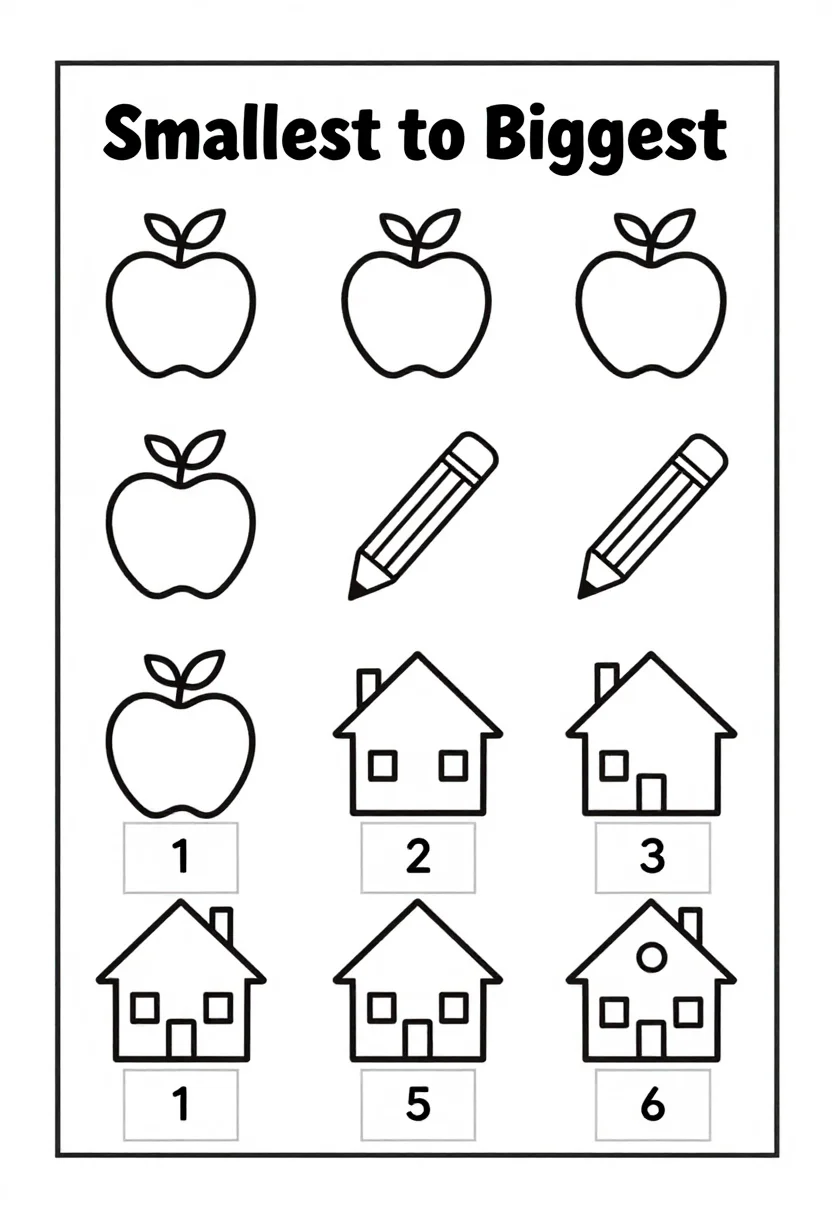
Size comparison worksheets so young children compare big and small, and tall and short. Teachers and parents print them for a maths lesson or at home. The pages ask the child to circle the big one in five pairs, tick the taller of four pairs, and put three rows of pictures in order by size. The direction box takes a request such as animal pictures.
- a maths lesson on comparing sizes
- a sorting task at home
- a size game for a class
Frequently asked questions
- Does a page compare length?
- The tall-and-short page compares height. The samples do not show a long-and-short page.
- What does the order page ask?
- The child puts three pictures in order from smallest to biggest, using three numbered boxes under each row.
- Can I ask for other objects?
- Yes. The direction box takes a request such as animal pictures, which asks for a different set of objects.
About toile
This page is a showcase and a starting point: nine samples already rendered, three readings of the pack crossed with three styles, each shown at the size and ratio it was made for. Take any of them further on the wall with a few words, or ask for all nine again under your own direction; a sign-in keeps what you make, and it is free while Toile is new. The recipe behind each sample — the subject, the style, the palette, the framing — travels with the image rather than staying private to the render: it is in the alt text of every sample and in the page's own structured data, so a search engine reads the same handles a person would.