/spanish-verb-charts · classroom
Spanish verb charts: present tense, ser and estar, preterite
Make your ownSpanish verb charts
Describe yours. We'll remake the whole pack your way.
More like this
the whole catalog →
every sample — three subjects, three styles ↓
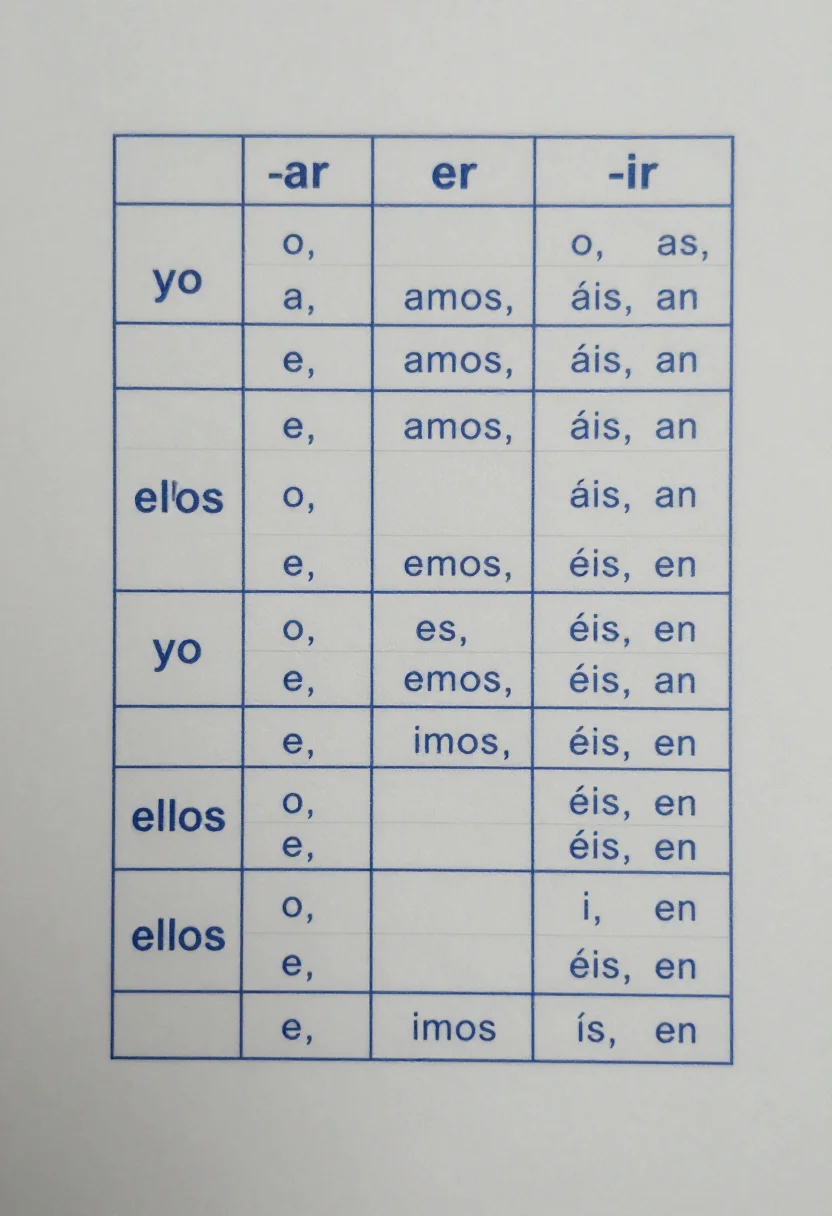
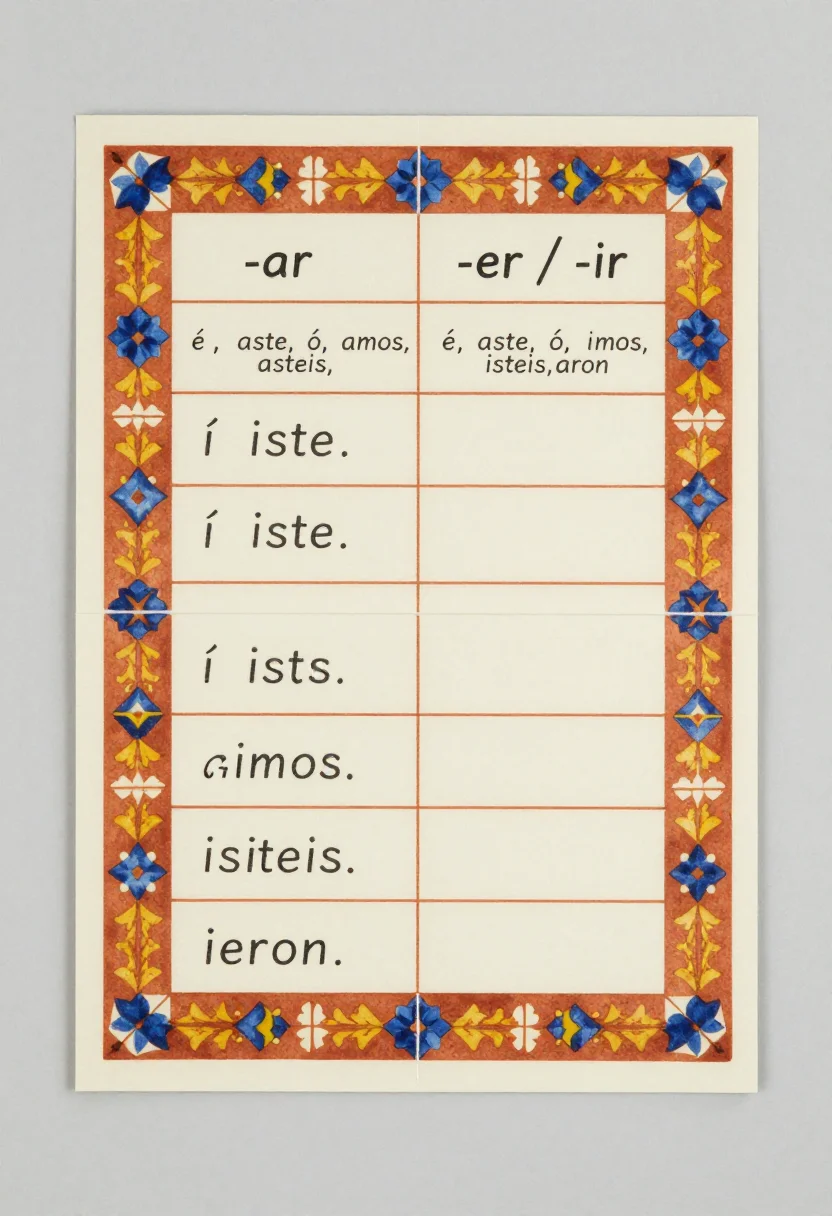
Spanish learners and teachers keep the verb endings in view while they practise. These nine charts show present-tense endings for -ar, -er and -ir verbs beside the six pronouns; ser and estar in two columns; and the preterite endings for -ar verbs and for -er and -ir verbs. Each comes in a classroom table style, a colour-coded version or a Spanish tile border. You can also type a request, such as irregular verbs, to shape the charts.
- a grammar chart beside a study desk
- a classroom wall for Spanish lessons
- a quick reference beside a homework sheet
- a gift for a language learner
Frequently asked questions
- Which endings are in the present tense chart?
- The regular -ar, -er and -ir endings for yo through ellos, set in three columns.
- Do the charts cover irregular verbs?
- The nine charts show the regular endings, ser and estar, and the preterite. Irregular verbs can be asked for as a request.
- What are the three styles?
- Classroom is a ruled table with blue headings, colour coded puts each ending in red, green or blue, and tile border sets the table in a terracotta, cobalt and yellow frame.
About toile
This page is a showcase and a starting point: nine samples already rendered, three readings of the pack crossed with three styles, each shown at the size and ratio it was made for. Take any of them further on the wall with a few words, or ask for all nine again under your own direction; a sign-in keeps what you make, and it is free while Toile is new. The recipe behind each sample — the subject, the style, the palette, the framing — travels with the image rather than staying private to the render: it is in the alt text of every sample and in the page's own structured data, so a search engine reads the same handles a person would.