/spell-cards · tabletop
Spell cards: evocation, illusion and necromancy in three styles
Make your ownSpell cards
Describe yours. We'll remake the whole pack your way.
More like this
the whole catalog →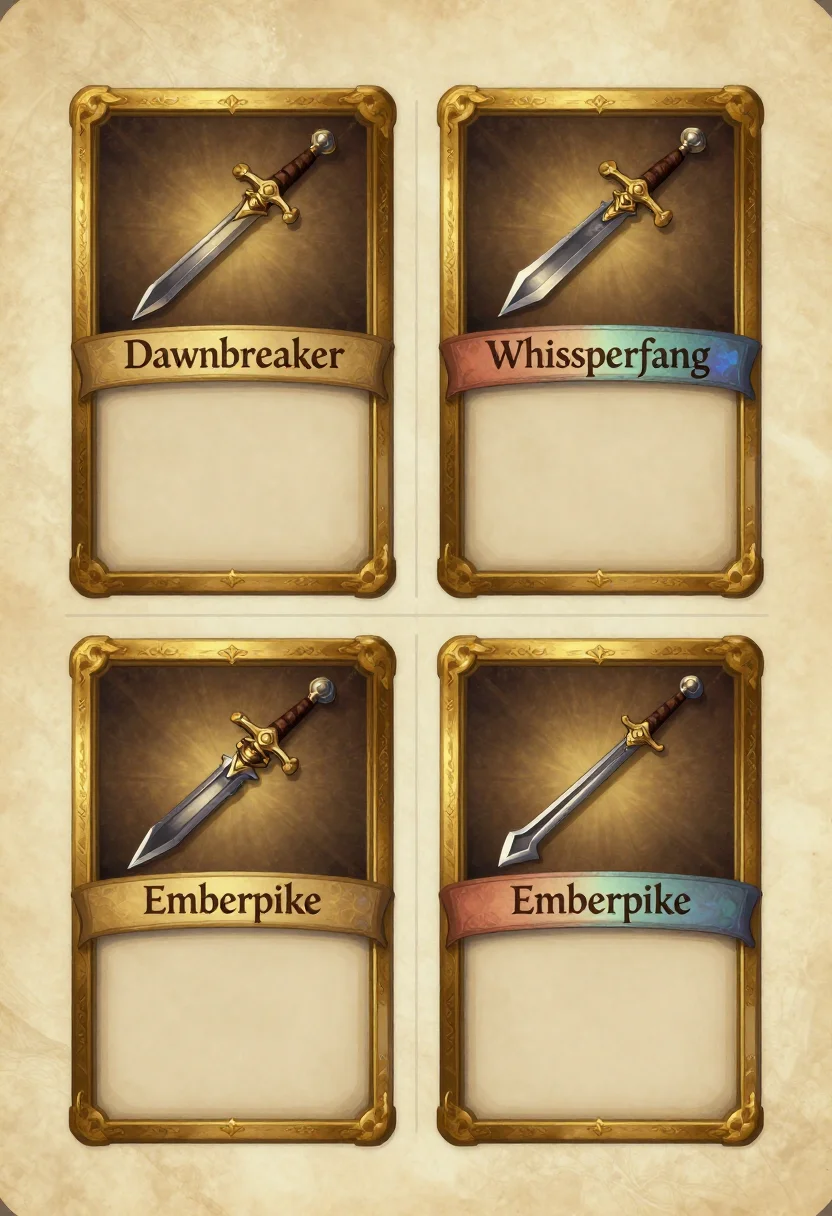
every sample — three subjects, three styles ↓
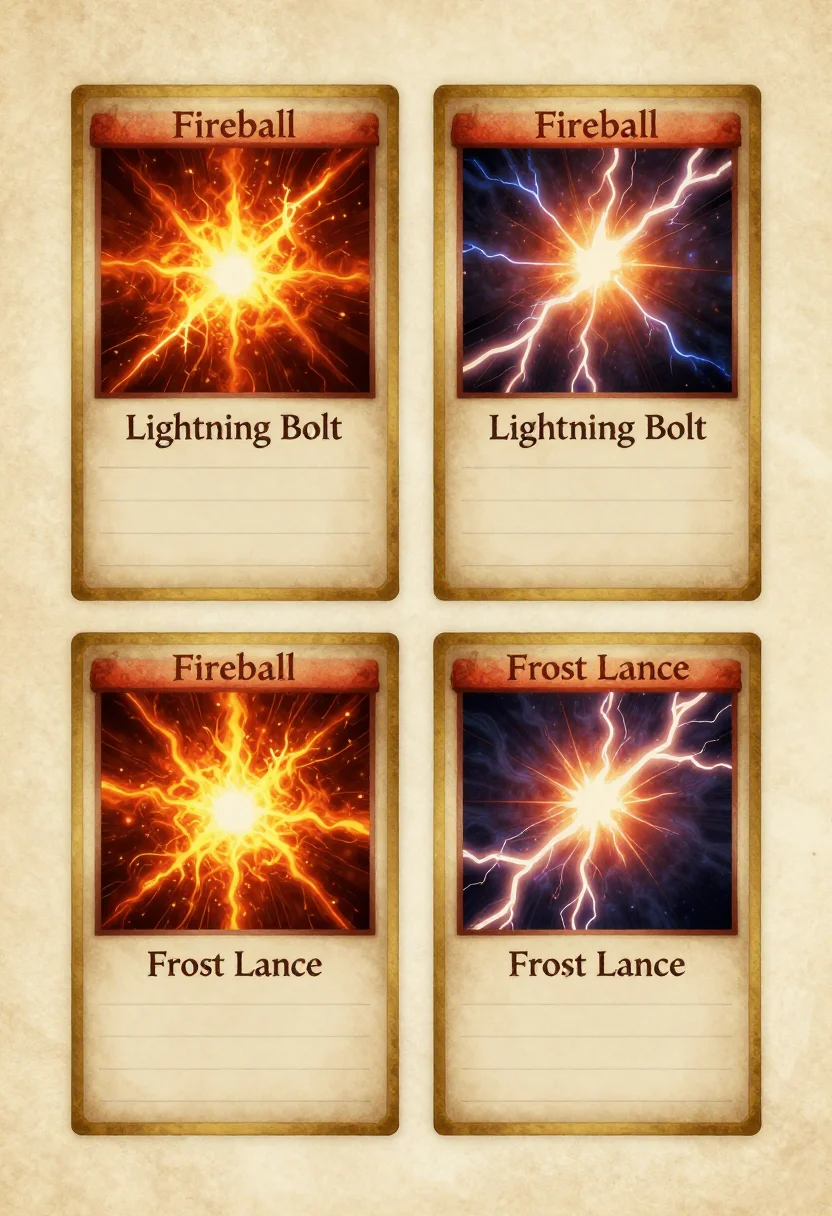
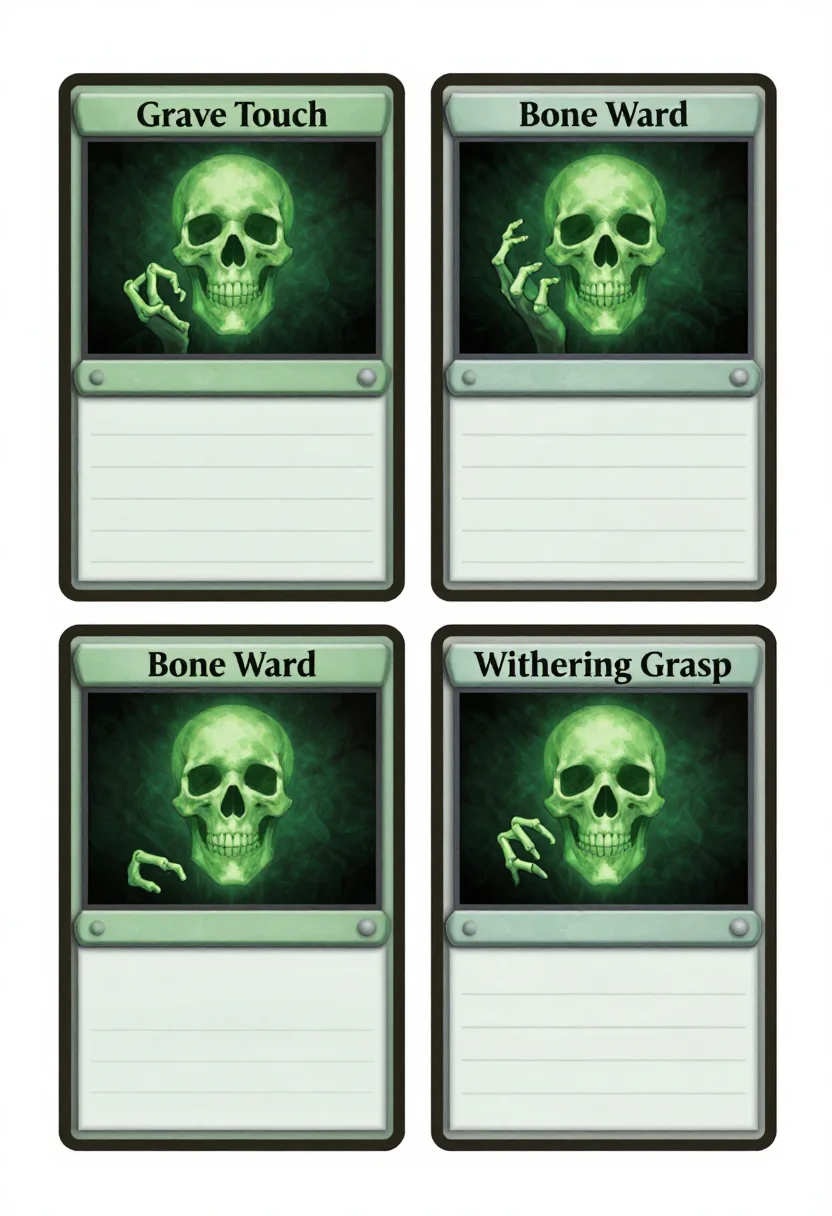
The spell card a caster flips to mid-fight. These nine decks cover three schools — evocation, illusion, necromancy — each card carrying a school color bar, a level pip and ruled lines left blank for the effect text. Arcane parchment, glowing dark deck, and clean modern finishes. Print and cut into a flippable deck for the table.
- a spellbook deck for the table
- a printable insert for a card-sleeve binder
- a session-prep prop for homebrew spells
- a teaching aid for a new player's spell list
Frequently asked questions
- What size are the cards?
- Cards are laid out on a standard letter or A4 sheet at print resolution, ready to cut to standard card size.
- Are the effect lines left blank?
- Yes — the ruled lines under each spell name are left empty so you can write in the effect text yourself.
- Can I get a different school of magic?
- Yes — the direction field on the page redraws the same deck for another school, such as a healing spell deck.
About toile
This page is a showcase and a starting point: nine samples already rendered, three readings of the pack crossed with three styles, each shown at the size and ratio it was made for. Take any of them further on the wall with a few words, or ask for all nine again under your own direction; a sign-in keeps what you make, and it is free while Toile is new. The recipe behind each sample — the subject, the style, the palette, the framing — travels with the image rather than staying private to the render: it is in the alt text of every sample and in the page's own structured data, so a search engine reads the same handles a person would.