/spellbook-pages · tabletop
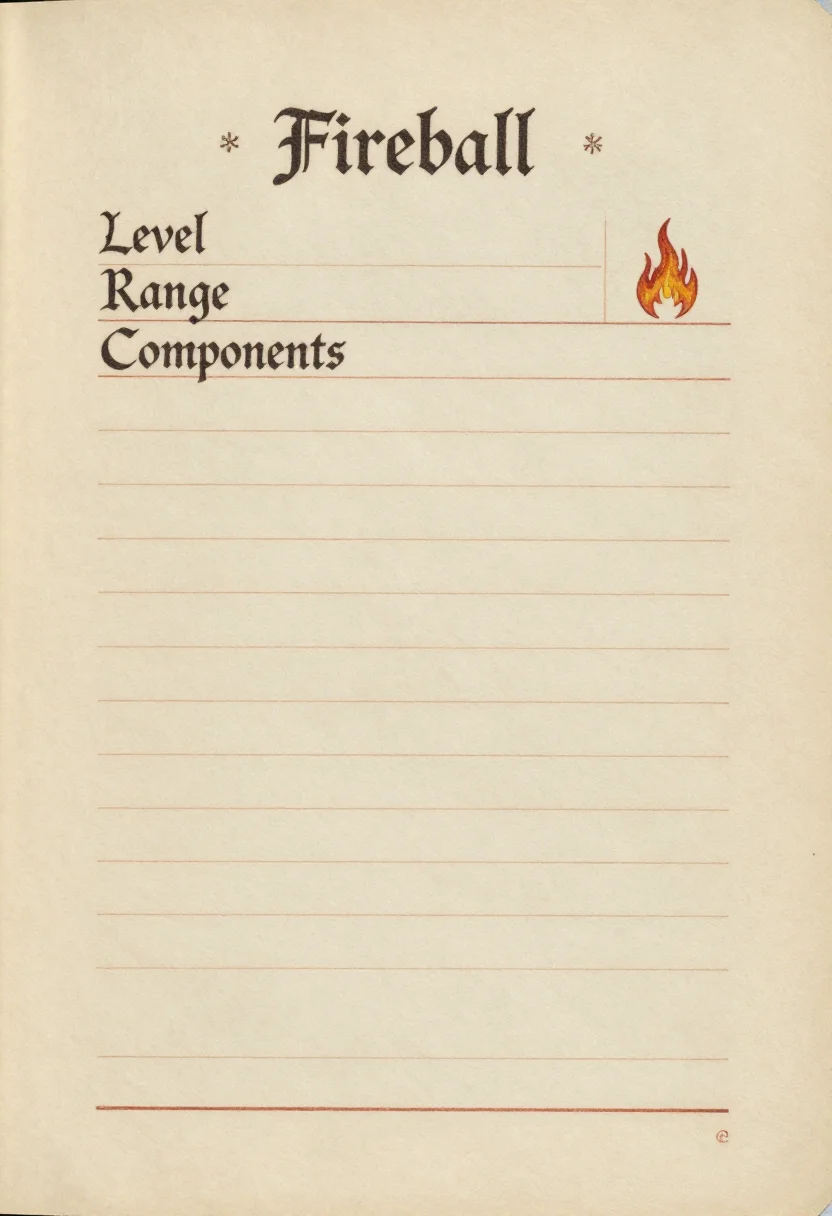
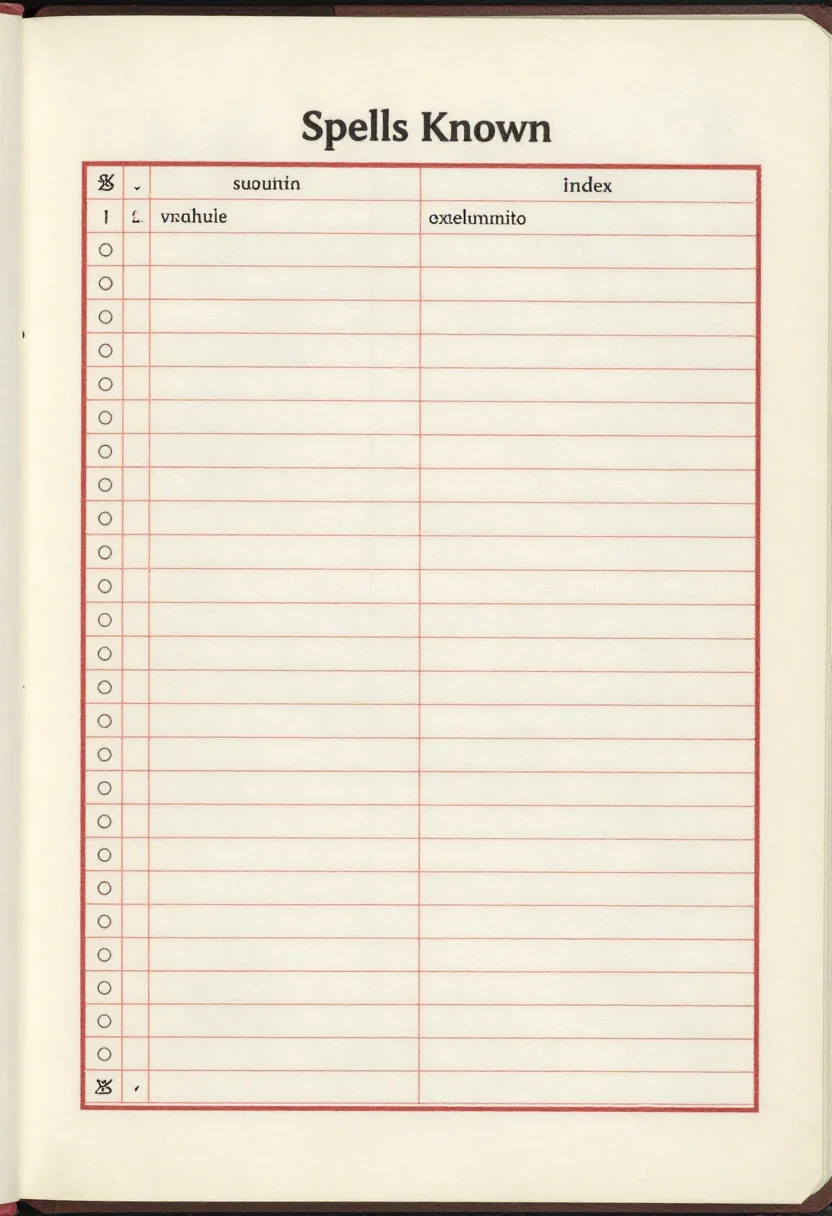
Spellbook pages: spell entry, blank spell page, spell index
Make your ownSpellbook pages
Describe yours. We'll remake the whole pack your way.
More like this
the whole catalog →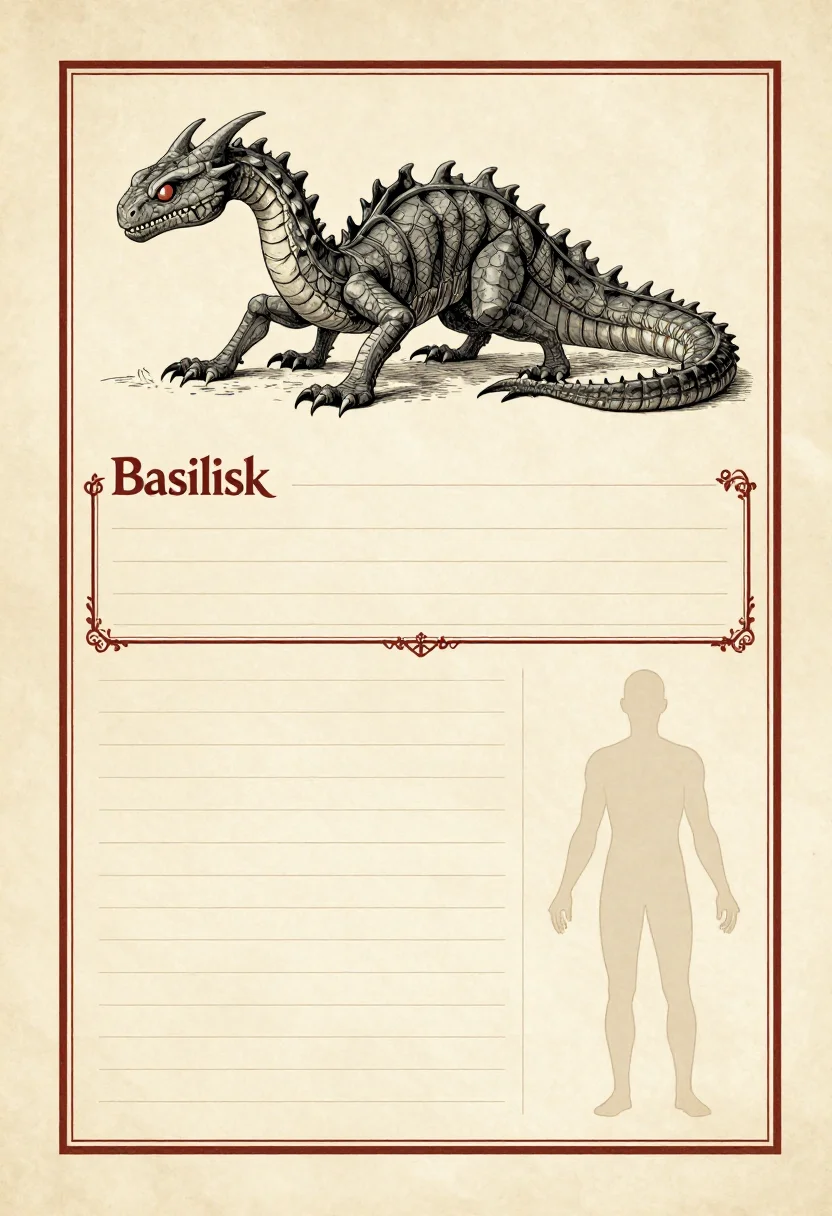
every sample — three subjects, three styles ↓
Printable spellbook pages for a wizard player or a game master. A filled spell entry shows the labelled lines of a spell, a blank spell page leaves its boxes and writing panel empty, and a spell index gives a ruled table of the spells known. Each comes in vellum, illuminated and printed codex styles. Type a different direction, such as necromancer or elven script, and the same layout takes it as a request for that look.
- a spellbook for a wizard player at the table
- a grimoire found in a dungeon and handed to the party
- a spell list to keep beside the character sheet
- a prop for a fantasy dinner or a game night
Frequently asked questions
- What is on each page?
- The entry page is a filled spell with labelled lines for Level, Range and Components. The blank page has empty boxes and a lined panel, and the index is a ruled list of spells known with tick circles down the side.
- Is the sample spell filled in?
- Yes, the entry sample is a spell named Fireball. The blank page and the index are empty for you to write in.
- What is the difference between the three styles?
- Vellum is hand-ruled brown ink on aged cream. Illuminated adds a gold-leaf initial, a vine border and jewel tones. The printed codex is a clean typeset page with woodcut-style sigils and thin red rules.
- What size are the pages?
- Each page is a tall portrait layout with an even margin around it, ready to print on a standard sheet.
About toile
This page is a showcase and a starting point: nine samples already rendered, three readings of the pack crossed with three styles, each shown at the size and ratio it was made for. Take any of them further on the wall with a few words, or ask for all nine again under your own direction; a sign-in keeps what you make, and it is free while Toile is new. The recipe behind each sample — the subject, the style, the palette, the framing — travels with the image rather than staying private to the render: it is in the alt text of every sample and in the page's own structured data, so a search engine reads the same handles a person would.