/spelling-worksheets · classroom
Spelling worksheets: missing letters, word search, look-cover-write
Make your ownSpelling worksheets
Describe yours. We'll remake the whole pack your way.
More like this
the whole catalog →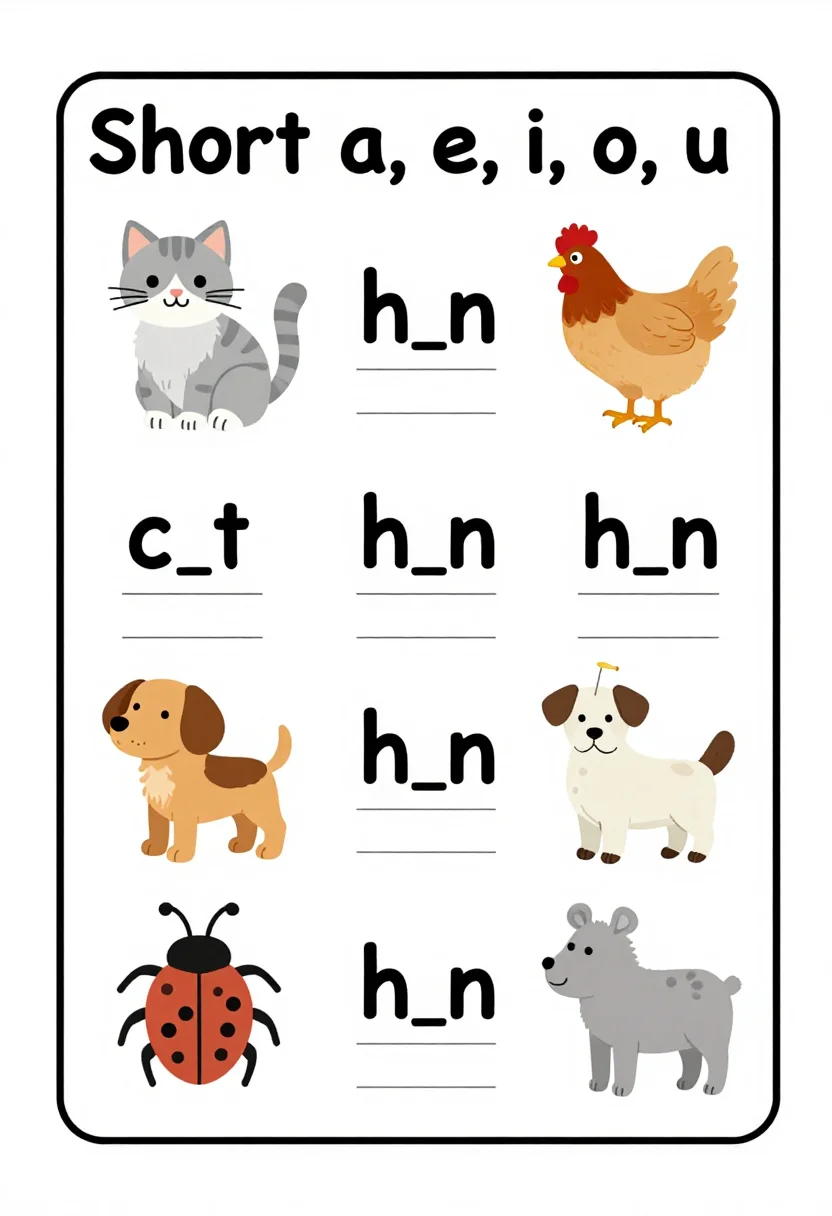
every sample — three subjects, three styles ↓
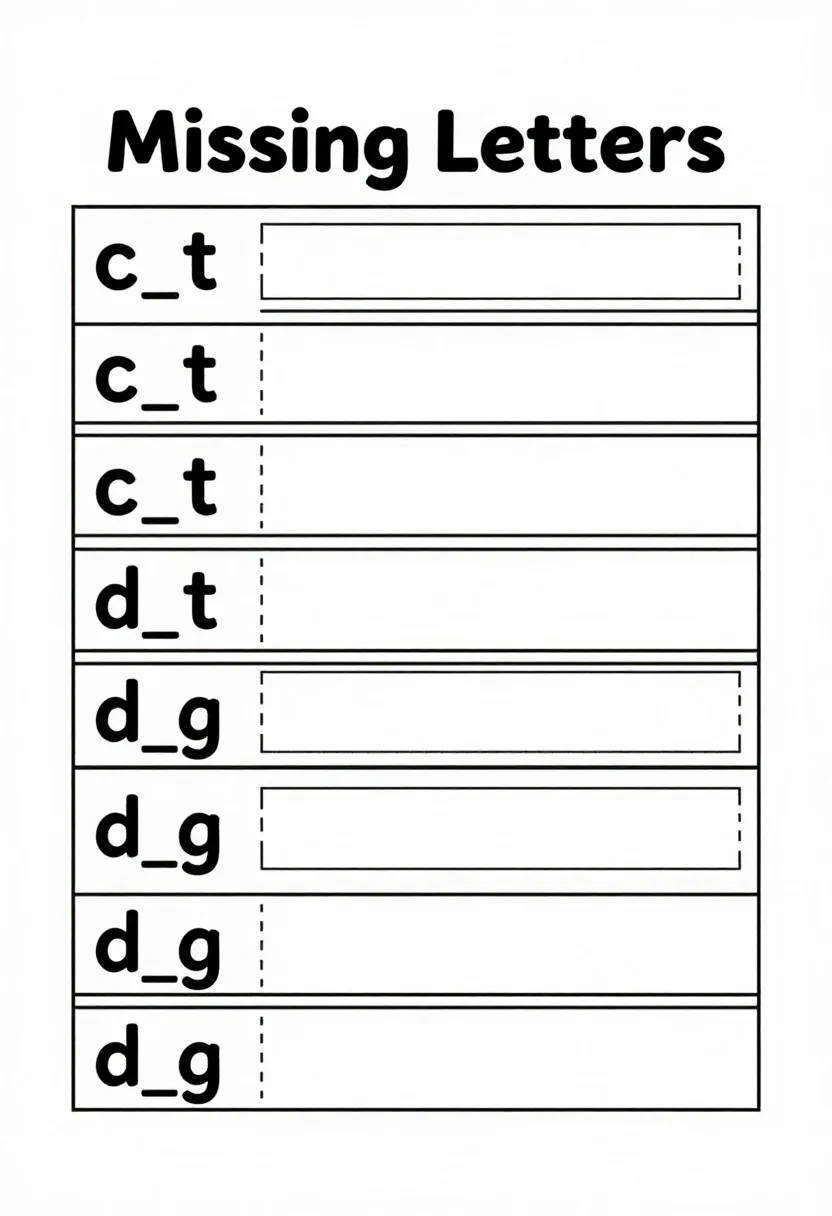
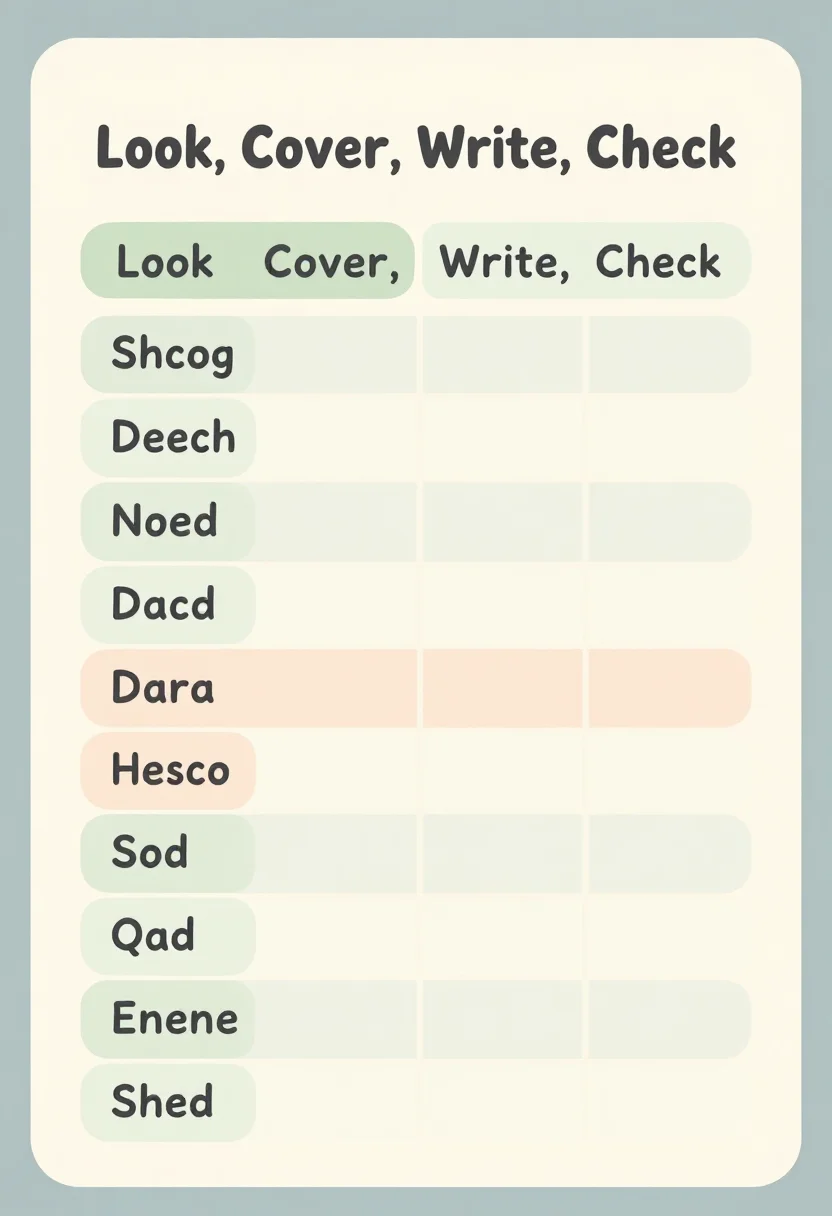
Spelling practice sheets for children. One has pictures and words such as c_t and d_g with blanks for the missing letters. One has a letter grid and a list of words to find. One has rows of empty boxes to write each word from memory, then check it. Made for teachers and parents in India and the US. You can also type a different word list or theme, and the same layout is used.
- a weekly spelling test in class
- homework spelling practice
- a word search break in a lesson
- a home practice sheet for a new word list
Frequently asked questions
- How does look-cover-write work on the sheet?
- The child looks at each word, covers it, writes it from memory, then checks. The sheet has rows of empty boxes for this.
- What is in the word search?
- A letter grid with a list of words to find.
- What is the difference between the three styles?
- Plain print is black ink on white paper. Bright cartoon uses red, yellow, blue and green on white with a colored heading band. Soft pastel uses sage green, peach and dusty blue on cream.
- Can I type a different subject?
- Yes. A typed subject is a request, so the same layout is used, but the page may not match the request exactly. Check each page before you print it.
About toile
This page is a showcase and a starting point: nine samples already rendered, three readings of the pack crossed with three styles, each shown at the size and ratio it was made for. Take any of them further on the wall with a few words, or ask for all nine again under your own direction; a sign-in keeps what you make, and it is free while Toile is new. The recipe behind each sample — the subject, the style, the palette, the framing — travels with the image rather than staying private to the render: it is in the alt text of every sample and in the page's own structured data, so a search engine reads the same handles a person would.