/st-patricks-cards · season
St Patrick's Day cards: greeting, Irish blessing, lucky card
Make your ownSt Patrick's cards
Describe yours. We'll remake the whole pack your way.
More like this
the whole catalog →
every sample — three subjects, three styles ↓
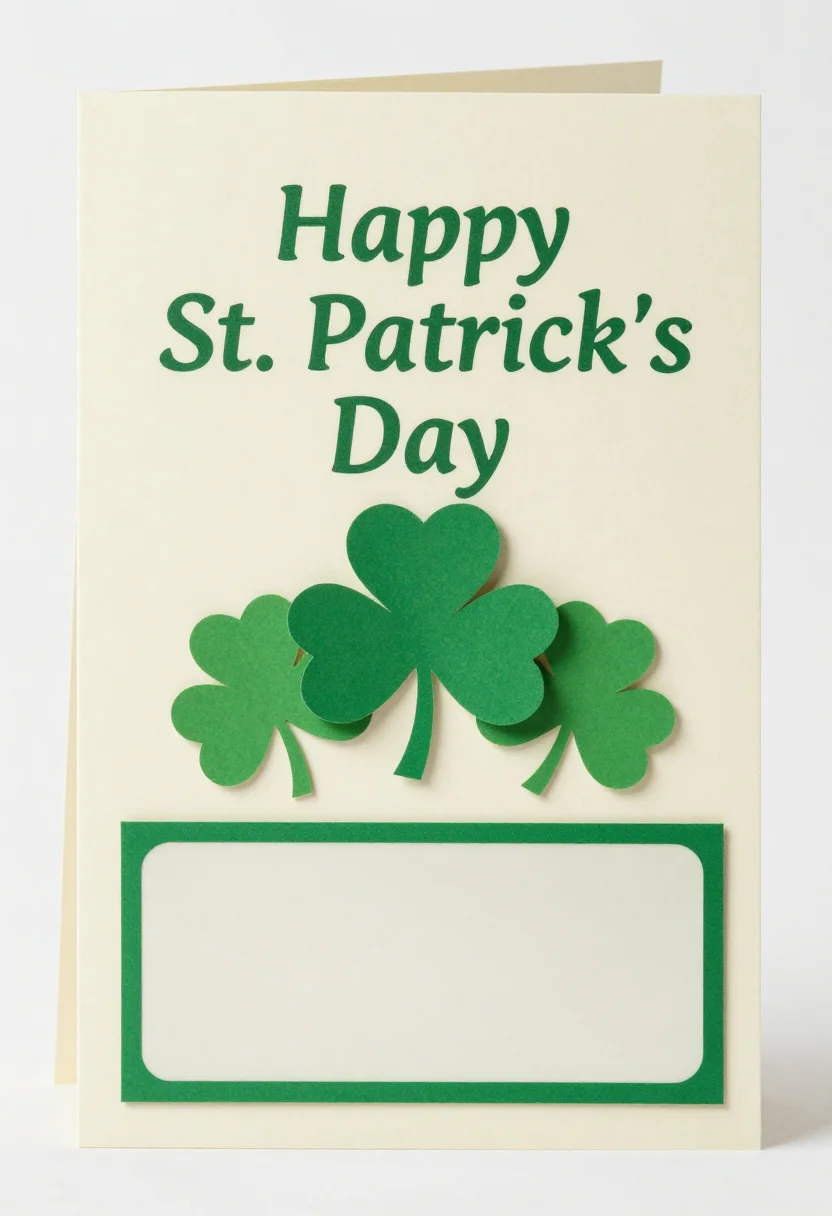
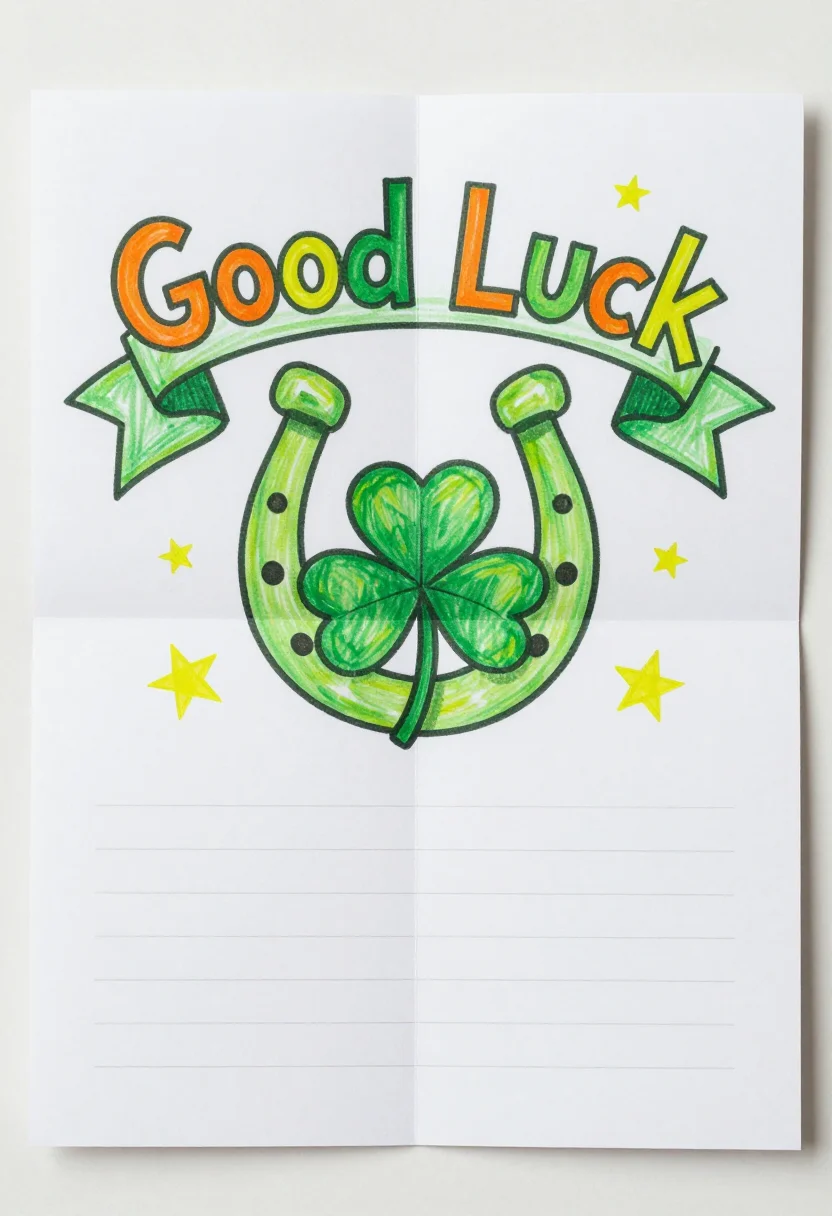
Printable St Patrick's Day cards for 17 March: a greeting for a friend, an Irish blessing for family abroad, and a card a child can sign for the class. The greeting is lettered as written, and each design leaves a clear panel or ruled lines for a message. The three finishes are papercut, Celtic ink and child crayon. Ask for a different symbol, such as an Irish flag or a Claddagh, and the same card layout carries it.
- a card for a friend on 17 March
- a blessing for family overseas
- a class card for the whole group to sign
- a card for a school party
Frequently asked questions
- Which wording is on the cards?
- One reads 'Happy St. Patrick's Day', one carries the blessing 'May the road rise up to meet you', and one has 'Good Luck' on a ribbon above ruled lines.
- How do I print them?
- Each sheet is one vertical card page with an even margin, ready to print on paper or card stock at the size you need.
- What is the difference between the three styles?
- Papercut uses layered cut-paper shapes in green and gold. Celtic ink uses knotwork borders and uncial lettering. Child crayon uses wobbly lines and big lettering a child could sign.
- Can I ask for a different design?
- Yes. A design such as a horseshoe or a Claddagh is a request, and the result is not a promised picture.
About toile
This page is a showcase and a starting point: nine samples already rendered, three readings of the pack crossed with three styles, each shown at the size and ratio it was made for. Take any of them further on the wall with a few words, or ask for all nine again under your own direction; a sign-in keeps what you make, and it is free while Toile is new. The recipe behind each sample — the subject, the style, the palette, the framing — travels with the image rather than staying private to the render: it is in the alt text of every sample and in the page's own structured data, so a search engine reads the same handles a person would.