/sunflowers · motif
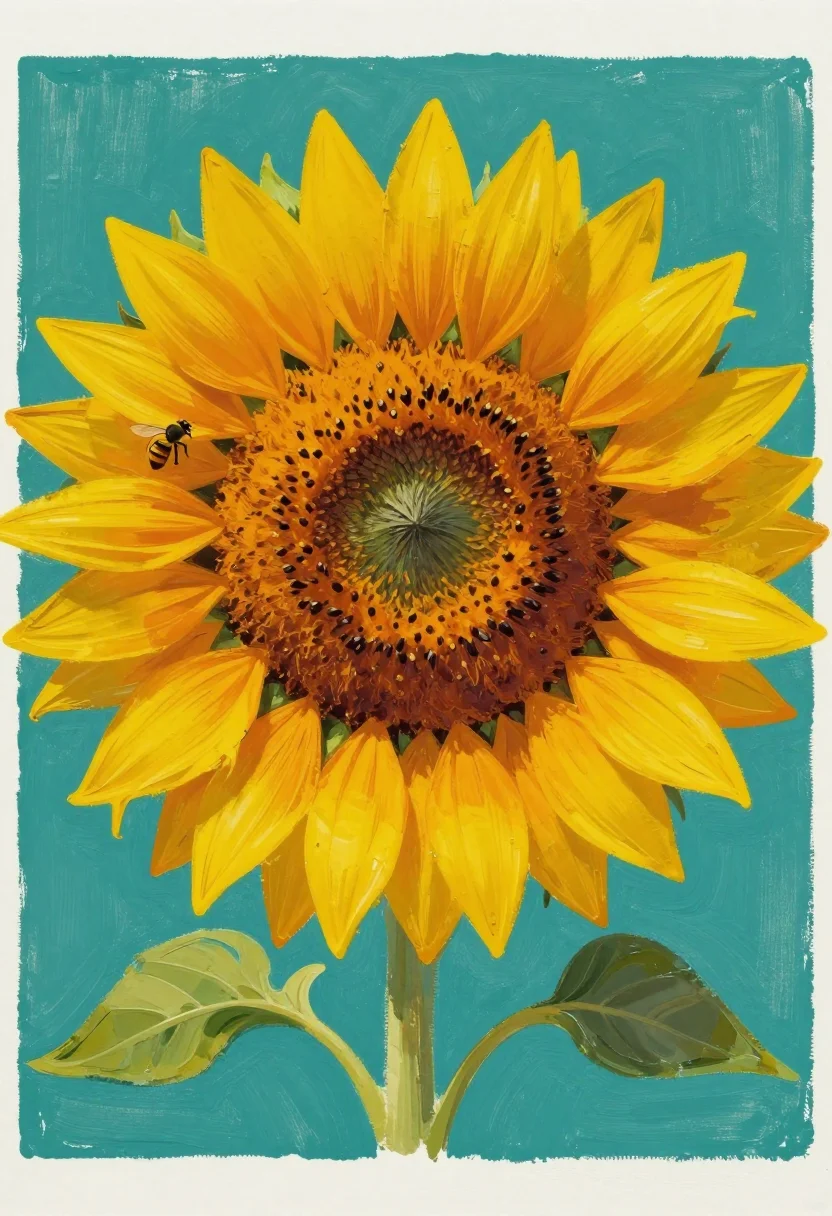
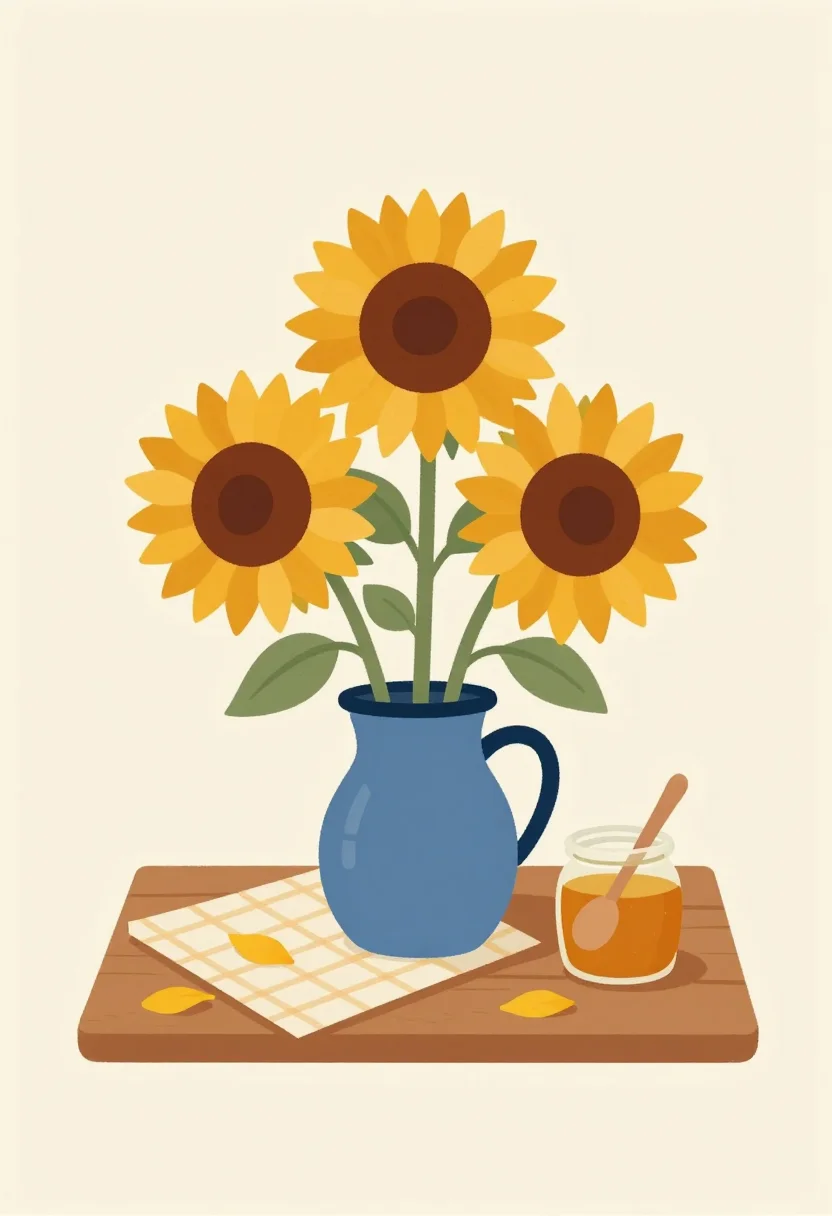
Sunflower designs: single head, field, jug of stems
Make your ownSunflowers
Describe yours. We'll remake the whole pack your way.
More like this
the whole catalog →

every sample — three subjects, three styles ↓
The sunflower is the kitchen print, the August wedding and the linocut fair. These nine set a single head straight on, a field at sunset and three stems in a blue jug against painted print, linocut and flat scandi — the seed spiral and the ragged petals the constant. Ask for a different flower and the same three styles carry it.
- a kitchen or dining room wall print
- a linocut-style card design
- a farmhouse-style gift print
- a coloring page
- a wedding or harvest-season decor motif
Frequently asked questions
- What size do these print at?
- Each design is drawn at A3 proportions with an even margin, so it prints clean at A3 or scales to A4.
- Can I get a different flower instead?
- Yes — the direction field takes any flower, and the same painted, linocut and flat-scandi styles render it.
- What's the difference between the three styles?
- Painted print is a soft brushed illustration; linocut has bold carved-block texture and flat blocks of ink; flat scandi is clean minimal shapes with a limited palette.
- Is the seed spiral accurate?
- Each head is drawn with the sunflower's real spiral seed pattern at its centre — a botanically honest detail, not a stylised blob.
About toile
This page is a showcase and a starting point: nine samples already rendered, three readings of the pack crossed with three styles, each shown at the size and ratio it was made for. Take any of them further on the wall with a few words, or ask for all nine again under your own direction; a sign-in keeps what you make, and it is free while Toile is new. The recipe behind each sample — the subject, the style, the palette, the framing — travels with the image rather than staying private to the render: it is in the alt text of every sample and in the page's own structured data, so a search engine reads the same handles a person would.