/telling-time-worksheets · classroom
Telling time worksheets: hour clocks, half-and-quarter and blank clocks
Make your ownTelling time
Describe yours. We'll remake the whole pack your way.
More like this
the whole catalog →
every sample — three subjects, three styles ↓
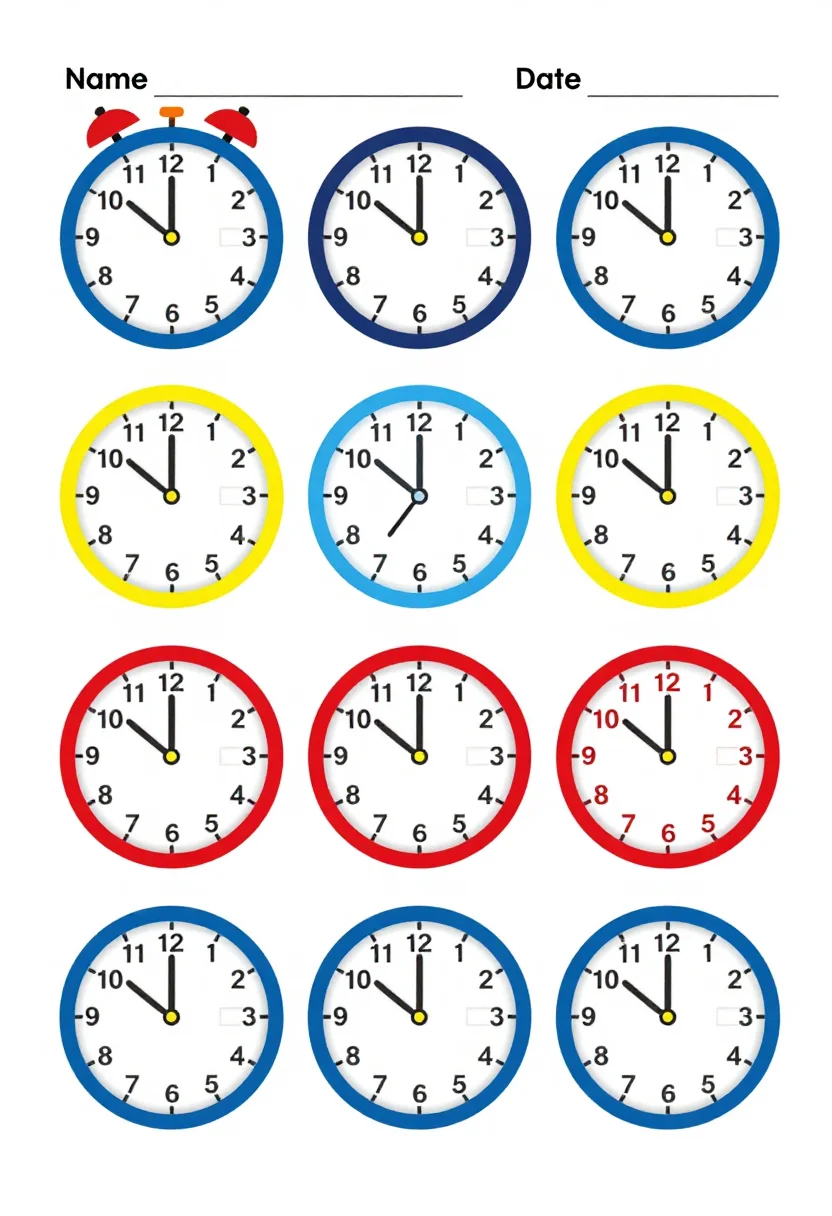
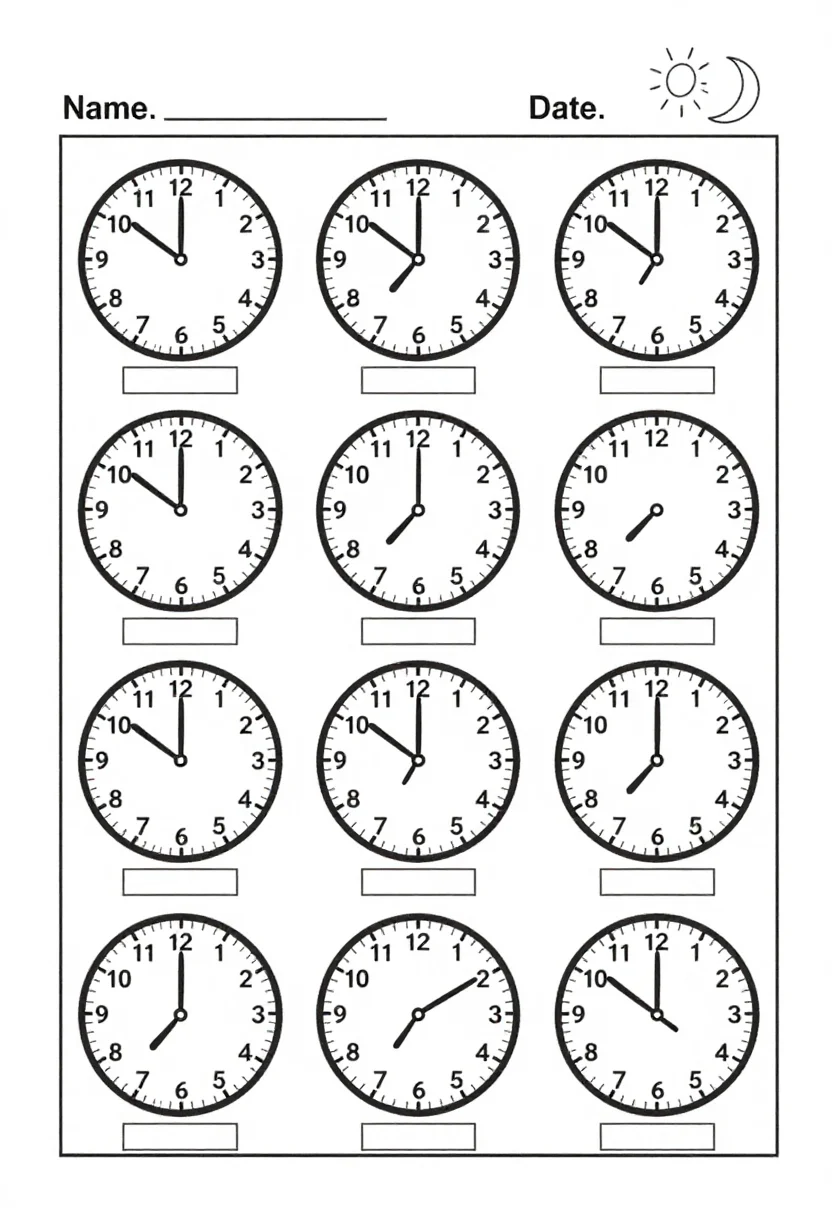
Twelve analogue clock faces on a page, hands drawn, digital boxes blank — the telling-time worksheet is pure drawing, and the clock face is the lesson, so numerals one through twelve are rendered with exact precision. These nine cover hour clocks, half-and-quarter clocks, and a blank clock sheet to draw hands on. Type a different time level and the page redraws.
- a telling time worksheet for math practice
- a blank clock face printable for drawing hands
- a clock worksheet for a time-telling unit
- a math center time-reading activity
- a homework sheet for hour and half-hour time
Frequently asked questions
- Are the clock numbers accurate?
- Yes — numerals 1 through 12 are rendered with exact precision on every clock face (this is a math pack), so the hands can be read correctly against them.
- Are the digital time boxes filled in?
- No — the digital boxes below each clock are blank. Students read the analogue hands and write the matching digital time.
- What's the blank clock sheet for?
- A clock face with numerals but no hands drawn — students draw the hands themselves to show a given time, the reverse of the reading exercise.
- What levels of time are covered?
- Three readings: hour clocks (o'clock times), half-and-quarter clocks, and the blank hands-drawing sheet — ask through the direction field for a specific level.
About toile
This page is a showcase and a starting point: nine samples already rendered, three readings of the pack crossed with three styles, each shown at the size and ratio it was made for. Take any of them further on the wall with a few words, or ask for all nine again under your own direction; a sign-in keeps what you make, and it is free while Toile is new. The recipe behind each sample — the subject, the style, the palette, the framing — travels with the image rather than staying private to the render: it is in the alt text of every sample and in the page's own structured data, so a search engine reads the same handles a person would.