/tenses-charts · classroom
Tenses charts: the twelve English tenses, formulas and timeline
Make your ownTenses charts
Describe yours. We'll remake the whole pack your way.
More like this
the whole catalog →

every sample — three subjects, three styles ↓
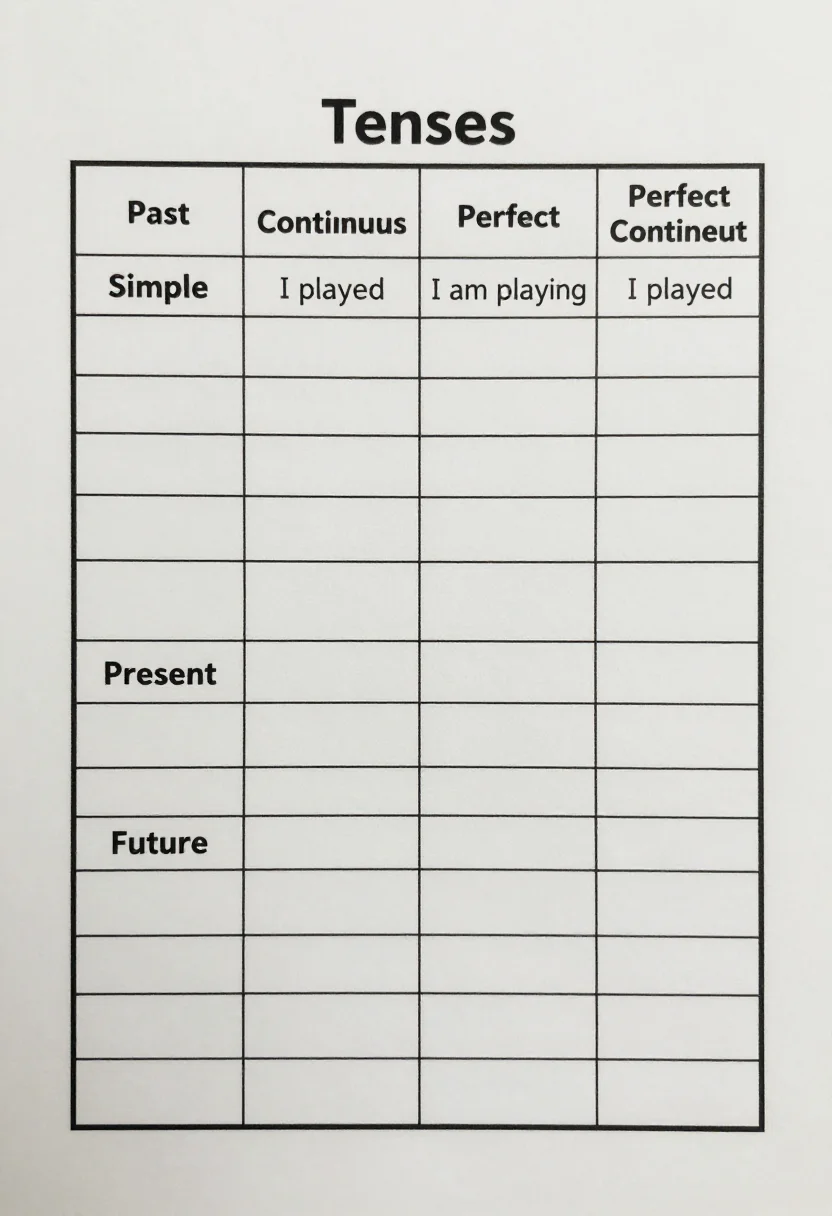
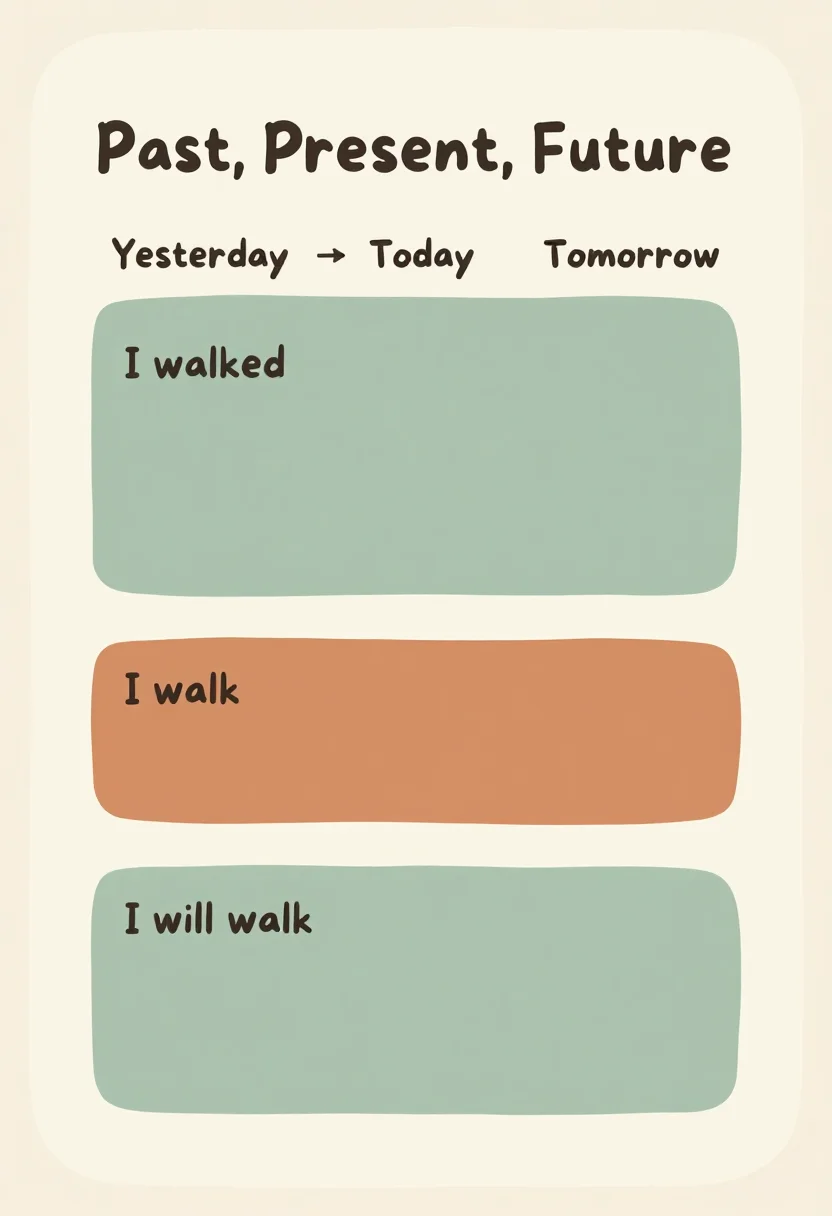
Printable tenses charts for students learning English grammar. One chart shows all twelve tenses at once, past, present and future across simple, continuous, perfect and perfect continuous, with an example in each cell. One gives the pattern for each tense in twelve coloured bands, and one is a timeline of yesterday, today and tomorrow with a sentence for each. Type a direction such as for kids or rainbow colours, and the chart is drawn for it.
- a grammar chart on the classroom wall
- a notebook page for a tenses unit
- a revision sheet before a test
- a timeline for younger learners
Frequently asked questions
- What is in the twelve-tense grid?
- Past, present and future across simple, continuous, perfect and perfect continuous, with an example such as 'I played' or 'I am playing' in each cell.
- Where is the formula for each tense?
- On a separate chart, in twelve coloured bands, each with the tense name and its pattern, such as subject, has or have, and the third verb form.
- Does the timeline show all tenses?
- No. It shows past, present and future with one sentence each: I walked, I walk and I will walk.
- What is the difference between the styles?
- Black and white is crisp black line on white, bright flat uses bold clean colour shapes, and soft pastel is muted with rounded shapes.
About toile
This page is a showcase and a starting point: nine samples already rendered, three readings of the pack crossed with three styles, each shown at the size and ratio it was made for. Take any of them further on the wall with a few words, or ask for all nine again under your own direction; a sign-in keeps what you make, and it is free while Toile is new. The recipe behind each sample — the subject, the style, the palette, the framing — travels with the image rather than staying private to the render: it is in the alt text of every sample and in the page's own structured data, so a search engine reads the same handles a person would.