/thanksgiving-icons · season
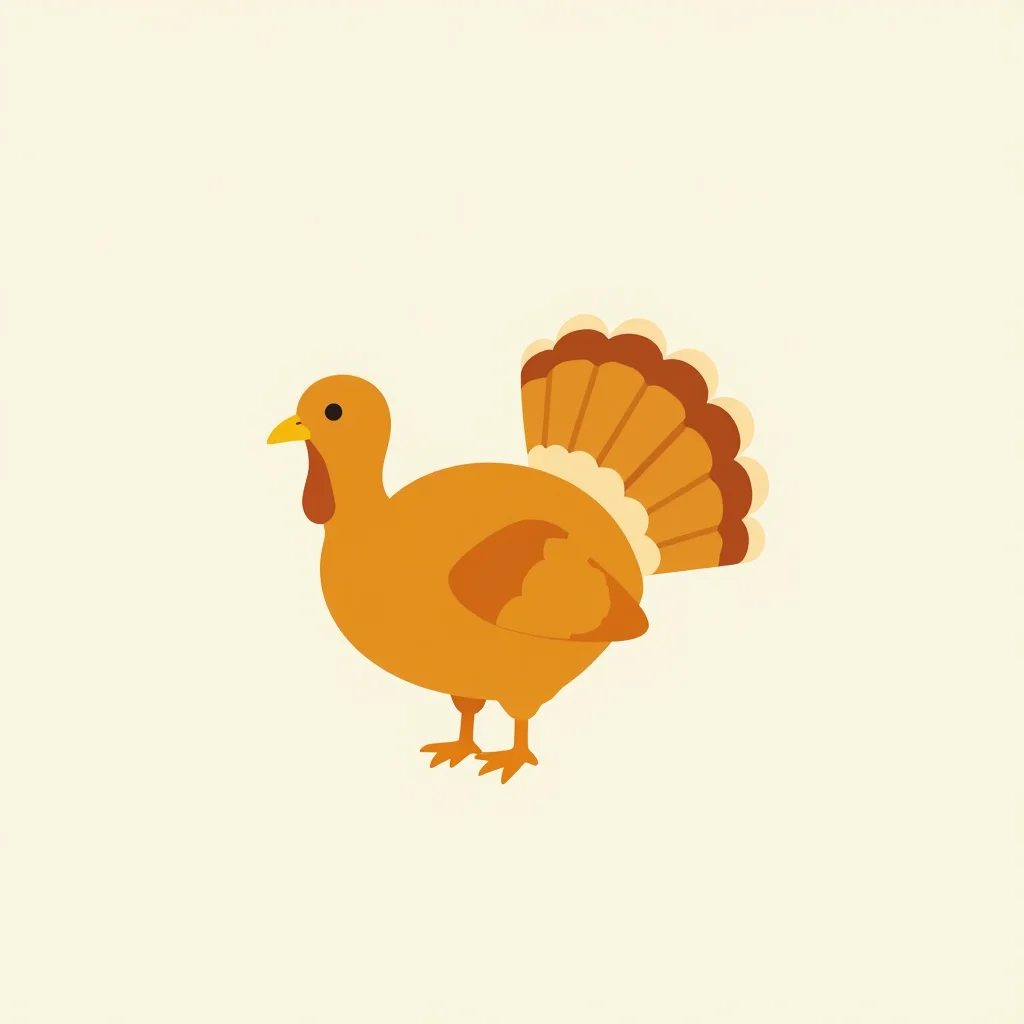
Thanksgiving icon set: turkey, pie, leaf glyphs

Make your ownThanksgiving icons
Describe yours. We'll remake the whole pack your way.
More like this
the whole catalog →
every sample — three subjects, three styles ↓
Nine Thanksgiving glyph icons — a turkey, a pie, a maple leaf — each reduced to one simple shape and built to stay legible at small icon size, in a flat harvest, a vintage americana, and a watercolor treatment. Set against a plain background with no lettering, ready to drop into a menu, app, or slide deck.
- a menu or recipe card section marker
- an app or website seasonal icon set
- a slide deck or infographic bullet icon
- a printable label or tag accent
Frequently asked questions
- Do these icons stay legible at small sizes?
- Yes — each glyph is simplified down to one clear shape specifically so it holds up at roughly 32 pixels, not just at full size.
- Are the icons a matched set or three unrelated styles?
- Each of the three subjects — turkey, pie, leaf — comes in the same three styles, so you can pick one register and use all three glyphs together as a set.
- What's the difference between the three styles?
- Harvest flat uses simplified matte shapes, vintage americana adds halftone grain and warm faded color, and watercolor uses soft loose edges with visible paper texture.
- Can I recolor the icons to match my brand?
- The flat and vintage styles are simple enough to recolor in most image editors; the watercolor style is more textured and recolors less cleanly.
About toile
This page is a showcase and a starting point: nine samples already rendered, three readings of the pack crossed with three styles, each shown at the size and ratio it was made for. Take any of them further on the wall with a few words, or ask for all nine again under your own direction; a sign-in keeps what you make, and it is free while Toile is new. The recipe behind each sample — the subject, the style, the palette, the framing — travels with the image rather than staying private to the render: it is in the alt text of every sample and in the page's own structured data, so a search engine reads the same handles a person would.