/thanksgiving-worksheets · season
Thanksgiving worksheets: counting, tracing and thankful-for in three styles
Make your ownThanksgiving worksheets
Describe yours. We'll remake the whole pack your way.
More like this
the whole catalog →


every sample — three subjects, three styles ↓
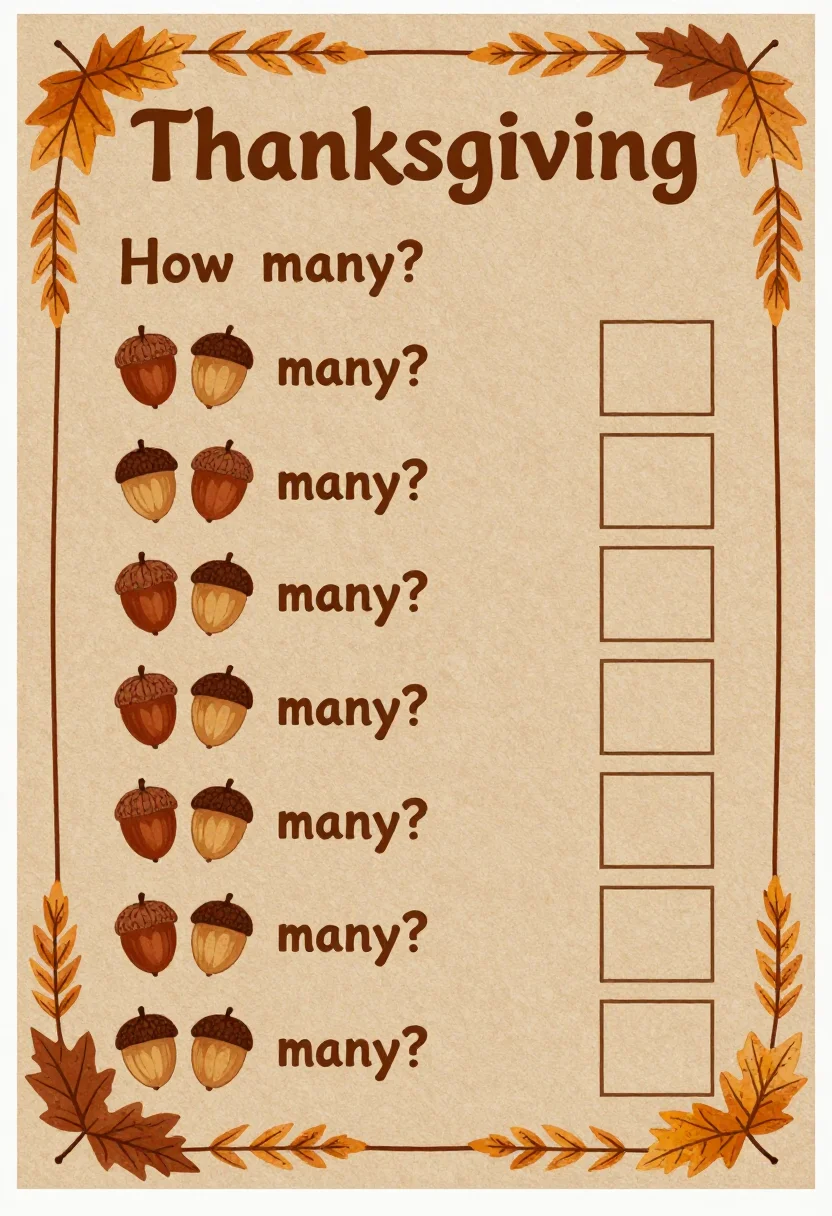
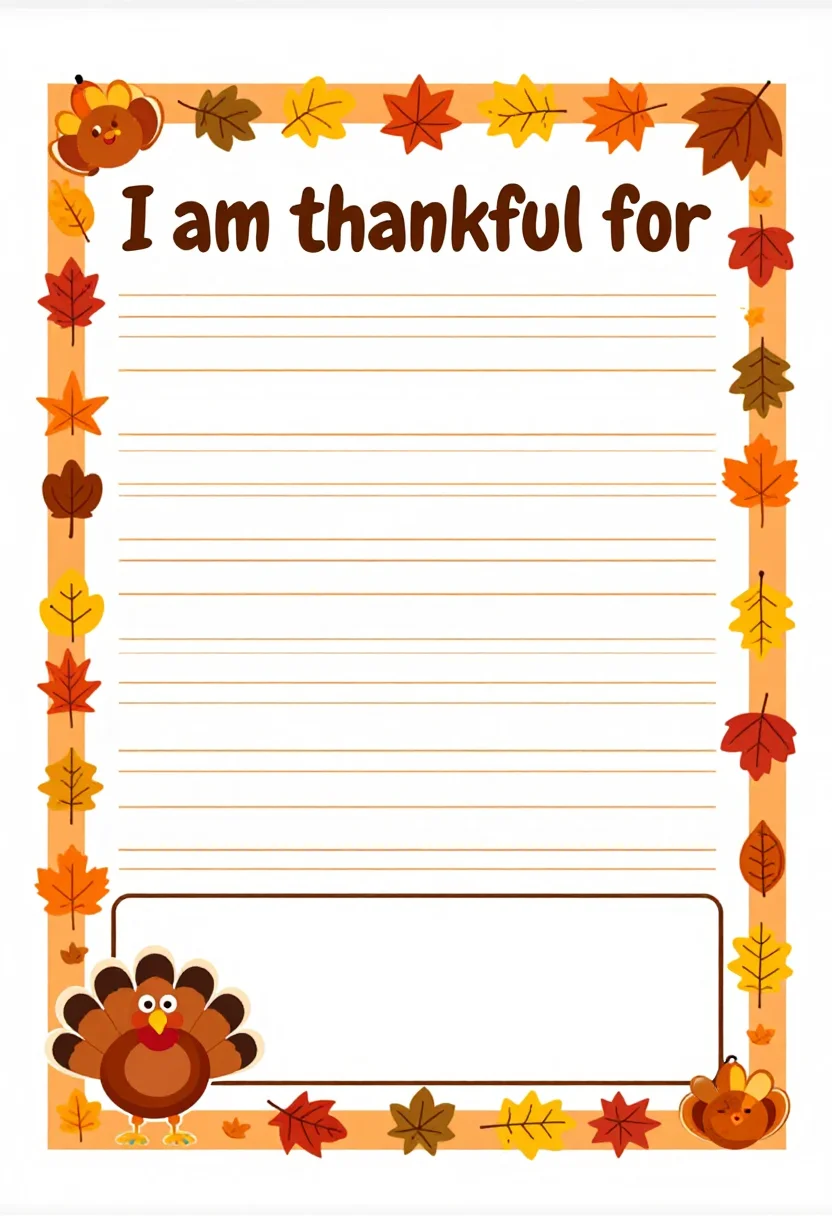
Three November worksheets for the classroom: a counting page with acorns to tally, a tracing sheet of harvest words, an I-am-thankful-for page with lines to write on. Each leaves the answer space blank for a pupil to fill in. Drawn rustic burlap-and-kraft, elegant gold-and-cream, or bright kids' style. Type a different word list or count and the sheet redraws.
- a classroom November learning activity
- a homeschool Thanksgiving lesson
- a gratitude-writing exercise for kids
- a quiet-time worksheet during a family gathering
Frequently asked questions
- What age group are these worksheets for?
- The counting and tracing sheets suit early elementary; the thankful-for page works from early writers through older kids with more lines to fill.
- Are the answers already filled in?
- No — the counting and tracing sheets leave the working space blank, and the thankful-for page's lines are entirely open for a pupil's own words.
- Can I change the words or the count?
- Yes — type a direction like 'trace turkey, pie, harvest' or 'count up to twenty' and the sheet redraws.
- Is there a simpler version for younger kids?
- The kids' style uses larger print and simpler word choices; the rustic and elegant sets carry finer detail suited to an older class.
About toile
This page is a showcase and a starting point: nine samples already rendered, three readings of the pack crossed with three styles, each shown at the size and ratio it was made for. Take any of them further on the wall with a few words, or ask for all nine again under your own direction; a sign-in keeps what you make, and it is free while Toile is new. The recipe behind each sample — the subject, the style, the palette, the framing — travels with the image rather than staying private to the render: it is in the alt text of every sample and in the page's own structured data, so a search engine reads the same handles a person would.