/tigers · motif
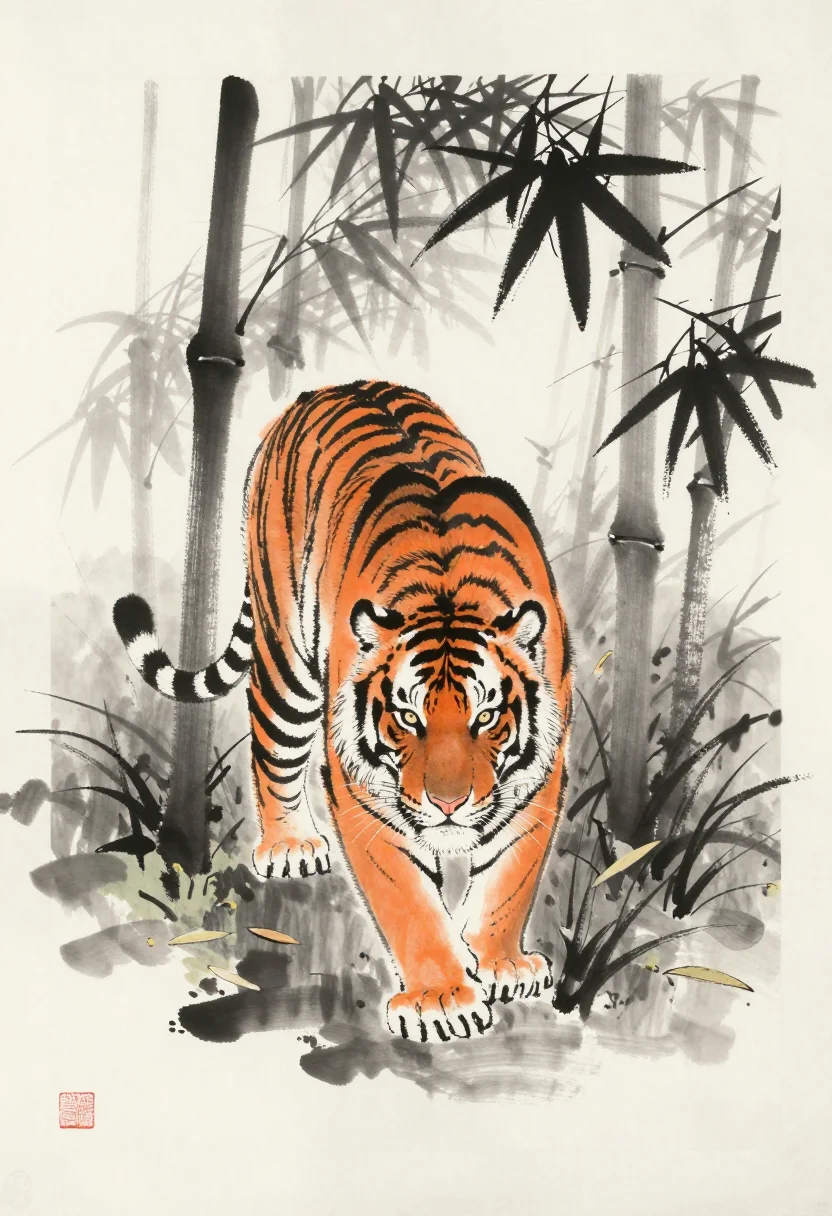
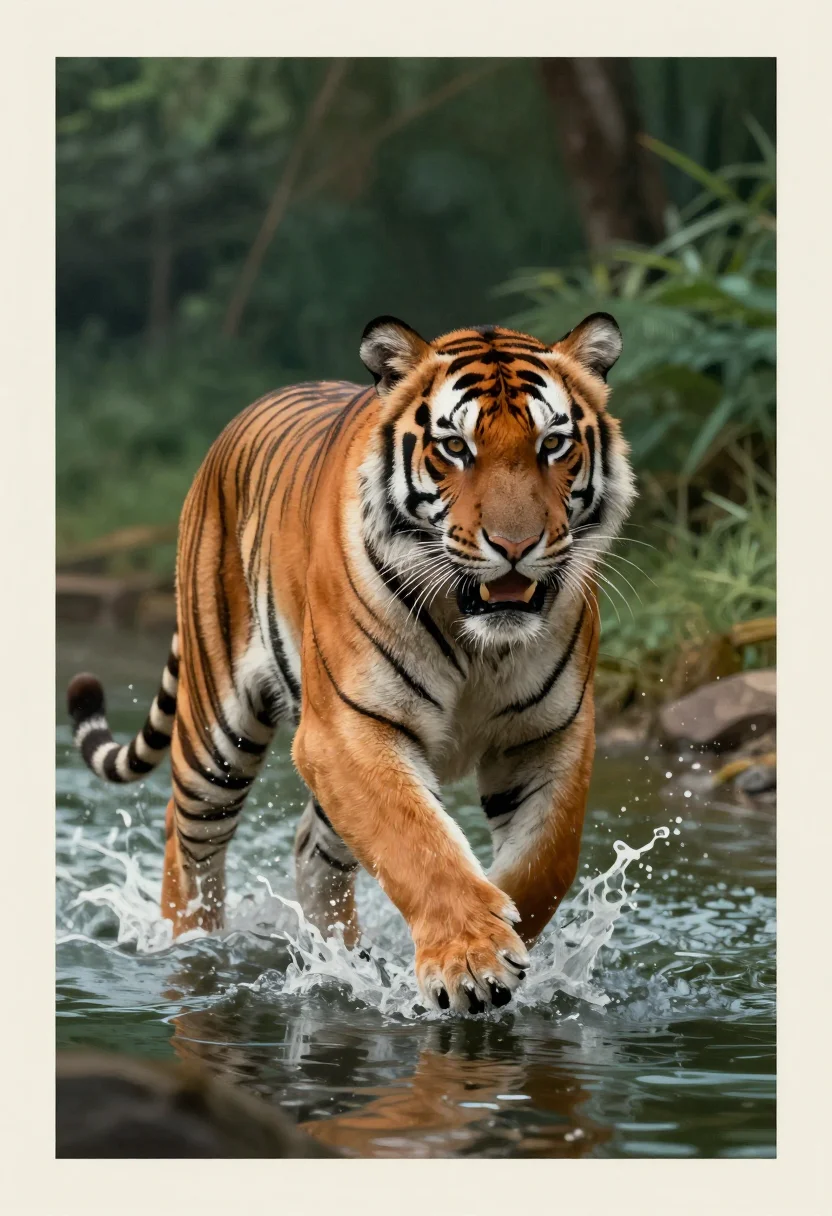
Tiger art: prowling bamboo, close face, leaping water
Make your ownTigers
Describe yours. We'll remake the whole pack your way.
More like this
the whole catalog →
every sample — three subjects, three styles ↓
The tiger is the tattoo shop's other king: one animal in three readings — prowling low through bamboo, the face filling the frame with the stripes like calligraphy, leaping through a river — rendered as Japanese ink-brush painting, American traditional tattoo flash and a painted wildlife print. Ask for a white tiger or a tiger cub and the same three finishes carry it.
- a tattoo flash reference
- a martial-arts or dojo wall print
- a gift print for a tiger or big-cat lover
- a coloring page for older kids
- a phone or laptop wallpaper
Frequently asked questions
- What size does this print at?
- Each design is drawn at A3 proportions with an even margin, so it prints clean at A3 or scales down to A4.
- What's the difference between the three finishes?
- Japanese ink-brush painting is bold loaded strokes with a single orange wash and most of the page left blank. Traditional tattoo flash is flat orange, black and white with heavy solid shading. The painted print details the fur down to the guard hairs in dramatic light.
- Can I bring the tattoo version to my artist?
- Yes — that column is centered on a plain white background with a clean margin, drawn exactly the way a flash sheet is presented.
- Can I get a different tiger, like a white tiger or a cub?
- Yes — the direction field takes any variation, such as a white tiger, a tiger cub, or a coloring-page treatment, and the same three finishes render it.
About toile
This page is a showcase and a starting point: nine samples already rendered, three readings of the pack crossed with three styles, each shown at the size and ratio it was made for. Take any of them further on the wall with a few words, or ask for all nine again under your own direction; a sign-in keeps what you make, and it is free while Toile is new. The recipe behind each sample — the subject, the style, the palette, the framing — travels with the image rather than staying private to the render: it is in the alt text of every sample and in the page's own structured data, so a search engine reads the same handles a person would.