/ugadi-cards · faith
Ugadi cards: greeting, pachadi pot, family card

Make your ownUgadi cards
Describe yours. We'll remake the whole pack your way.
More like this
the whole catalog →
every sample — three subjects, three styles ↓
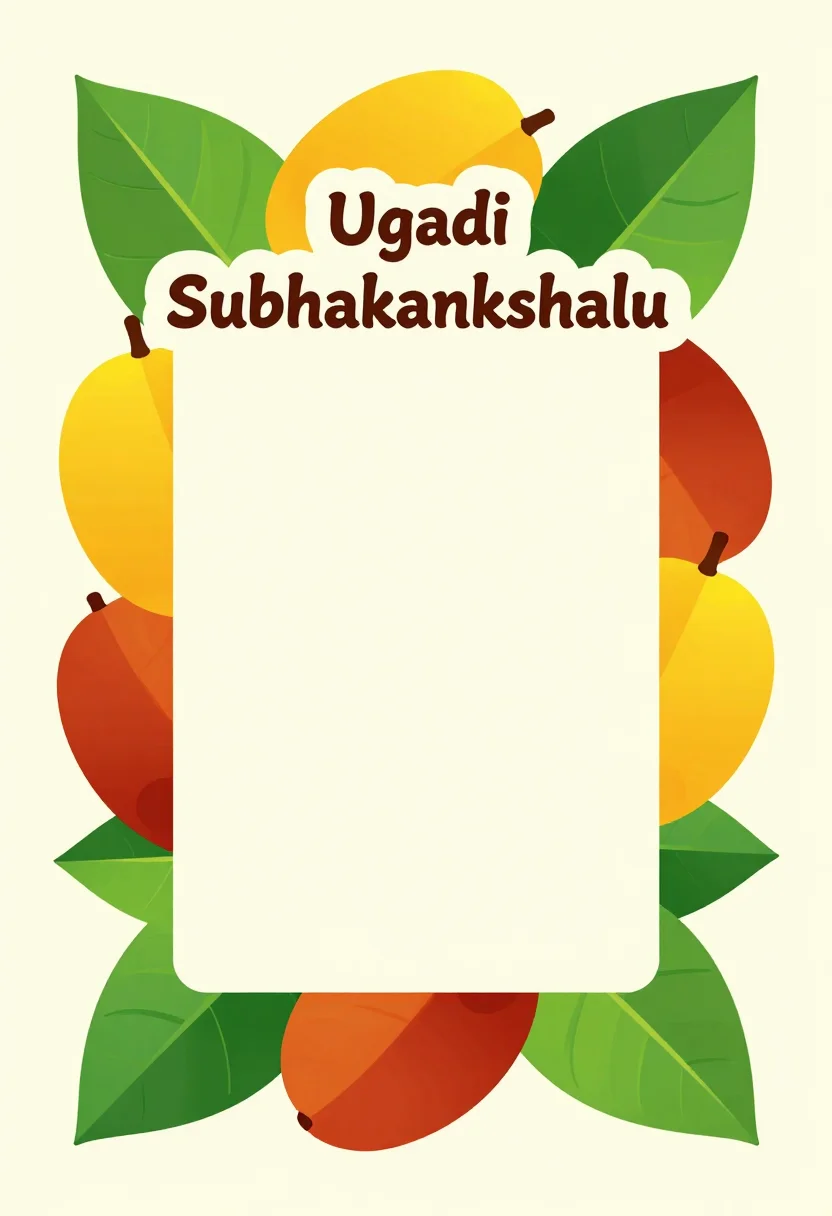
A card for Ugadi, the new year of the Chaitra month, sent by Telugu and Kannada families. These nine show three cards: a greeting under a mango-leaf toran, a clay pot of Ugadi pachadi with its six tastes labelled, and a family card with an empty panel for a name. Each is drawn in Kalamkari, watercolour and flat vector. Type a different wording or subject and the same styles carry it.
- a card sent to family for Ugadi
- a printed greeting for a community event
- a card with space for a name
- a classroom card on the six tastes of the pachadi
Frequently asked questions
- Is the greeting spelled correctly?
- The greeting is set as the design asks, Happy Ugadi and Ugadi Subhakankshalu. Check any lettering against your wording before printing, because the text is generated.
- What are the six tastes?
- The pachadi stands for the six tastes of the year: jaggery, neem flowers, raw mango, tamarind, salt and chilli.
- Can I write a name in the family card?
- Yes. The middle panel is left blank for the sender's name to be written or added.
- What is the difference between the styles?
- Kalamkari has fine reed-pen outlines and flat dyed fills, watercolour has soft washes on warm white paper, and flat vector has bold clean shapes with no outlines.
About toile
This page is a showcase and a starting point: nine samples already rendered, three readings of the pack crossed with three styles, each shown at the size and ratio it was made for. Take any of them further on the wall with a few words, or ask for all nine again under your own direction; a sign-in keeps what you make, and it is free while Toile is new. The recipe behind each sample — the subject, the style, the palette, the framing — travels with the image rather than staying private to the render: it is in the alt text of every sample and in the page's own structured data, so a search engine reads the same handles a person would.