/ugadi-rangoli · faith
Ugadi rangoli: pachadi pot, kalash, mango leaves
Make your ownUgadi rangoli
Describe yours. We'll remake the whole pack your way.
More like this
the whole catalog →


every sample — three subjects, three styles ↓
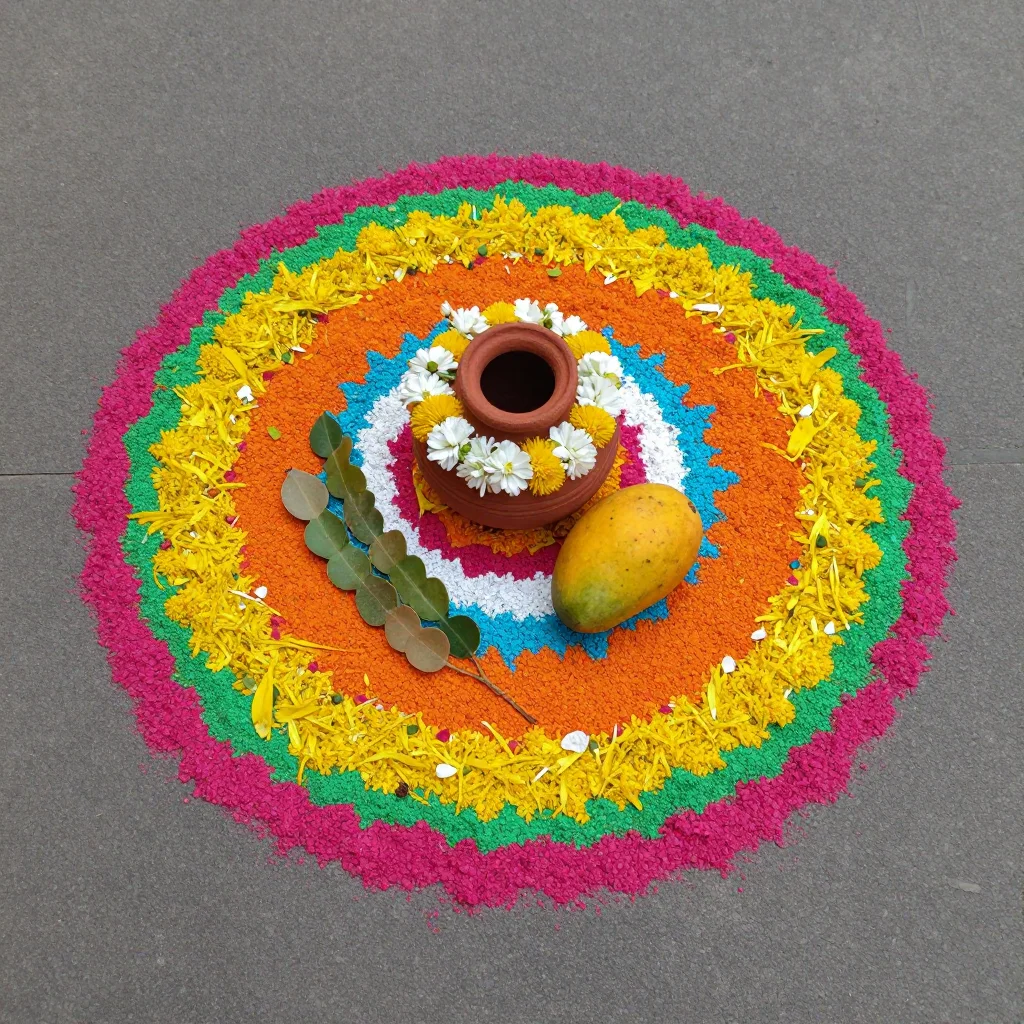
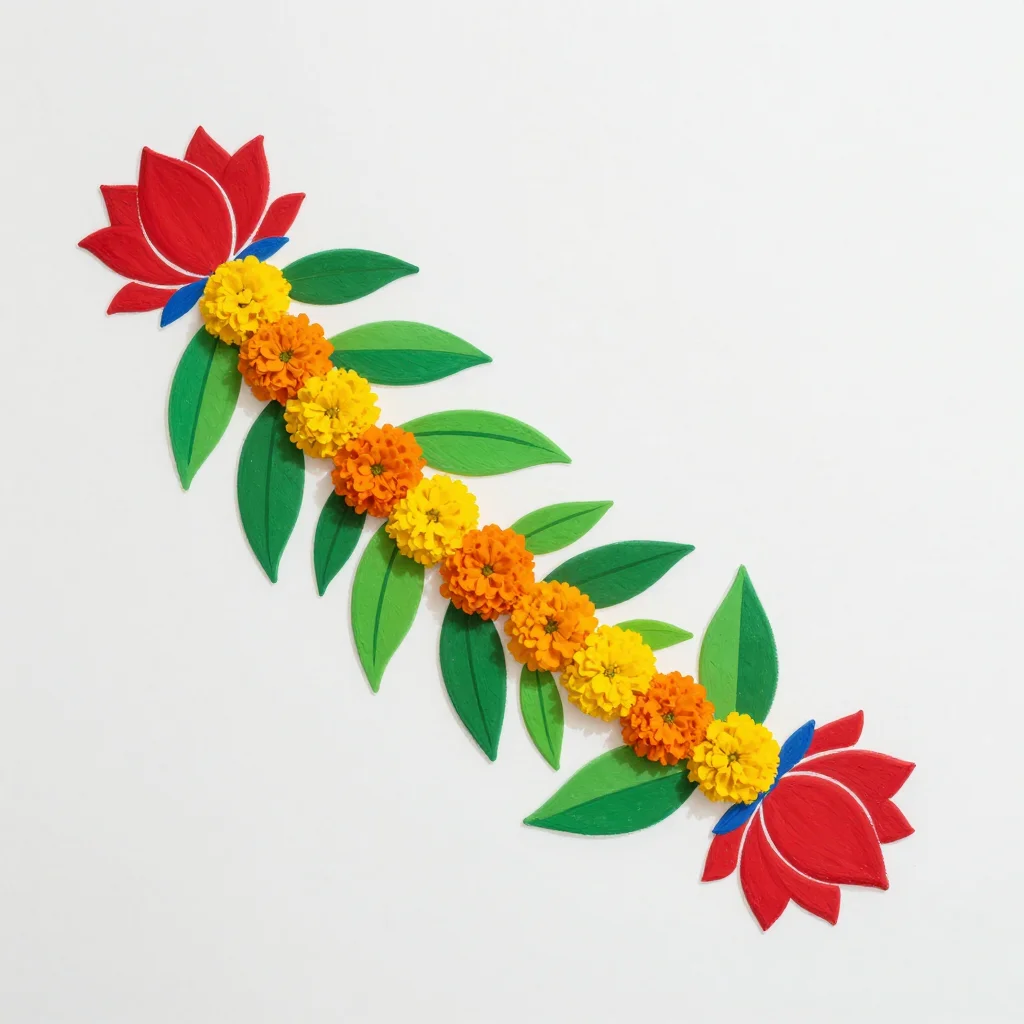
The muggulu drawn at the door on Ugadi morning in Andhra Pradesh, Telangana and Karnataka. These nine are built on the festival's own things: a clay pot of pachadi, a round kalash with a coconut and mango leaves, and a doorstep strand of mango leaves and marigolds. Each is shown in coloured powder, in flower petals and as a chart to copy by hand. Type a different motif, such as a lotus, and the same styles carry it.
- a doorstep design for Ugadi morning
- a copy of a muggulu on the floor
- a practice chart before drawing in powder
- a printed festival sheet
Frequently asked questions
- What is a muggulu?
- A muggulu is the rangoli drawn at the threshold of a home, the name used in Telugu-speaking states. The designs here are shown as top-down pictures.
- What are the three styles?
- Coloured powder has soft grainy edges, flower petals shows each petal as a small shape, and the drawn chart uses bold shapes and thin white lines that are easy to copy by hand.
- Can I copy one on a floor or print it?
- Yes. Each picture is a flat top-down design on a plain ground, so it works as a floor guide or a printed sheet.
- Can I ask for a different motif?
- Yes. Type the motif you want, such as a lotus, and it is drawn in the same three styles as a sample.
About toile
This page is a showcase and a starting point: nine samples already rendered, three readings of the pack crossed with three styles, each shown at the size and ratio it was made for. Take any of them further on the wall with a few words, or ask for all nine again under your own direction; a sign-in keeps what you make, and it is free while Toile is new. The recipe behind each sample — the subject, the style, the palette, the framing — travels with the image rather than staying private to the render: it is in the alt text of every sample and in the page's own structured data, so a search engine reads the same handles a person would.