/urdu-ginti-charts · classroom
Urdu numbers charts: 1 to 100, number names, counting with pictures
Make your ownUrdu numbers charts
Describe yours. We'll remake the whole pack your way.
More like this
the whole catalog →
every sample — three subjects, three styles ↓
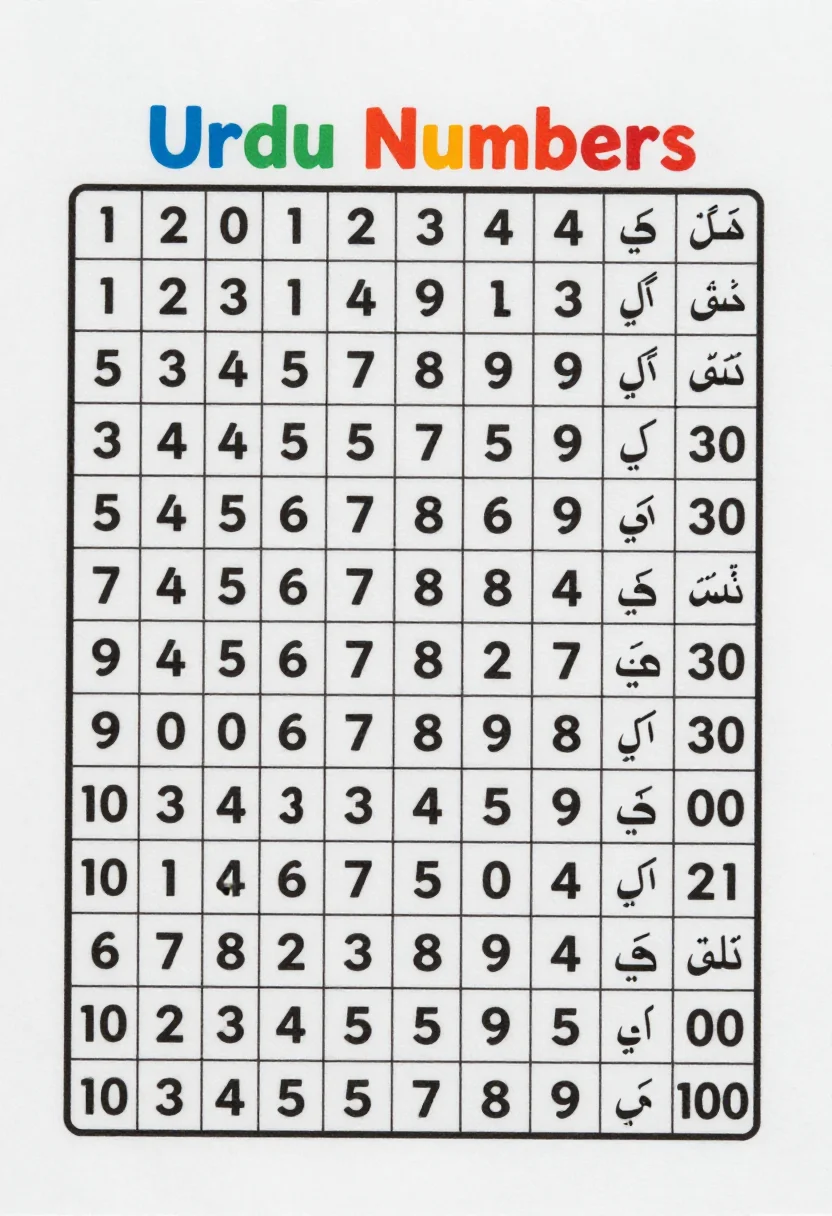
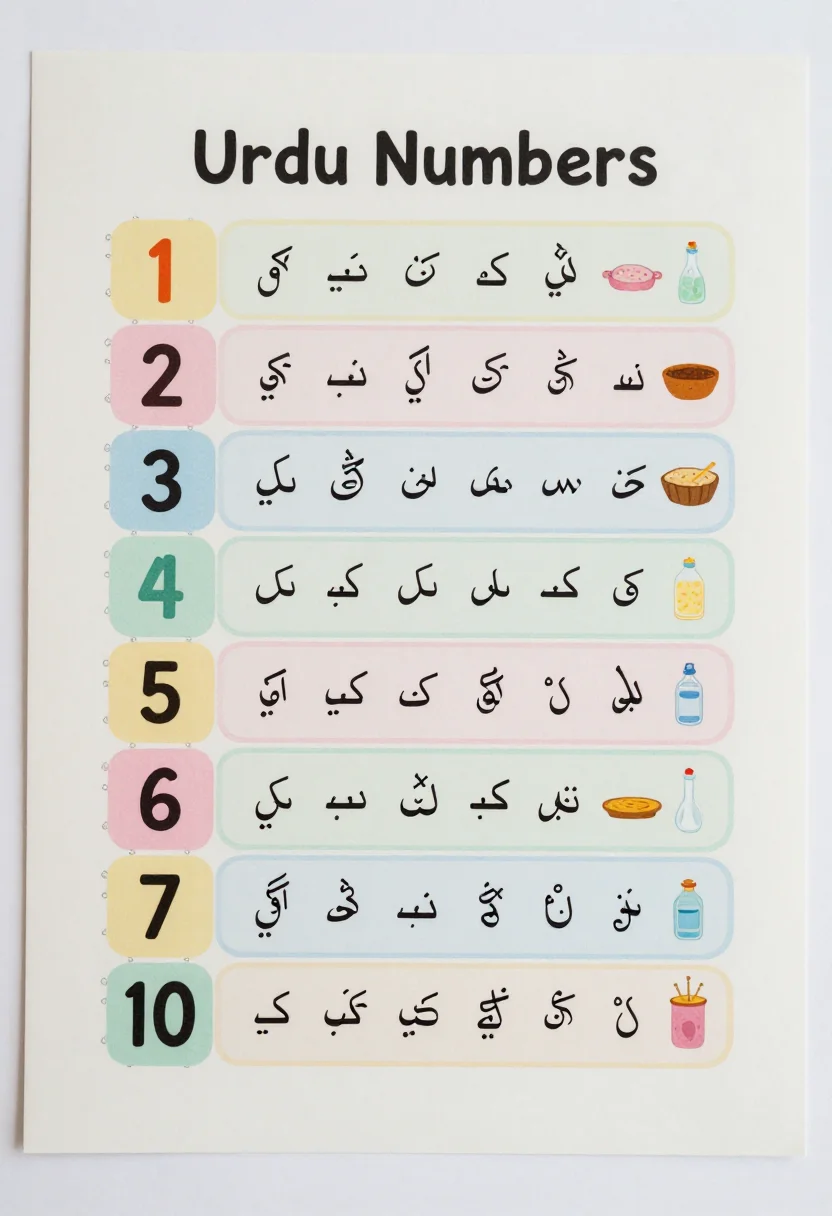
Parents and teachers print Urdu numbers to teach children to count and read numerals. The nine pages show Urdu numerals from 1 to 100 in a grid, 1 to 20 with the numerals and their number names, and 1 to 10 with groups of objects to count. Each comes as a ruled classroom sheet, a rainbow chart or a soft pastel nursery chart. Type a twist, such as large print or black and white, and the same layouts carry it.
- a classroom number wall
- a counting sheet at home
- a nursery wall
- a daily practice sheet
Frequently asked questions
- Does the chart go up to 100?
- Yes. One page shows Urdu numerals from 1 to 100 in a grid.
- Are there pictures to count?
- Yes. One page shows 1 to 10 in Urdu with groups of objects.
- What is the difference between the three styles?
- Classic ruled uses thin black lines and bold numerals. Rainbow classroom gives each row its own bright band inside a bold border. Soft pastel uses soft rounded tiles on cream with a small doodle border.
- Can I change the chart or ask for a twist?
- Yes. Type the change, such as large print, black and white or a border. Your request shapes the result; it is not a promise of what these nine pages show.
About toile
This page is a showcase and a starting point: nine samples already rendered, three readings of the pack crossed with three styles, each shown at the size and ratio it was made for. Take any of them further on the wall with a few words, or ask for all nine again under your own direction; a sign-in keeps what you make, and it is free while Toile is new. The recipe behind each sample — the subject, the style, the palette, the framing — travels with the image rather than staying private to the render: it is in the alt text of every sample and in the page's own structured data, so a search engine reads the same handles a person would.