/valentines-pixel-art · season
Valentine's pixel art: a pixel heart, a love letter and a teddy bear

Make your ownValentine's pixel art
Describe yours. We'll remake the whole pack your way.
More like this
the whole catalog →

every sample — three subjects, three styles ↓
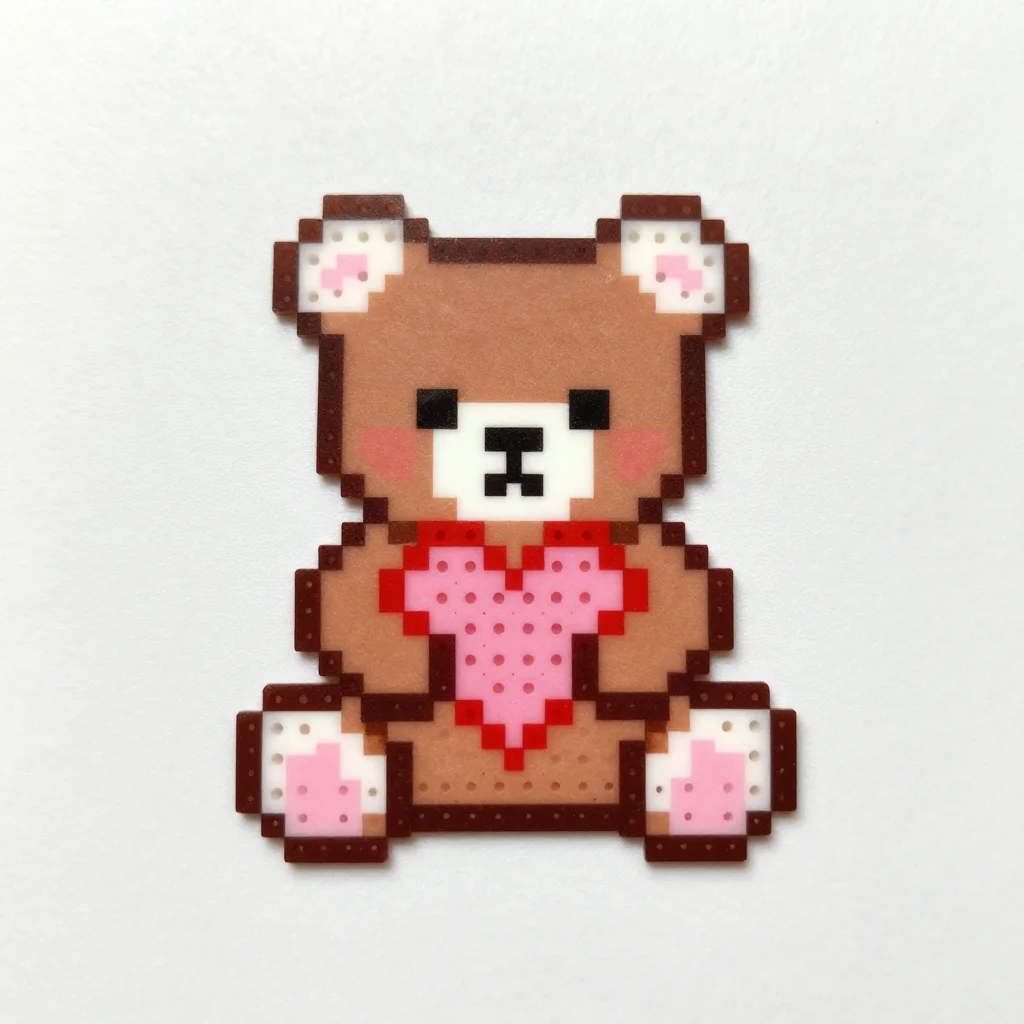
Valentine's pixel art is small pixel drawings to copy onto grid paper, into a game, as perler beads or in cross stitch. Each picture is one subject in crisp square pixels, magnified so every square can be counted. The three subjects are a sixteen-by-sixteen pixel heart, a pixel envelope with a red heart seal, and a teddy bear holding a heart. Type a subject, such as a cat, and the pixel art is drawn to it.
- a grid-paper craft for a child
- a perler bead Valentine's pattern
- a cross stitch or bead project for February
- a game sprite for a Valentine's build
Frequently asked questions
- How many pixels is the heart?
- Sixteen by sixteen. The teddy bear is about thirty pixels tall.
- Can I use these as perler beads?
- Yes. The bead style shows each pixel as a round fused bead, sitting in a square grid.
- What is the difference between the three styles?
- Classic 8-bit has a limited palette and a dark outline. Grid paper shows a thin gray line between squares, and perler beads show round beads with a hole in the middle.
- Can I change the subject?
- Yes. Type a subject such as a cat or a rose in the direction field, and the pixel art is drawn to that request.
About toile
This page is a showcase and a starting point: nine samples already rendered, three readings of the pack crossed with three styles, each shown at the size and ratio it was made for. Take any of them further on the wall with a few words, or ask for all nine again under your own direction; a sign-in keeps what you make, and it is free while Toile is new. The recipe behind each sample — the subject, the style, the palette, the framing — travels with the image rather than staying private to the render: it is in the alt text of every sample and in the page's own structured data, so a search engine reads the same handles a person would.