/valentines-quote-prints · season
Valentine's quote prints: Love is patient, All you need is love, Rumi
Make your ownValentine's quote prints
Describe yours. We'll remake the whole pack your way.
More like this
the whole catalog →

every sample — three subjects, three styles ↓
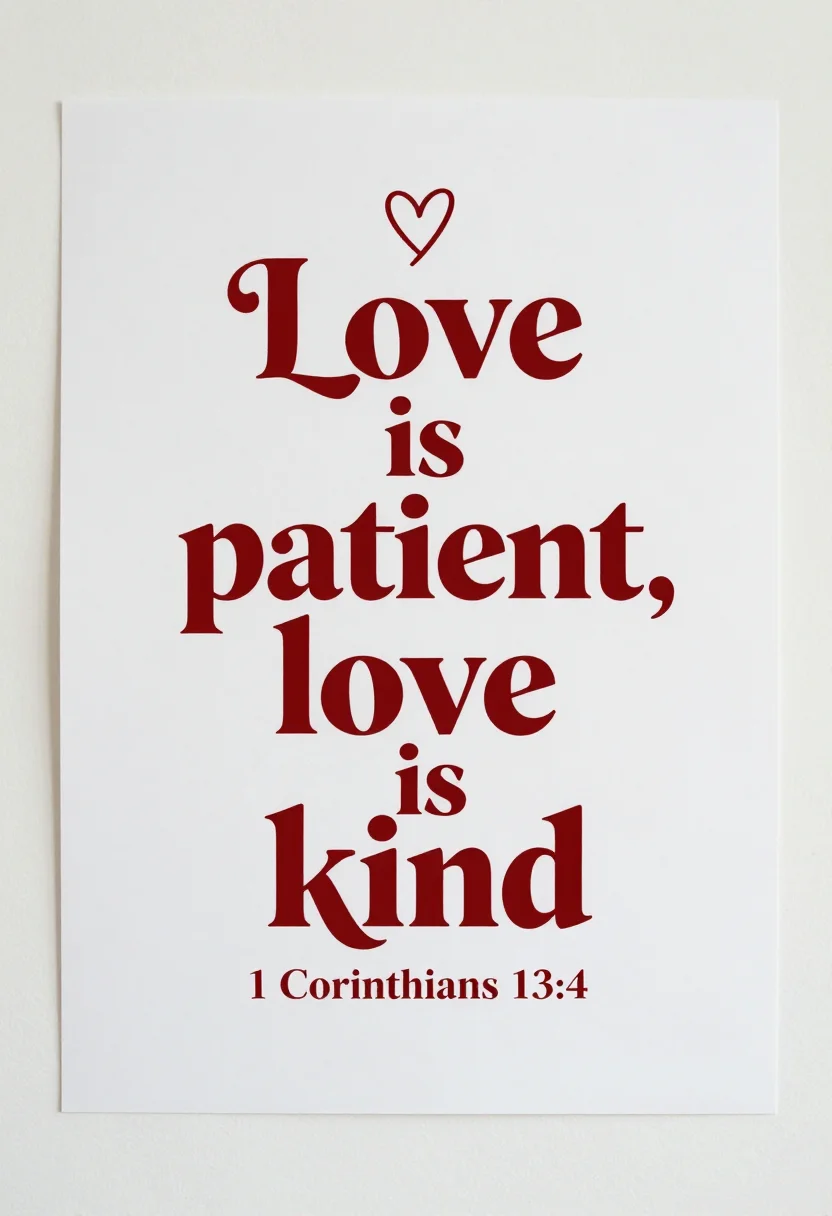
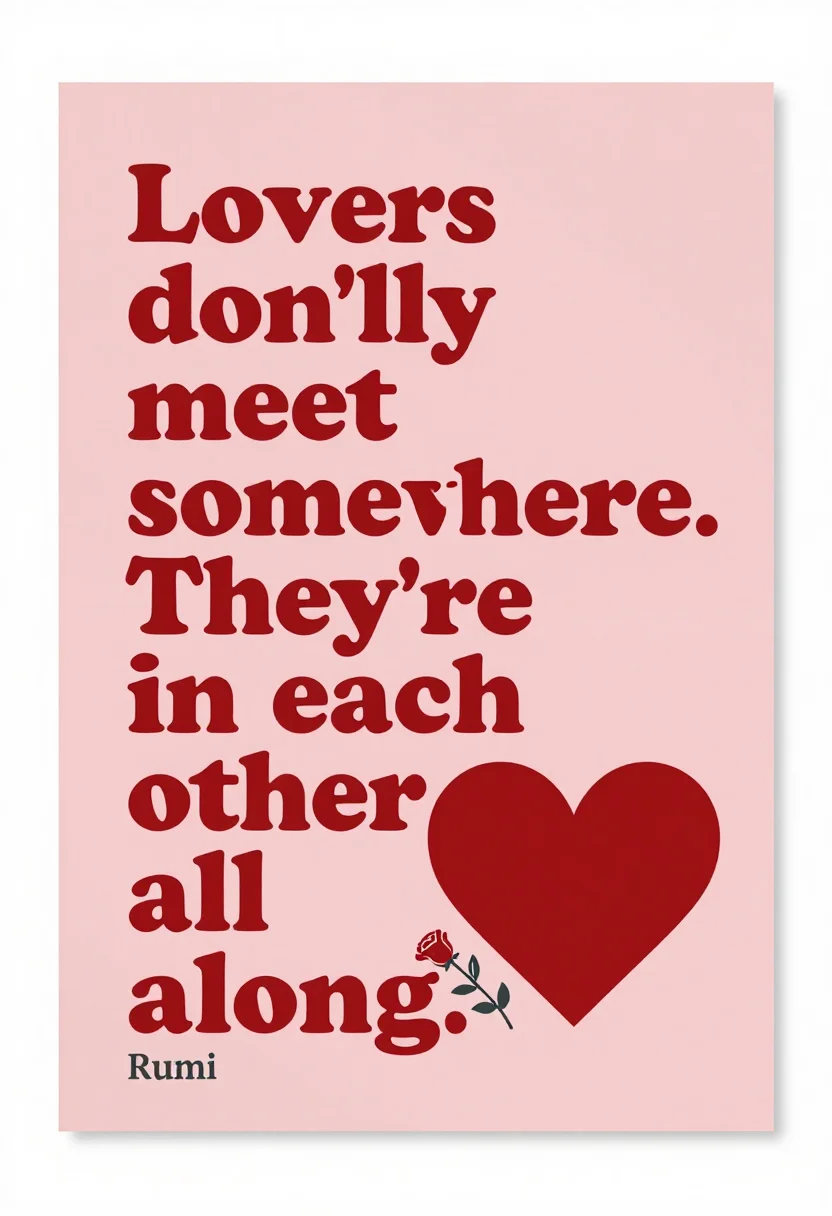
Valentine's quote prints are typographic pictures to frame for a mantel, a bedroom or a gift in February. Each sets one well-known line about love in exact words, with its attribution where there is one. The three lines are Love is patient, love is kind, All you need is love, and a line by Rumi. Each comes as elegant serif, hand-lettered brush or modern bold type. Type a source, such as a poem, and the print is drawn to it.
- a print for a bedroom wall
- a framed gift for a February anniversary
- a mantel print for the month
- a line of poetry on a bookshelf
Frequently asked questions
- Are the words exact?
- Yes. Each print sets its line in the words shown, with the attribution beneath where there is one.
- Who wrote these lines?
- The first line is from 1 Corinthians 13, the third is by the poet Rumi, and the middle line carries no attribution.
- What shape are the prints?
- Portrait-shaped, taller than wide, to hang on a wall.
- What is the difference between the three styles?
- Elegant serif has high-contrast type with spaced capitals and lots of white space. Hand-lettered has brush swashes, ink hearts and a watercolor wash, and modern bold has heavy stacked sans-serif with one flat heart.
About toile
This page is a showcase and a starting point: nine samples already rendered, three readings of the pack crossed with three styles, each shown at the size and ratio it was made for. Take any of them further on the wall with a few words, or ask for all nine again under your own direction; a sign-in keeps what you make, and it is free while Toile is new. The recipe behind each sample — the subject, the style, the palette, the framing — travels with the image rather than staying private to the render: it is in the alt text of every sample and in the page's own structured data, so a search engine reads the same handles a person would.