/voice-level-charts · classroom
Voice level chart printable: numbered chart, meter, hand signals
Make your ownVoice level charts
Describe yours. We'll remake the whole pack your way.
More like this
the whole catalog →

every sample — three subjects, three styles ↓
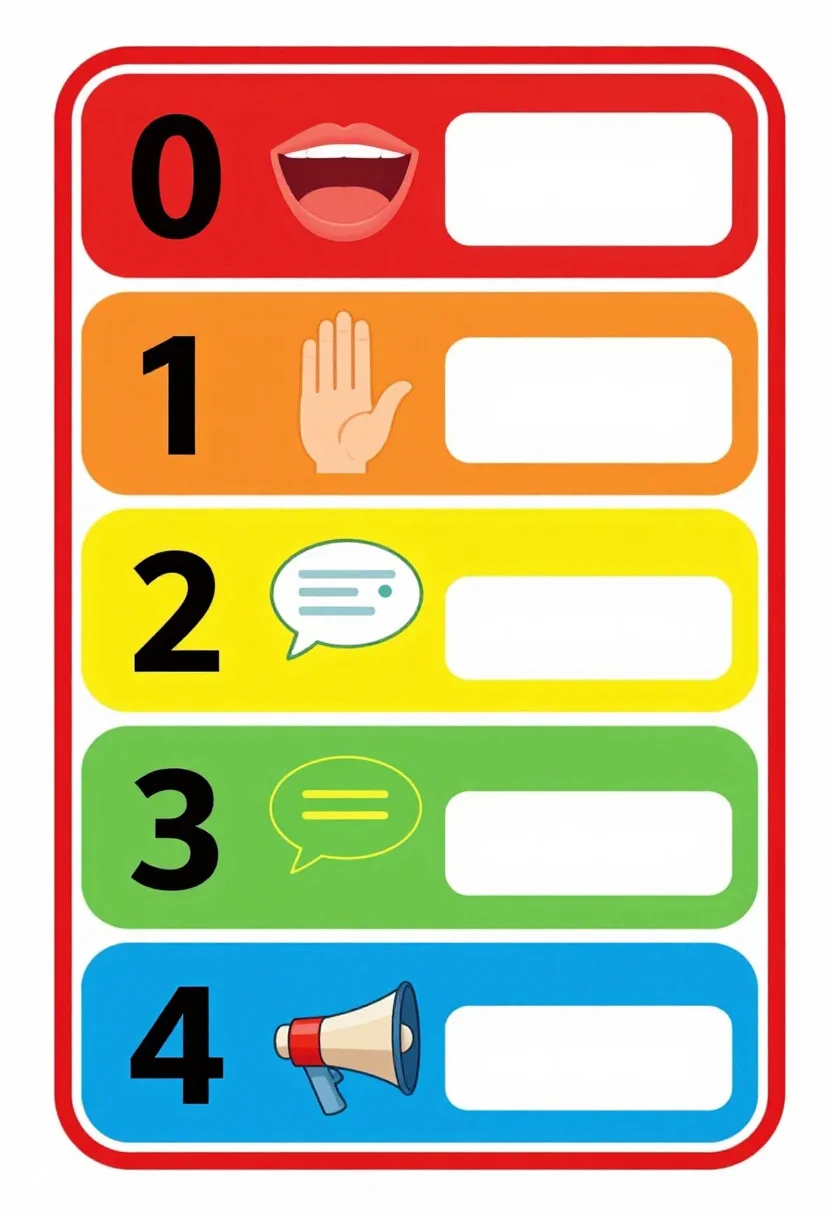
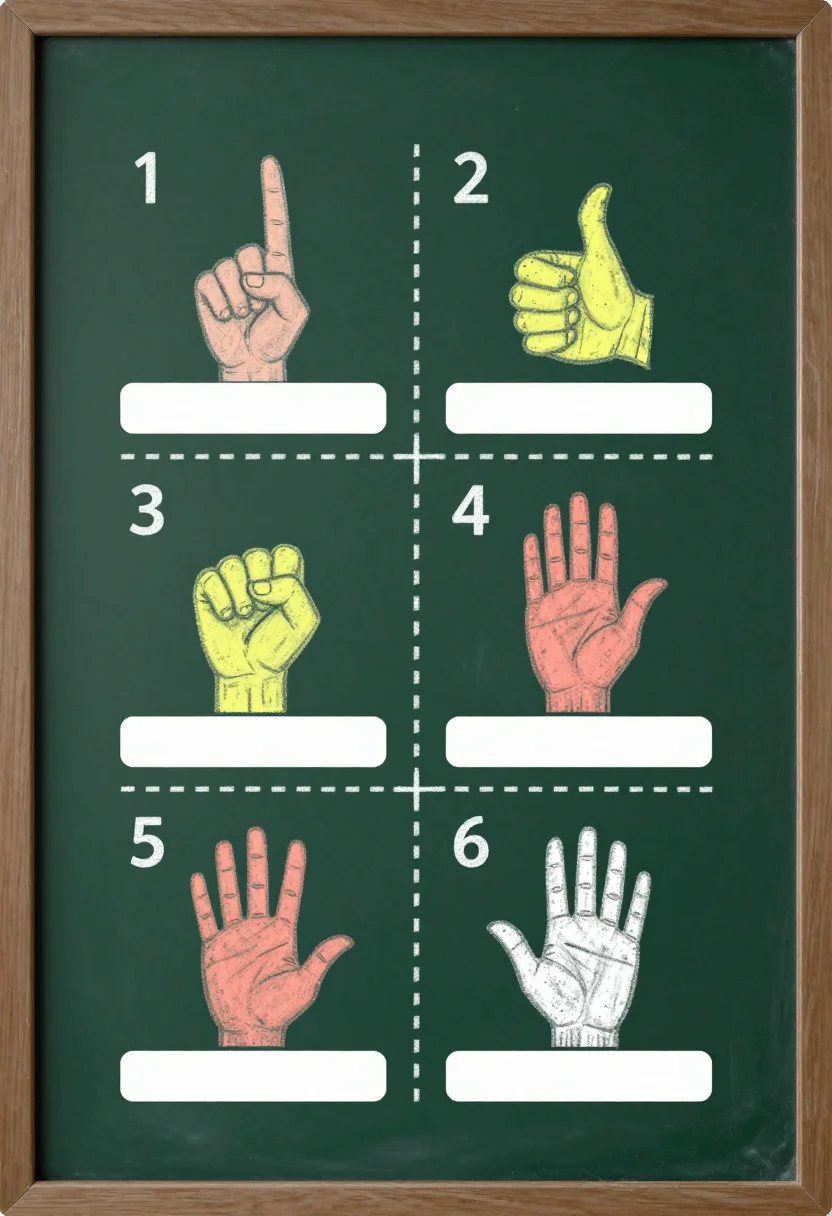
The classroom-management staple every wall needs: a numbered voice-level chart from silent to outside voice, a noise meter with a movable arrow, and a set of hand-signal cards. These nine come in bright, pastel and chalkboard looks; numbers and drawn icons carry it, and the labels print blank so a teacher can add the exact wording a class uses.
- a classroom voice level wall chart
- a library or cafeteria noise guide
- a substitute teacher's quick reference
- a home quiet-hours reminder
- a school hallway signage set
Frequently asked questions
- How many levels does the chart show?
- A numbered scale from silent through partner, group and presentation voices up to outside voice.
- Is the noise meter's arrow movable?
- The meter prints with a dial marked at each level — cut and attach a paper arrow, or point to the level directly.
- Can I get a different look or number of levels?
- Yes — the direction field takes style and level adjustments, and the same three formats redraw around it.
- What size do these print at?
- Portrait A4 proportions, sized to print at A4 or scale up for a classroom wall.
About toile
This page is a showcase and a starting point: nine samples already rendered, three readings of the pack crossed with three styles, each shown at the size and ratio it was made for. Take any of them further on the wall with a few words, or ask for all nine again under your own direction; a sign-in keeps what you make, and it is free while Toile is new. The recipe behind each sample — the subject, the style, the palette, the framing — travels with the image rather than staying private to the render: it is in the alt text of every sample and in the page's own structured data, so a search engine reads the same handles a person would.