/warli-animals · ornament
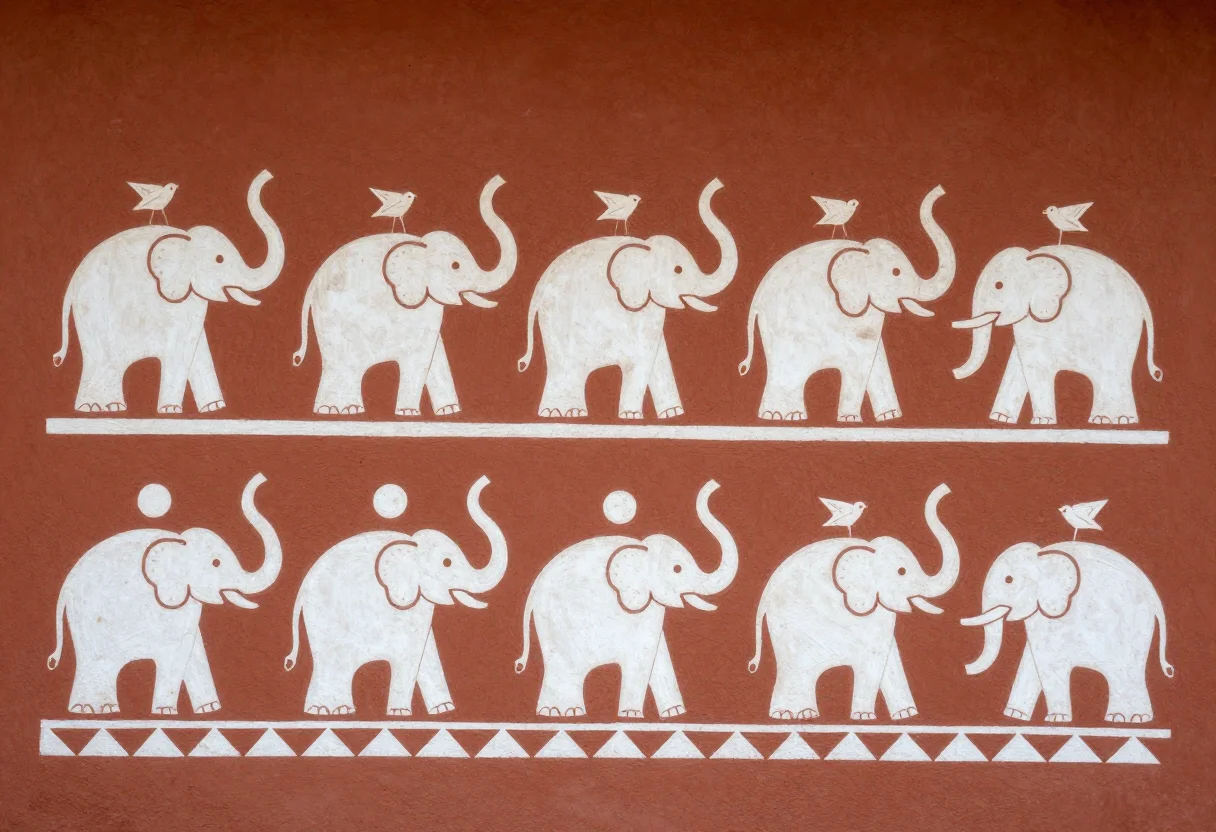
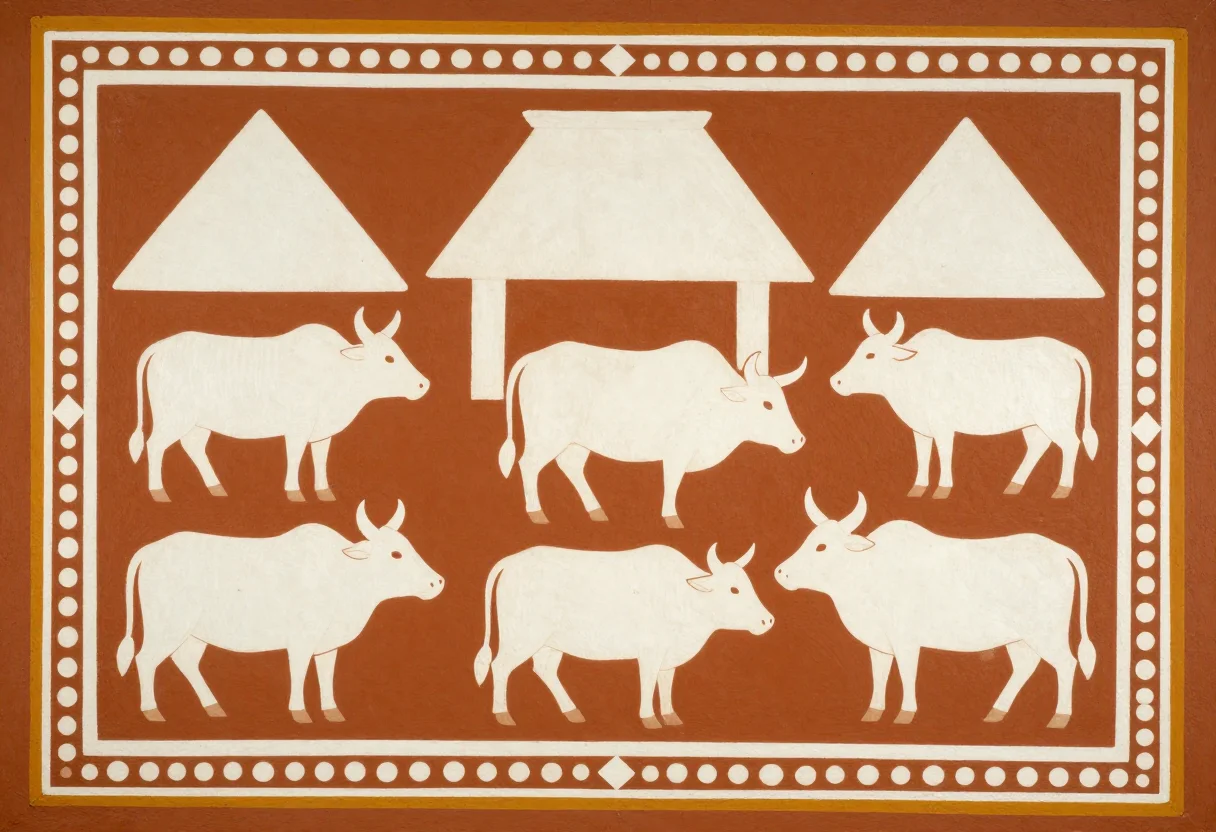
Warli animals: elephants in a row, dancing peacocks, cattle grazing
Make your ownWarli animals
Describe yours. We'll remake the whole pack your way.
More like this
the whole catalog →
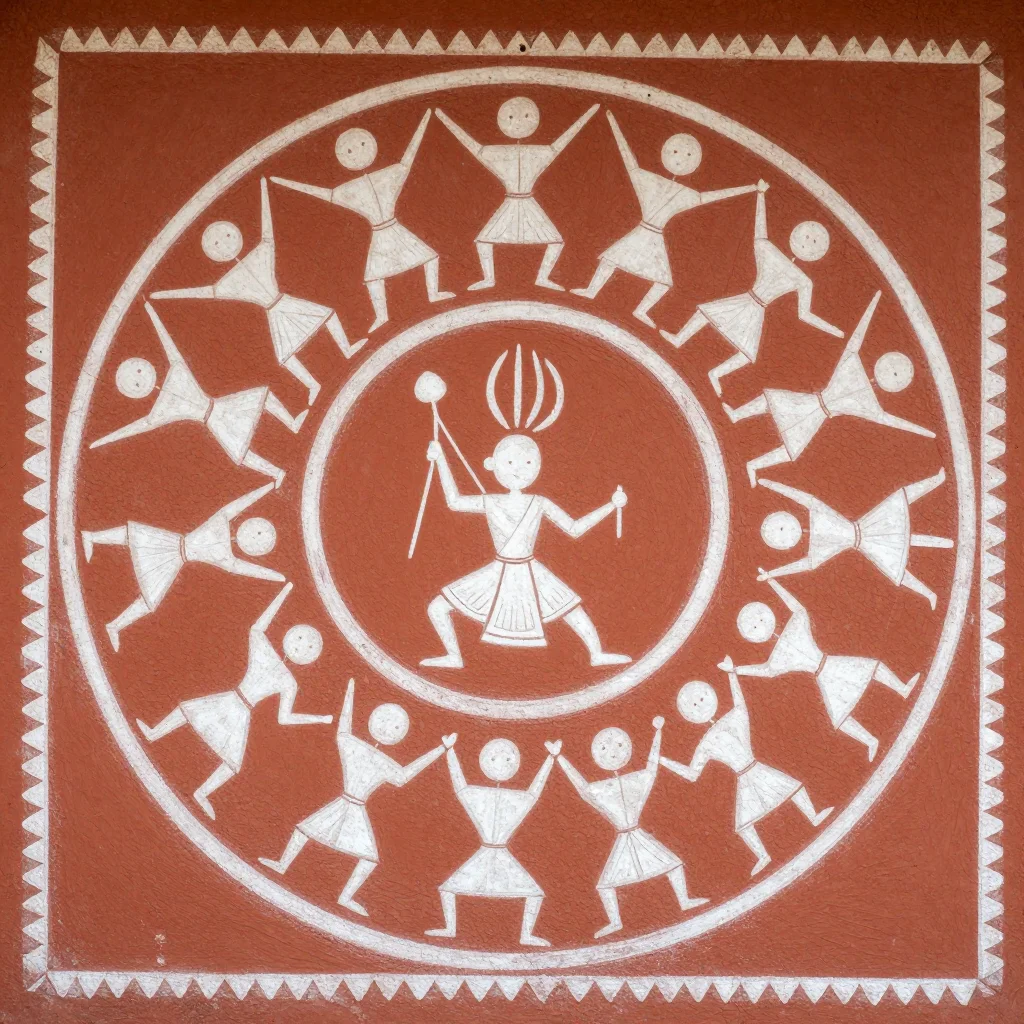
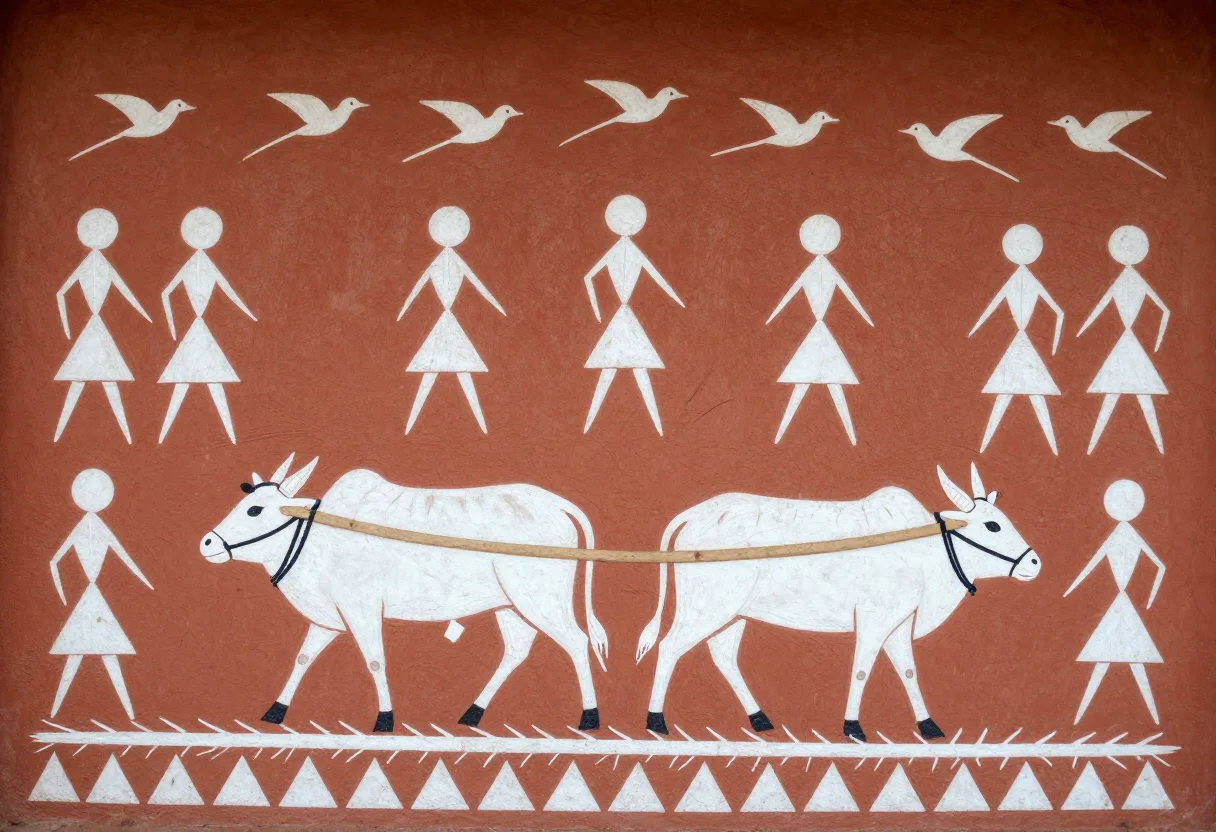
every sample — three subjects, three styles ↓
Warli animals built from triangles and circles, for students and decorators. The nine pictures show a row of elephants with small birds on their backs, two peacocks dancing under a tree, and cattle grazing by a hut. Each comes on a rice-paste mud wall, in crisp white on charcoal black, or as a bold print of cream figures on terracotta. Type a direction such as a tiger, and the figures carry it.
- a nursery or playroom wall
- a school project on Warli art
- a print for a kitchen or dining room
- a classroom bulletin board
Frequently asked questions
- What do the nine pictures show?
- Three animal scenes: a row of elephants, two peacocks dancing under a tree, and cattle grazing beside a hut.
- How do the three finishes differ?
- The mud-wall finish is white figures on earth red with a wobbly hand, the chalk finish is crisp white on charcoal black, and the print finish is cream figures on terracotta with a mustard border.
- Can I ask for a different animal?
- Yes. Type the change as a direction, such as a tiger or single animal. It is a request for that look, not a promised result.
About toile
This page is a showcase and a starting point: nine samples already rendered, three readings of the pack crossed with three styles, each shown at the size and ratio it was made for. Take any of them further on the wall with a few words, or ask for all nine again under your own direction; a sign-in keeps what you make, and it is free while Toile is new. The recipe behind each sample — the subject, the style, the palette, the framing — travels with the image rather than staying private to the render: it is in the alt text of every sample and in the page's own structured data, so a search engine reads the same handles a person would.