/wedding-programs · occasions
Wedding programs: church order of service, Hindu ceremony, fan program
Make your ownWedding programs
Describe yours. We'll remake the whole pack your way.
More like this
the whole catalog →


every sample — three subjects, three styles ↓
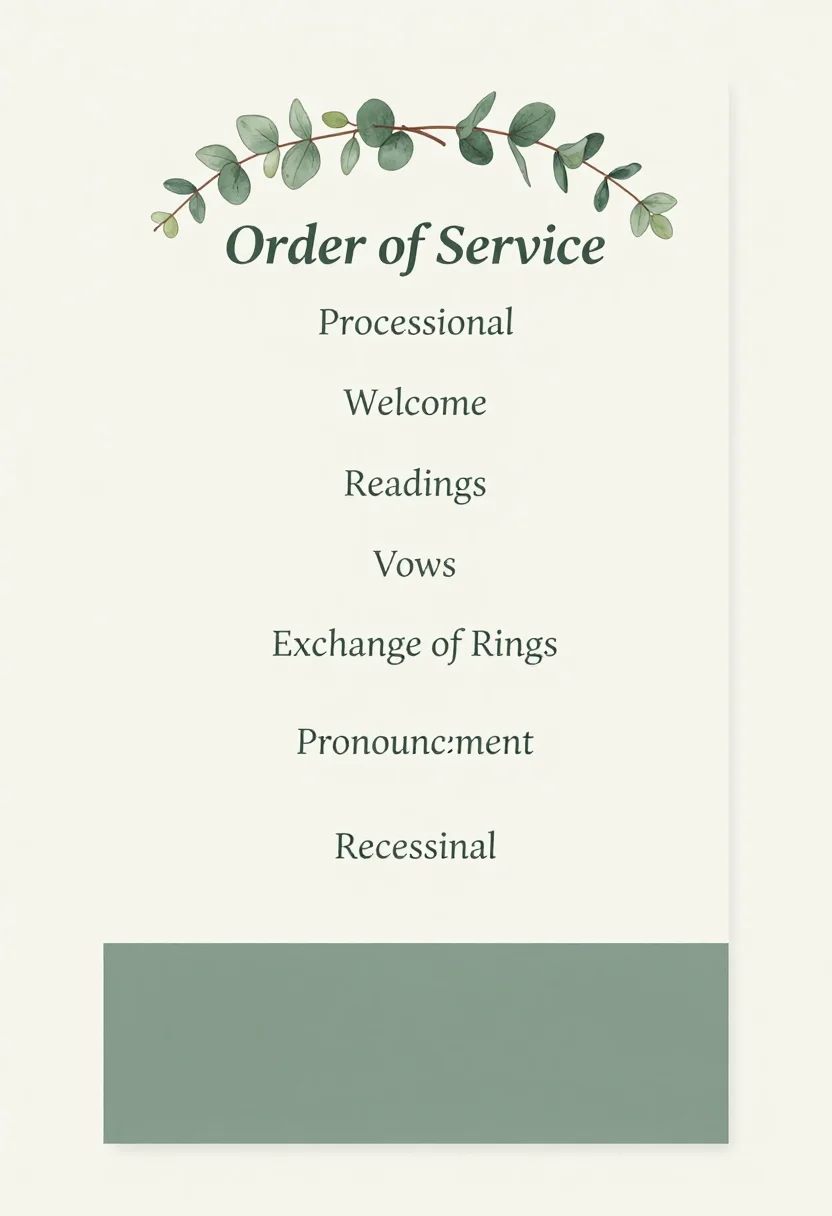
Couples hand these to guests as they take their seats, to follow the ceremony. One is a church order of service, listing the processional, readings, vows, exchange of rings and recessional. One is a Hindu ceremony guide, naming each ritual from the baraat to the vidaai. One is a fan program for a summer wedding. The nine samples are three programs in three finishes. Type a look, such as navy and blush, and the layout takes it.
- a church wedding for guests
- a Hindu wedding with a ceremony guide
- a summer garden wedding with fan programs
- a printed guide for a family celebration
Frequently asked questions
- Which order of service is shown?
- A church program listing the processional, welcome, readings, vows, exchange of rings, pronouncement and recessional.
- What rituals does the Hindu guide name?
- Baraat, Milni, Jaimala, Kanyadaan, Mangal Phere, Sindoor Daan and Vidaai, with a blank line under each for a short explanation.
- Can I put the names in?
- Yes. The programs have blank lines for names, which you can write in or add before printing.
- What is the difference between the finishes?
- Greenery is a fine eucalyptus drawing in sage on ivory, marigold has a festive garland border with gold ink, and modern is black on white with a thin frame.
About toile
This page is a showcase and a starting point: nine samples already rendered, three readings of the pack crossed with three styles, each shown at the size and ratio it was made for. Take any of them further on the wall with a few words, or ask for all nine again under your own direction; a sign-in keeps what you make, and it is free while Toile is new. The recipe behind each sample — the subject, the style, the palette, the framing — travels with the image rather than staying private to the render: it is in the alt text of every sample and in the page's own structured data, so a search engine reads the same handles a person would.