/bhogi-kolam · faith
Bhogi kolam: bonfire, gobbemma muggu, sugarcane border
Make your ownBhogi kolam
Describe yours. We'll remake the whole pack your way.
More like this
the whole catalog →



every sample — three subjects, three styles ↓
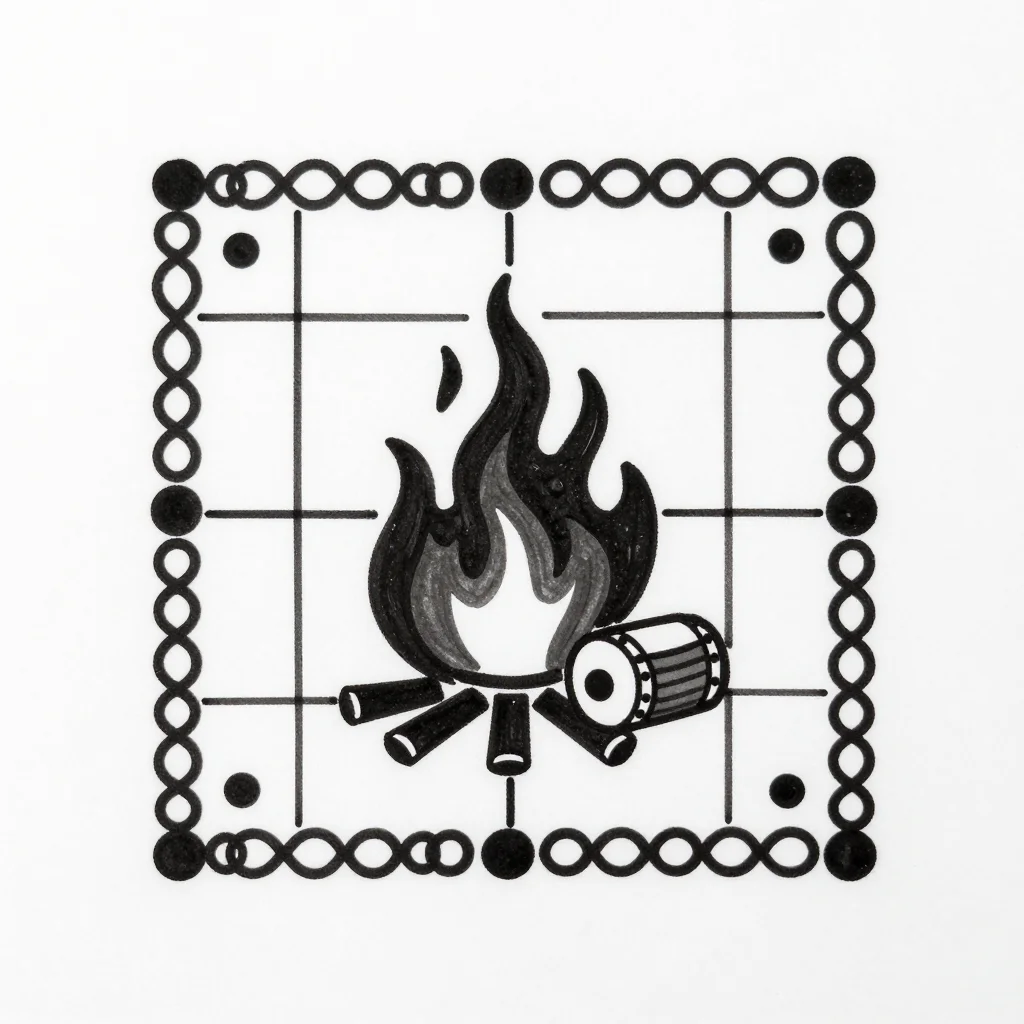
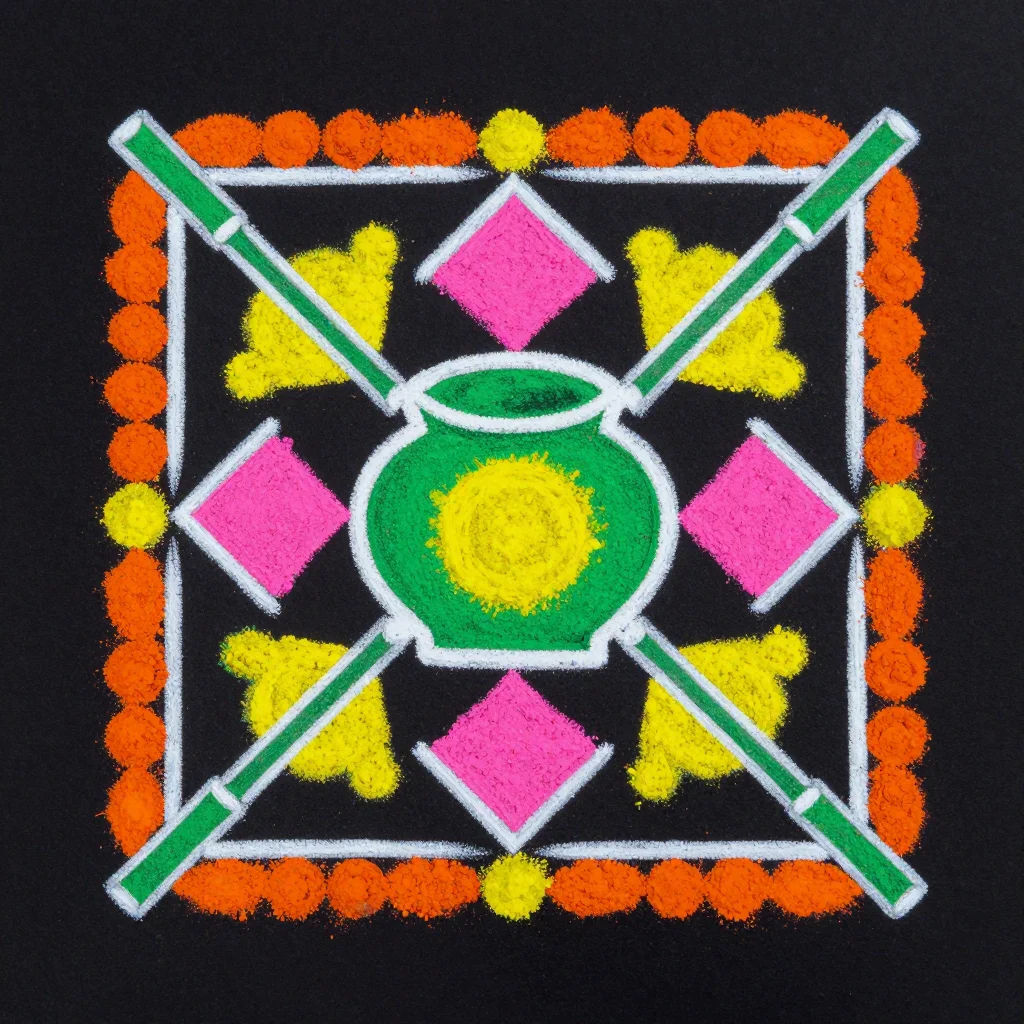
The kolam, or muggu in Telugu homes, drawn on Bhogi, the first day of the harvest festival, when old things are burned in the dawn bonfire. The nine show a bonfire with curling flames, a chukkala muggu with three cones, and a square kolam with sugarcane at each corner. Each is a design to copy, with its dot grid where it has one. Type a different design and the muggu is made to that request.
- a doorstep muggu for Bhogi morning
- a design to practise for a Telugu festival
- a pattern for a school or community kolam display
- a dot-grid practice sheet for children
Frequently asked questions
- What does the dot grid show?
- Where a design has one, the bold dots are the guide, so the lines can be drawn round them and counted.
- Is Bhogi the same as Pongal?
- No. Bhogi is the first day of the Telugu harvest festival, marked with the muggu; Pongal is the Tamil harvest festival, with its own kolam.
- What is the difference between the three styles?
- Dot grid is black lines on white with the dots visible; chalk is white lines on a dark terracotta floor; colour is white outlines filled with rangoli powder on black.
- Can I change the design?
- Yes. Type a different design, such as simple or with lamps, and the muggu is made to that request.
About toile
This page is a showcase and a starting point: nine samples already rendered, three readings of the pack crossed with three styles, each shown at the size and ratio it was made for. Take any of them further on the wall with a few words, or ask for all nine again under your own direction; a sign-in keeps what you make, and it is free while Toile is new. The recipe behind each sample — the subject, the style, the palette, the framing — travels with the image rather than staying private to the render: it is in the alt text of every sample and in the page's own structured data, so a search engine reads the same handles a person would.