/blood-type-charts · classroom
Blood type chart: donor grid, the four blood groups, inheritance
Make your ownBlood type charts
Describe yours. We'll remake the whole pack your way.
More like this
the whole catalog →
every sample — three subjects, three styles ↓
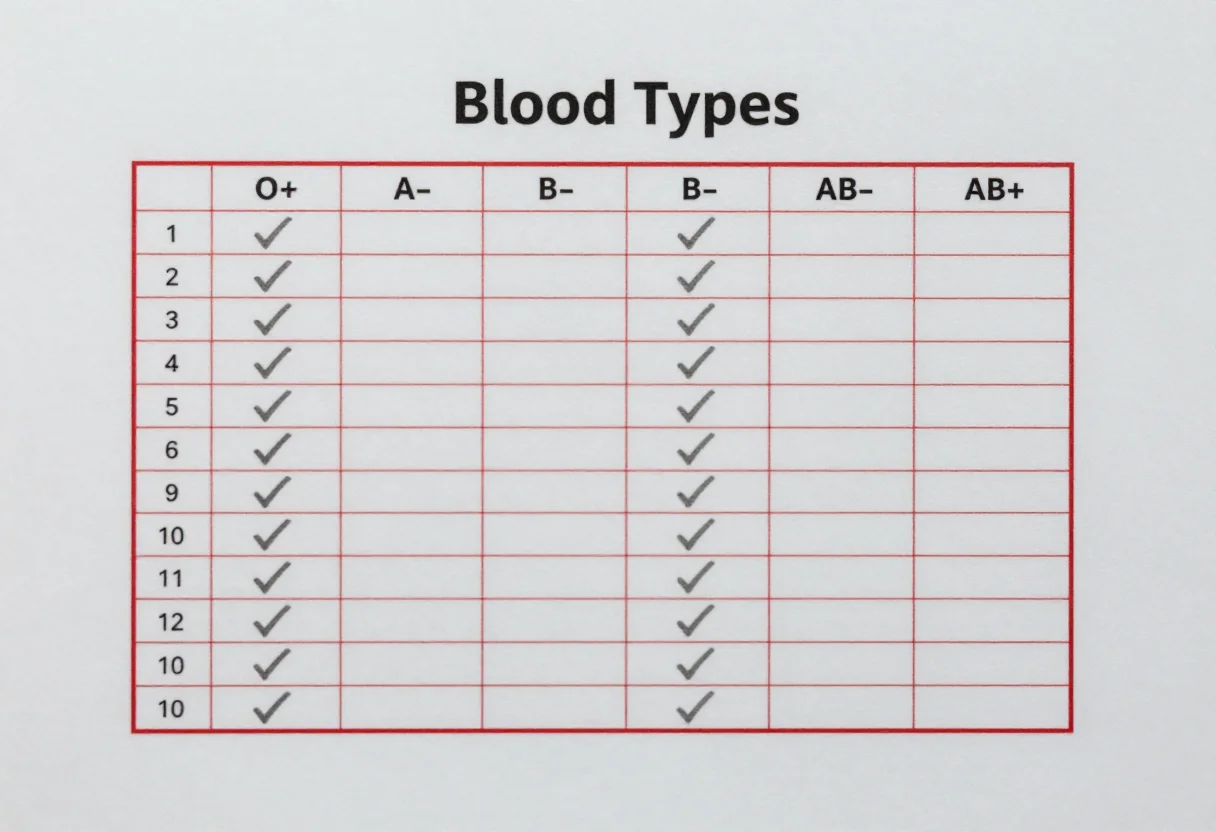
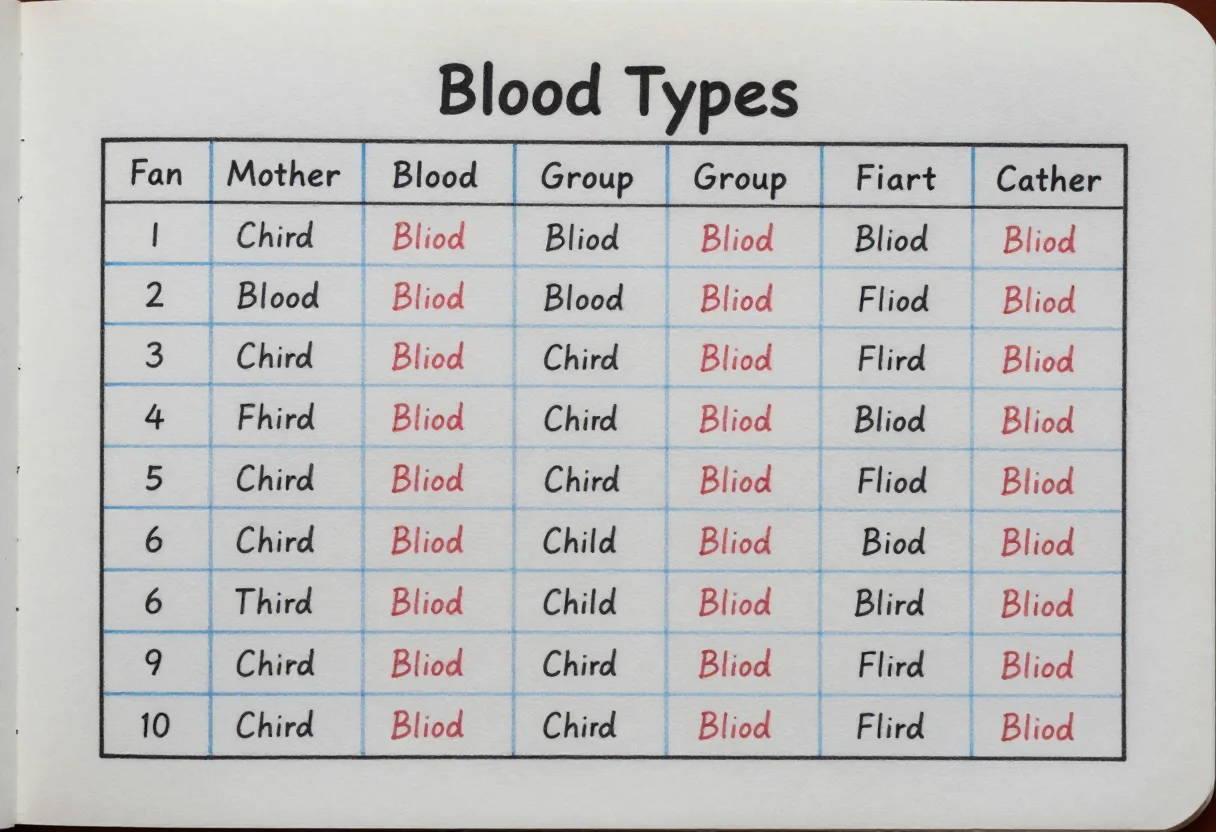
A blood type chart for students, nurses and blood donors. The donor grid lists the eight blood types as donors and recipients, with a tick where a match works. The second chart shows the four groups with their antigens. The third is an inheritance table for a mother's and a father's blood groups. Type a direction, such as Rh factor, and the picture will try it.
- a biology or health class lesson
- a reference for blood donation drives
- a nursing student's study sheet
- a poster for a school health room
Frequently asked questions
- What do the nine pictures show?
- Three charts in three styles: a donor and recipient compatibility grid, a chart of the four blood groups with their antigens, and a parents' inheritance table.
- Which blood type is marked as the universal donor?
- The grid marks O negative as the universal donor and AB positive as the universal recipient.
- What is the difference between the three styles?
- The clinic chart uses thin ruled cells in red and dark gray, the wall poster uses bold red and blue blocks, and the study sheet is hand-drawn with a red highlighter.
- Is this chart a substitute for a medical test?
- No. It is a reference chart; a blood type is confirmed by a test, not by a picture.
About toile
This page is a showcase and a starting point: nine samples already rendered, three readings of the pack crossed with three styles, each shown at the size and ratio it was made for. Take any of them further on the wall with a few words, or ask for all nine again under your own direction; a sign-in keeps what you make, and it is free while Toile is new. The recipe behind each sample — the subject, the style, the palette, the framing — travels with the image rather than staying private to the render: it is in the alt text of every sample and in the page's own structured data, so a search engine reads the same handles a person would.