/bounty-boards · tabletop
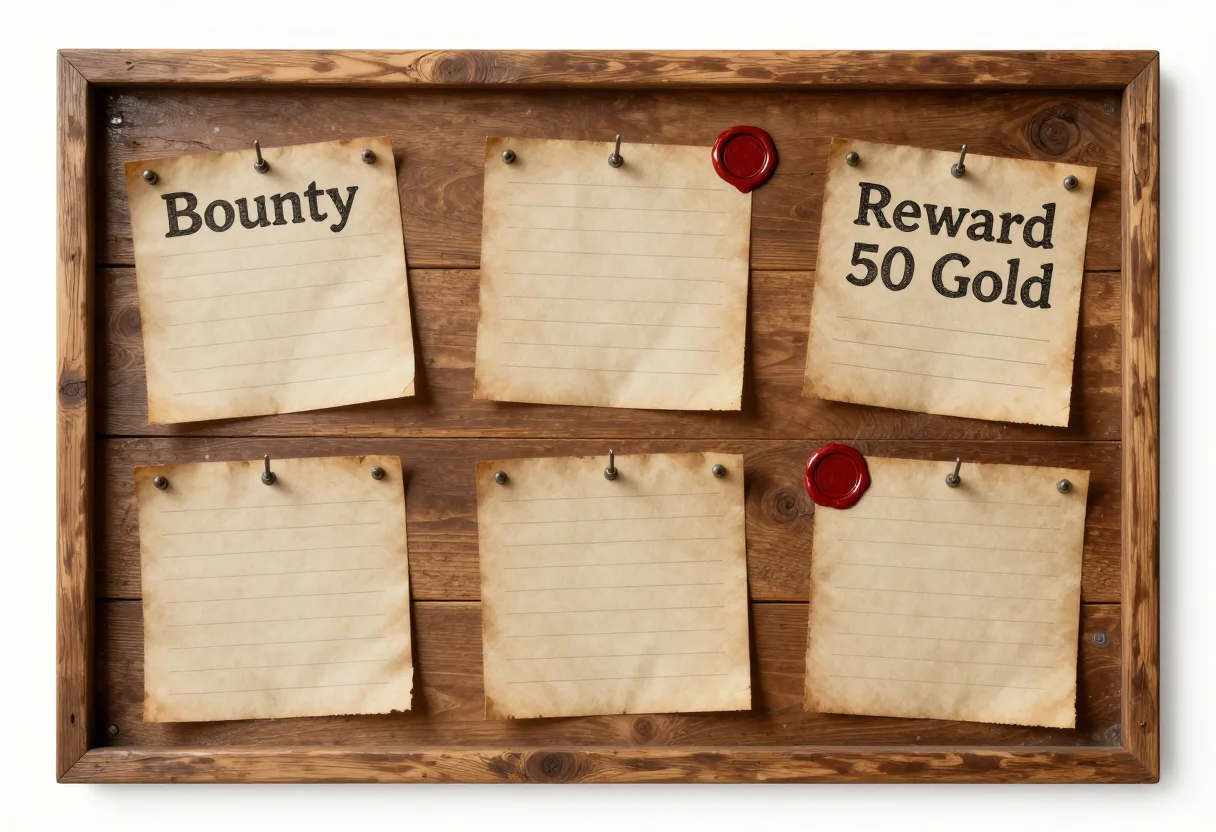
Bounty boards: full notice board, reward notice, blank board
Make your ownBounty boards
Describe yours. We'll remake the whole pack your way.
More like this
the whole catalog →
every sample — three subjects, three styles ↓
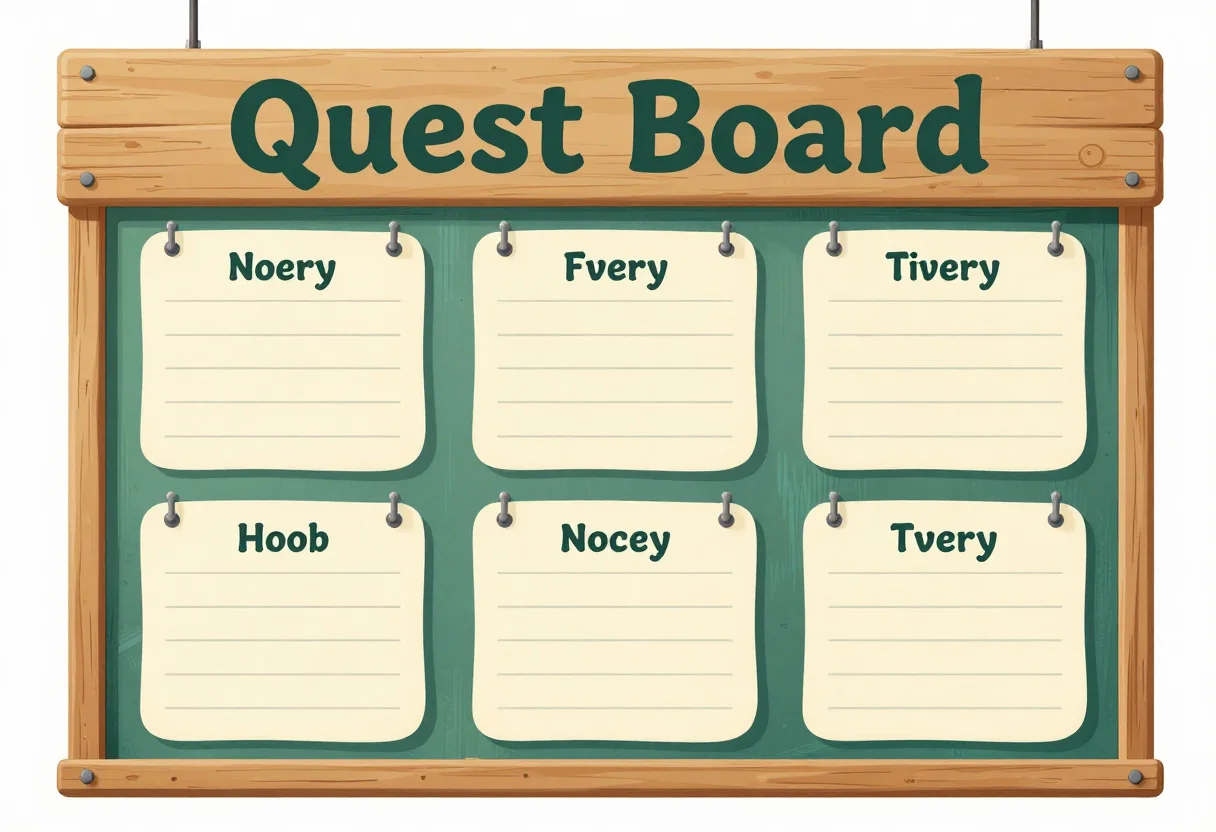
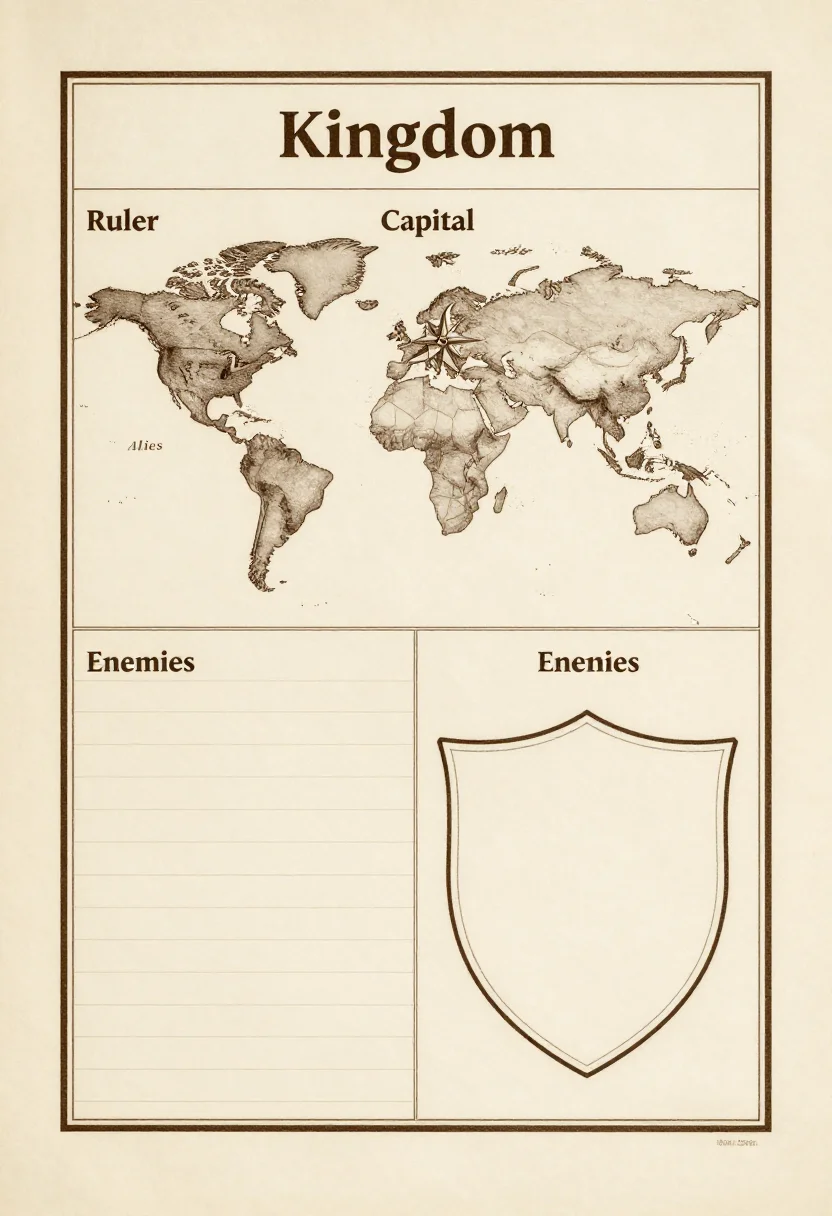
A bounty board is the job list pinned up in the tavern, so players choose their next quest from the notices. This pack shows a wooden board of five pinned notices, a single reward notice with an empty box for the target, and a board of six blank notices. Each comes as tavern wood, woodcut or storybook. Type a setting, such as pirate port, winter or royal, and the board keeps its notices.
- a quest board at the start of a session
- a single reward notice handed to one player
- a blank board for jobs written during play
- a printed prop for a tavern scene
Frequently asked questions
- What do the nine pictures show?
- Three readings in three styles: a full wooden board of pinned notices, a single reward notice, and a board of six blank notices.
- Can I print it on a landscape page?
- Yes. Each board is laid out on one horizontal page with an even margin, so it prints as a single sheet.
- Can I fill the blank notices by hand?
- Yes. Each blank notice has a title line and ruled lines for the job, left empty for writing.
- How do the three styles differ?
- Tavern wood has weathered planks, paper notices and rough ink lettering. Woodcut is black ink only. Storybook has soft painted planks and cheerful green, teal and yellow.
About toile
This page is a showcase and a starting point: nine samples already rendered, three readings of the pack crossed with three styles, each shown at the size and ratio it was made for. Take any of them further on the wall with a few words, or ask for all nine again under your own direction; a sign-in keeps what you make, and it is free while Toile is new. The recipe behind each sample — the subject, the style, the palette, the framing — travels with the image rather than staying private to the render: it is in the alt text of every sample and in the page's own structured data, so a search engine reads the same handles a person would.