/bubble-numbers · illustration
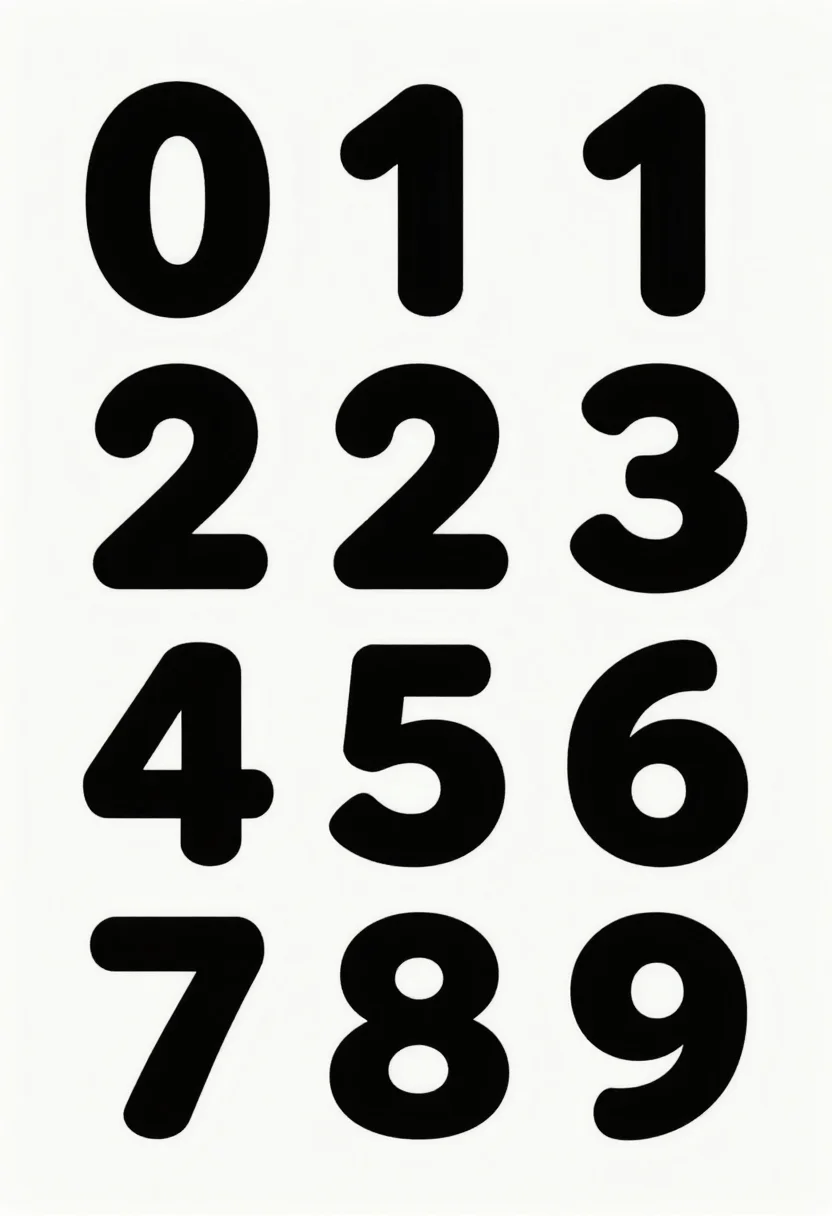
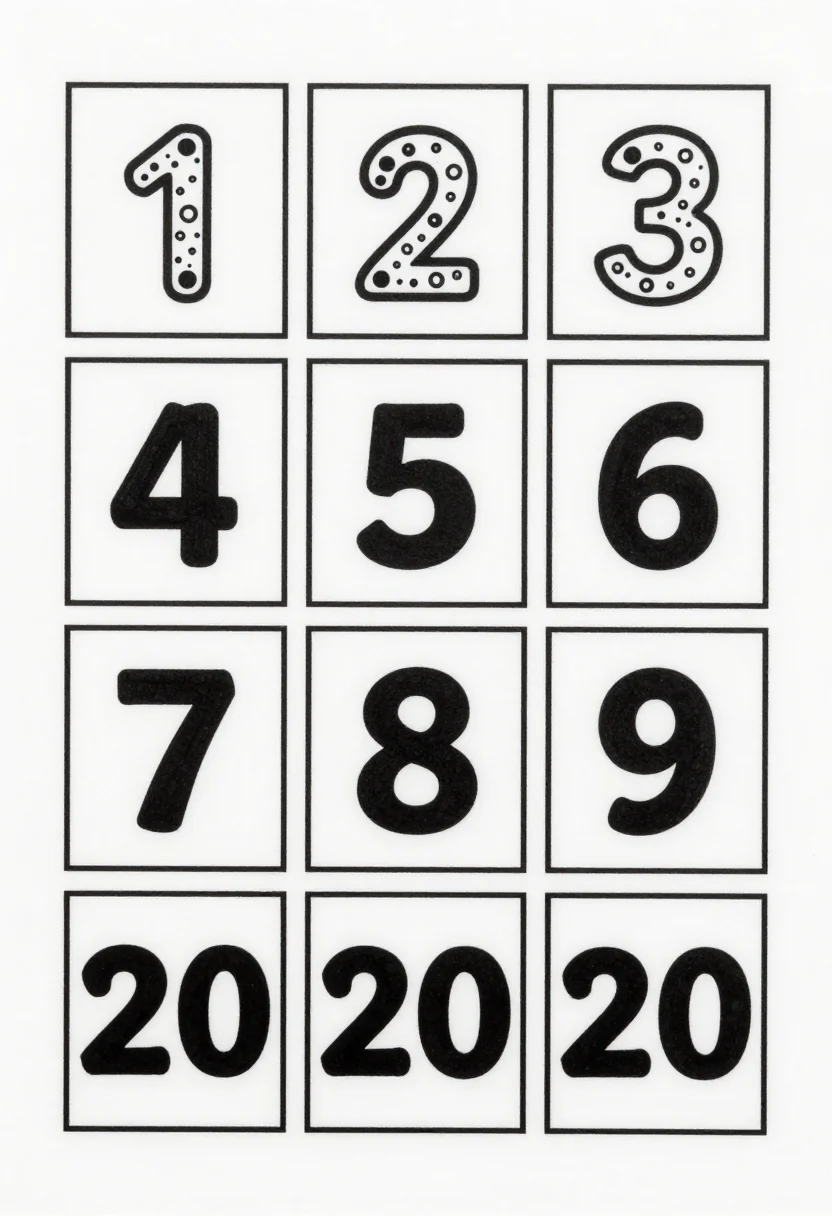
Bubble numbers: the digits 0 to 9, a birthday number, a counting chart
Make your ownBubble numbers
Describe yours. We'll remake the whole pack your way.
More like this
the whole catalog →

every sample — three subjects, three styles ↓
Bubble numbers are puffy outline digits for birthday signs, classroom counting walls and scoreboards. The nine sheets are black on white: the ten digits in one chart, a single large number to cut out, and a counting chart from 1 to 20 in boxes. Each comes plain, with stripes inside, or with dots and tiny stars inside. Ask for another number, a date or hearts, and the same outline is drawn for it.
- a birthday sign or age banner
- a classroom counting wall
- a scoreboard
- a number poster for a child's room
Frequently asked questions
- Which numbers are in the set?
- The first sheet has the digits 0 to 9, the second shows one large 5, and the third is a counting chart from 1 to 20.
- Can I get a number other than 5, or a date?
- Yes. Ask for another number, a date or hearts, and the same bubble outline is drawn for that subject. A different subject is a request, not a promised result.
- What are the stripes and dots for?
- They are patterns drawn inside the outline: parallel stripes on one set, and a scatter of dots and tiny stars on the other. The plain set has nothing inside.
- Are the numbers meant to be colored in?
- The plain outline is empty inside, ready to color. The striped and dotted sets have their patterns drawn inside each number.
About toile
This page is a showcase and a starting point: nine samples already rendered, three readings of the pack crossed with three styles, each shown at the size and ratio it was made for. Take any of them further on the wall with a few words, or ask for all nine again under your own direction; a sign-in keeps what you make, and it is free while Toile is new. The recipe behind each sample — the subject, the style, the palette, the framing — travels with the image rather than staying private to the render: it is in the alt text of every sample and in the page's own structured data, so a search engine reads the same handles a person would.