/childrens-day-cards · faith
Children's Day cards: red rose, from a teacher, kites and balloons
Make your ownChildren's Day cards
Describe yours. We'll remake the whole pack your way.
More like this
the whole catalog →
every sample — three subjects, three styles ↓
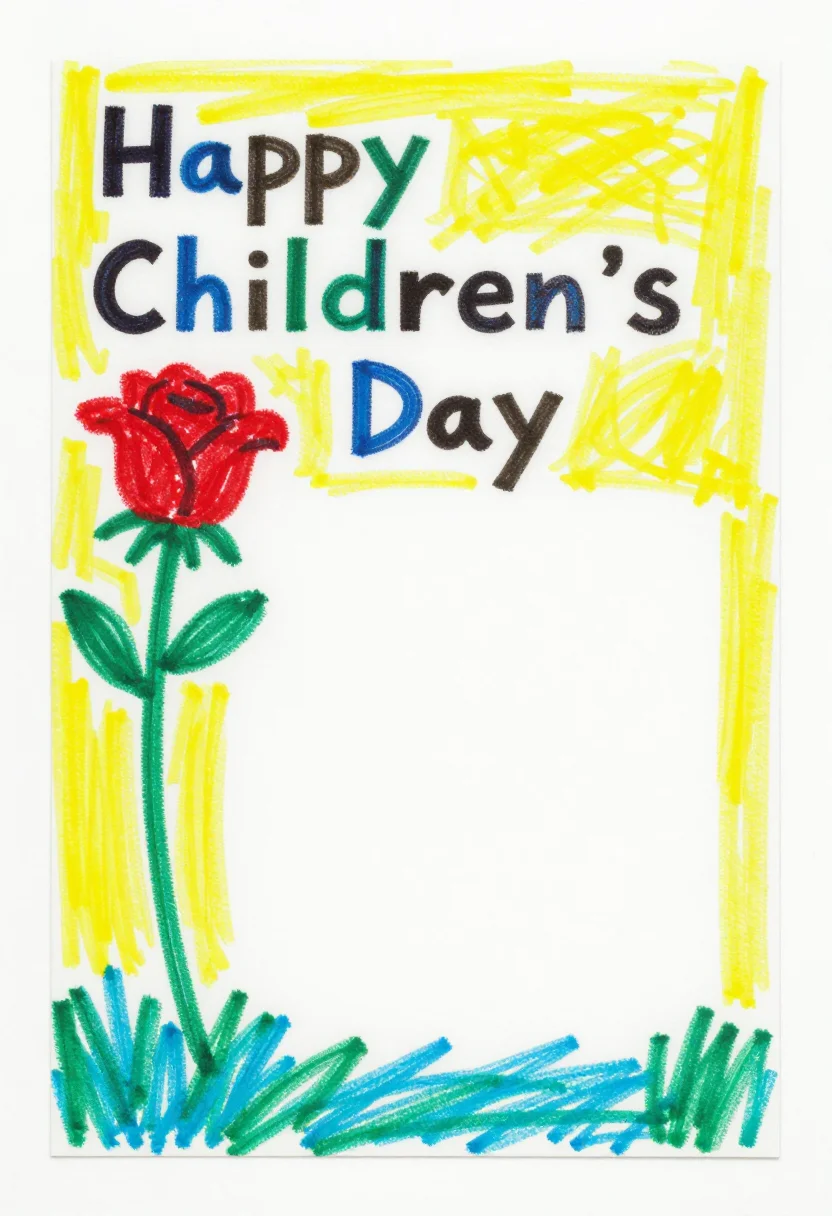
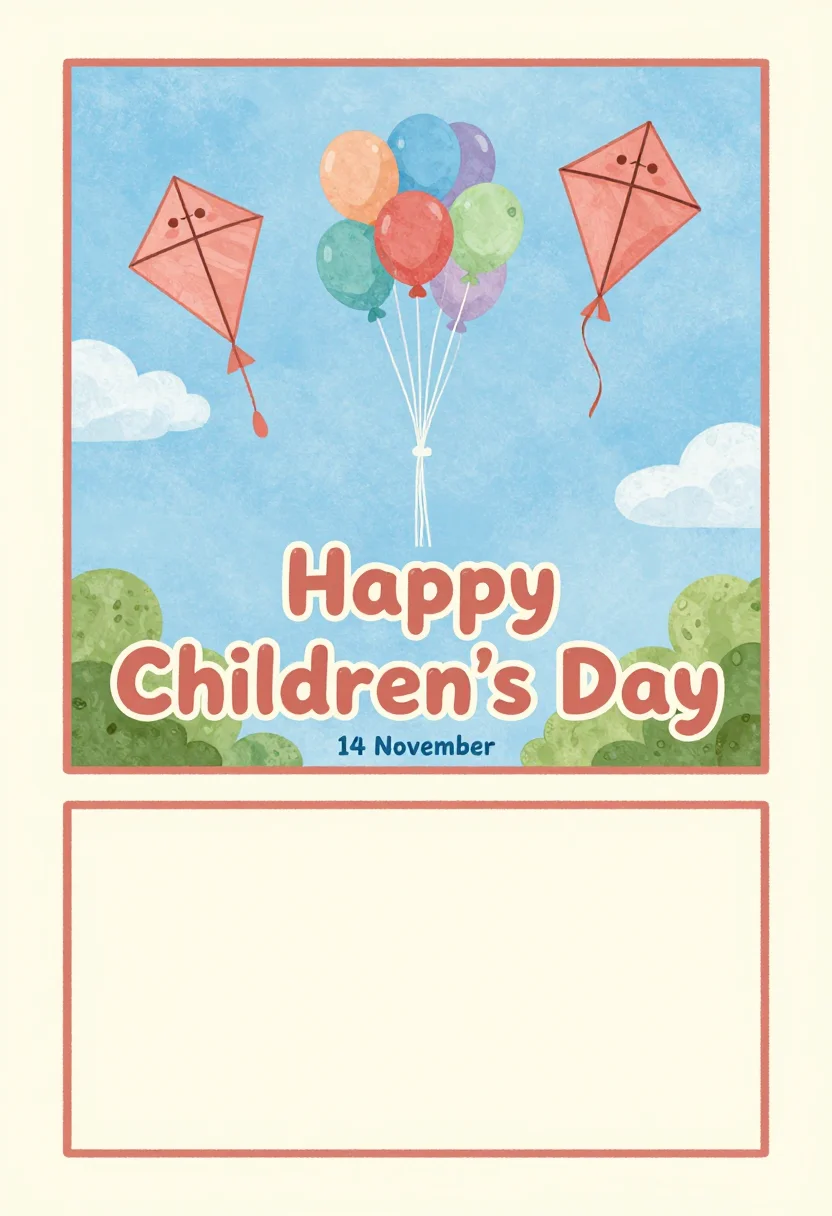
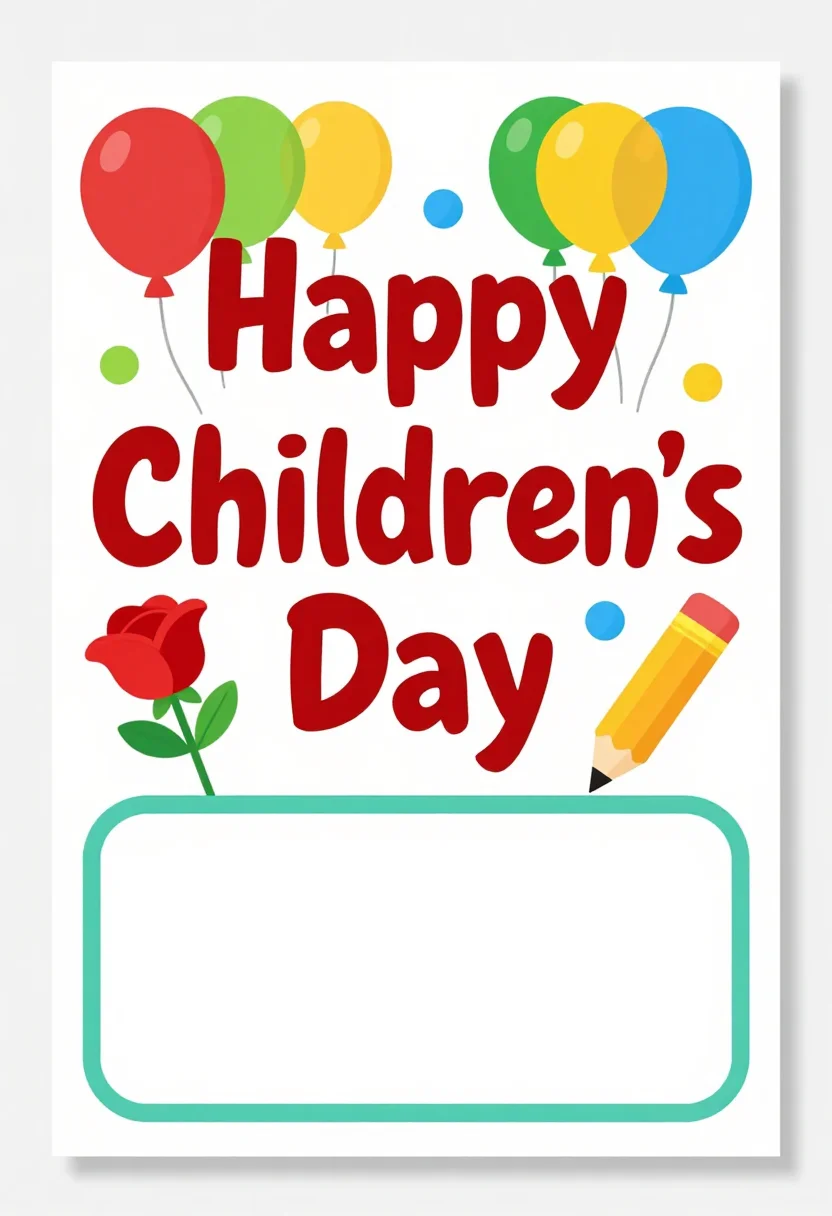
Printable greeting cards for Children's Day in India, marked on 14 November, Jawaharlal Nehru's birthday. Teachers send them to a class, parents to a child, and children make them for a friend. Each card carries 'Happy Children's Day', beside a red rose, a teacher's crayons and paper boat, or kites and balloons. The rose and teacher cards leave a clear panel for a name. Type a different twist, such as with balloons, and the same styles will carry it.
- a card from a teacher to the class
- a card a child makes for a friend
- a card from a parent to a child
- a classroom bulletin board
Frequently asked questions
- Is there room to write a name?
- Yes. The rose and teacher cards leave a clear empty panel below the greeting for a name or a message.
- Which style suits a card a child makes?
- The crayon drawing style looks hand-made, with waxy strokes and wobbly lettering; the paper collage suits a craft table.
- Why is Children's Day on 14 November?
- The date is Jawaharlal Nehru's birthday, and schools across India mark the day with cards, drawings and assemblies.
- Can I ask for a different twist?
- Yes. A direction such as with balloons or for a friend is a request for the design, not a promised result.
About toile
This page is a showcase and a starting point: nine samples already rendered, three readings of the pack crossed with three styles, each shown at the size and ratio it was made for. Take any of them further on the wall with a few words, or ask for all nine again under your own direction; a sign-in keeps what you make, and it is free while Toile is new. The recipe behind each sample — the subject, the style, the palette, the framing — travels with the image rather than staying private to the render: it is in the alt text of every sample and in the page's own structured data, so a search engine reads the same handles a person would.