/cinco-de-mayo-party · occasions
Cinco de Mayo party printables: papel picado, invitation and taco bar labels in three styles
Make your ownCinco de Mayo party printables
Describe yours. We'll remake the whole pack your way.
More like this
the whole catalog →


every sample — three subjects, three styles ↓
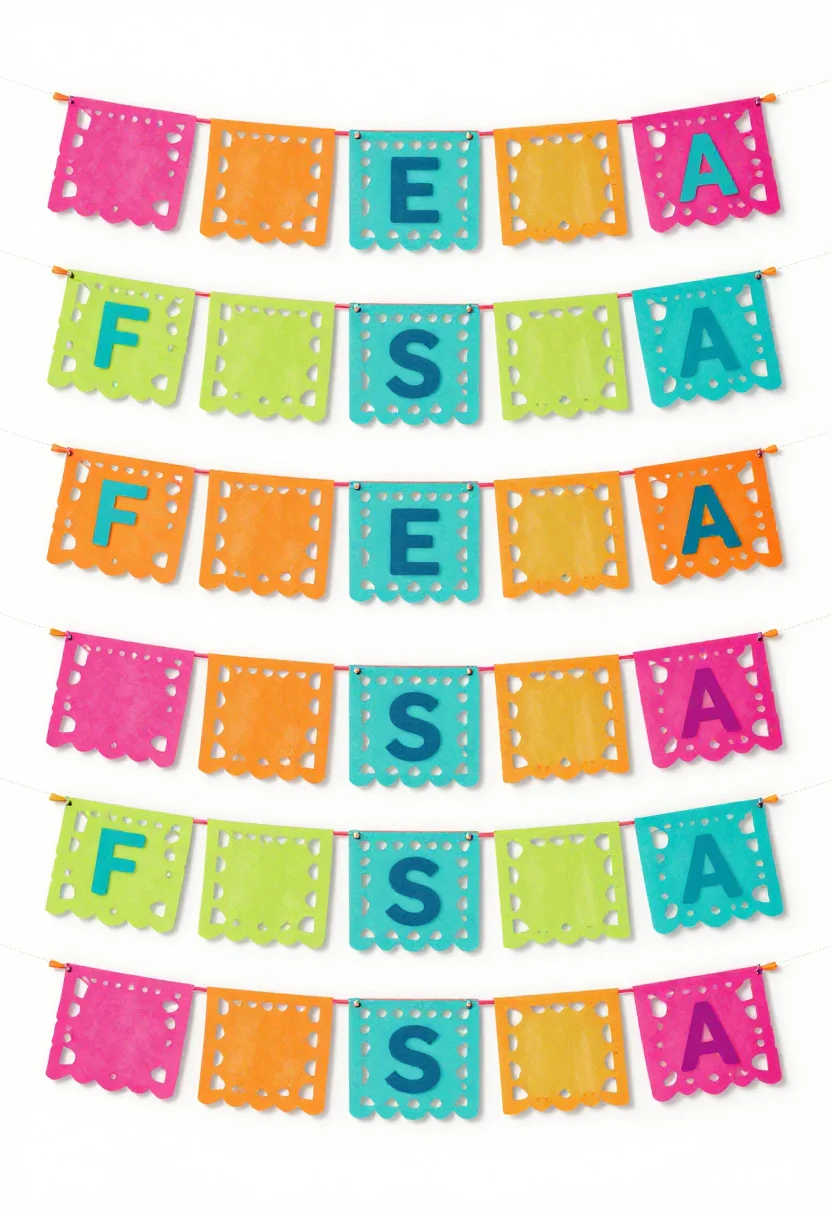
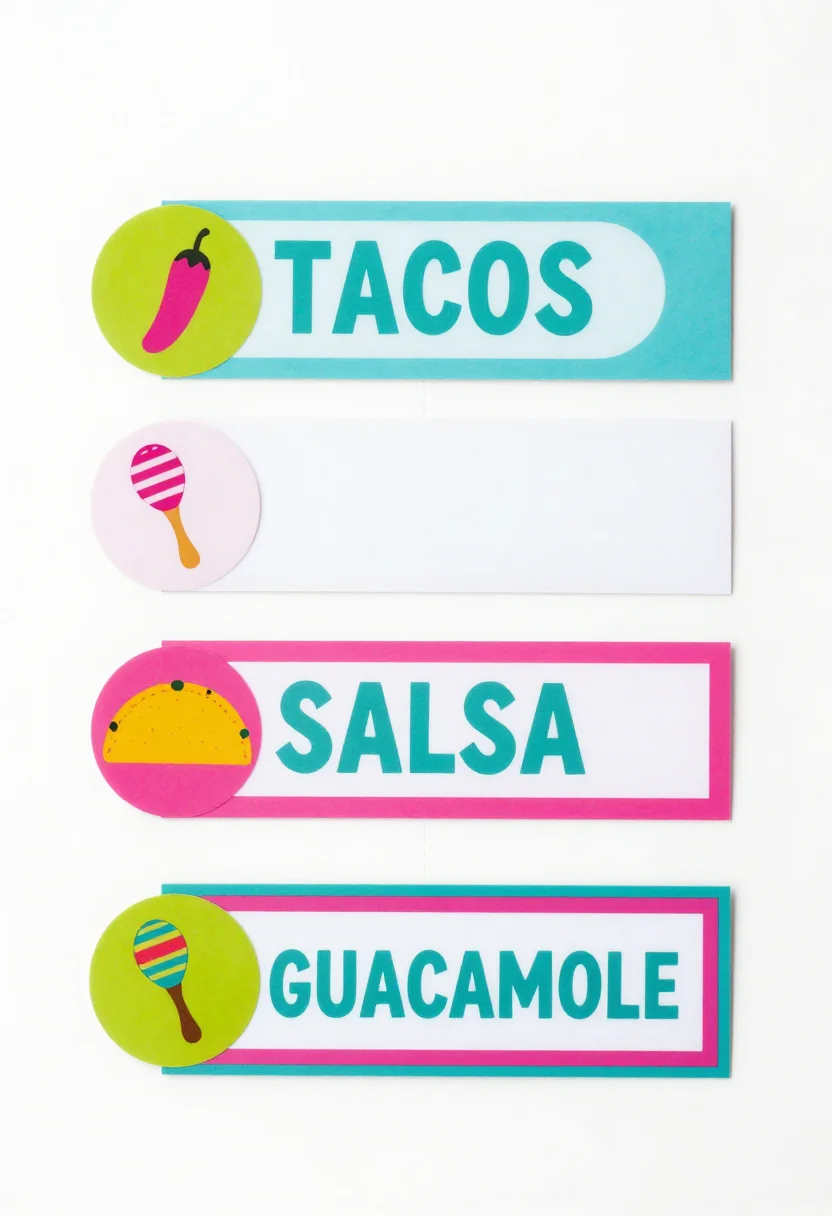
A Cinco de Mayo party runs on paper: papel-picado flags to cut and string, a fiesta invitation with the date left blank, taco-bar labels for the spread. Drawn in the paper-cut motif style, in hand-painted folk color, or in a modern flat palette — hot pink, orange, turquoise and lime carried through the set. Ask for pastel colors instead, or a drinks-bar sign added, and it redraws.
- papel-picado flags to string across the party
- a fiesta invitation to send
- taco-bar labels for the food table
- a matching cupcake-topper set
Frequently asked questions
- Do I cut the papel-picado flags myself?
- Yes — the flags are drawn as a printable strip with the cut pattern marked; cutting them out is the DIY step.
- What size do the sheets print at?
- Portrait A4 with even margins and cut lines, so labels and flags trim cleanly from standard paper or card stock.
- Can I get pastel colors instead of the bright palette?
- Yes — type 'in pastel colors' in the direction field and the same three treatments redraw in that palette.
- Would this work for a birthday instead of Cinco de Mayo?
- Ask for it 'for a birthday instead' and the fiesta motifs and layout carry over to that occasion.
About toile
This page is a showcase and a starting point: nine samples already rendered, three readings of the pack crossed with three styles, each shown at the size and ratio it was made for. Take any of them further on the wall with a few words, or ask for all nine again under your own direction; a sign-in keeps what you make, and it is free while Toile is new. The recipe behind each sample — the subject, the style, the palette, the framing — travels with the image rather than staying private to the render: it is in the alt text of every sample and in the page's own structured data, so a search engine reads the same handles a person would.