/class-schedule-charts · classroom
Class schedule charts: visual schedule, weekly timetable, daily schedule
Make your ownClass schedule charts
Describe yours. We'll remake the whole pack your way.
More like this
the whole catalog →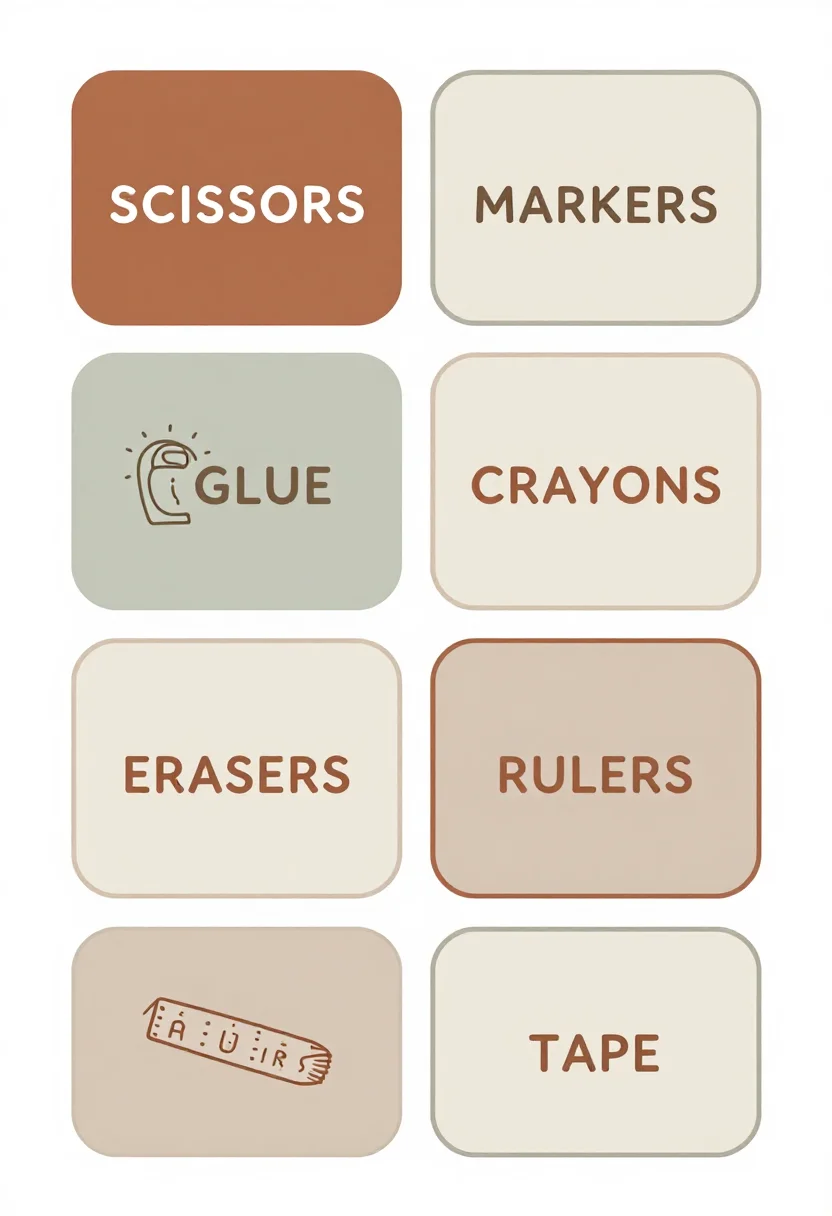
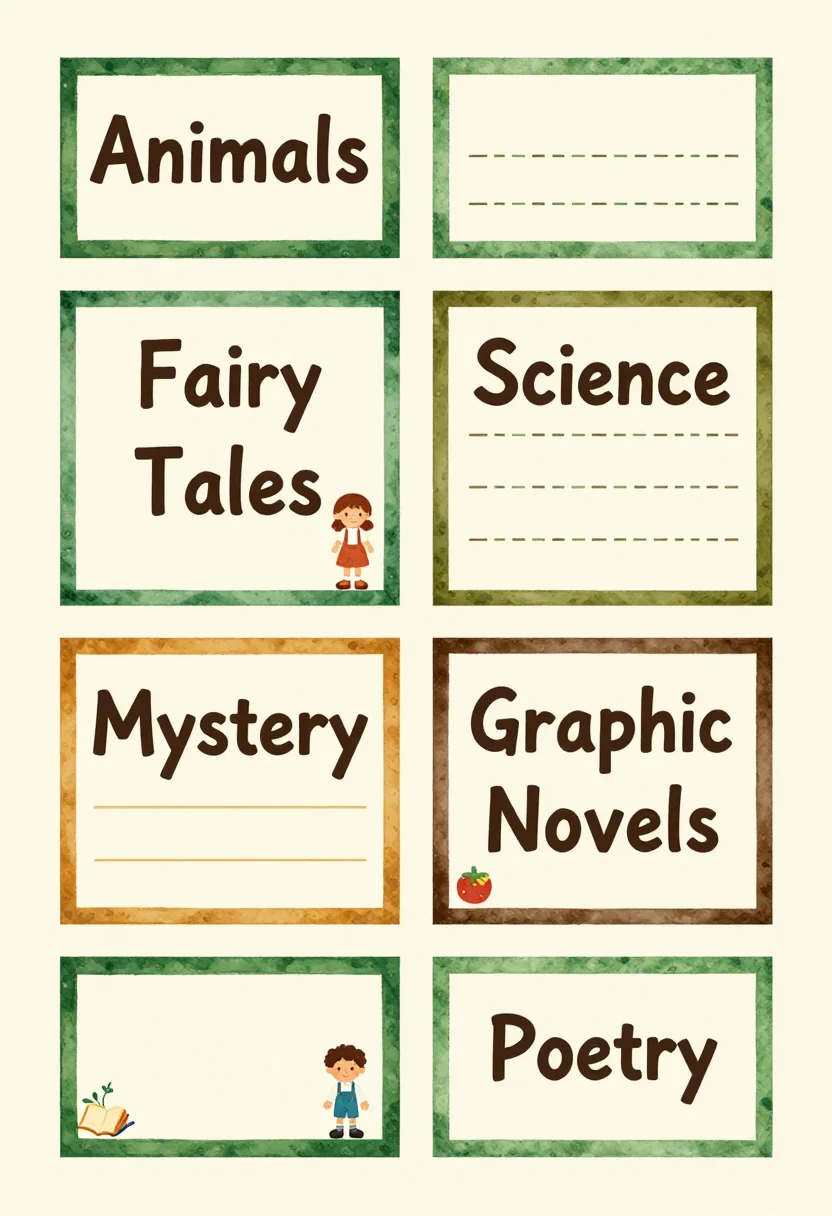
every sample — three subjects, three styles ↓
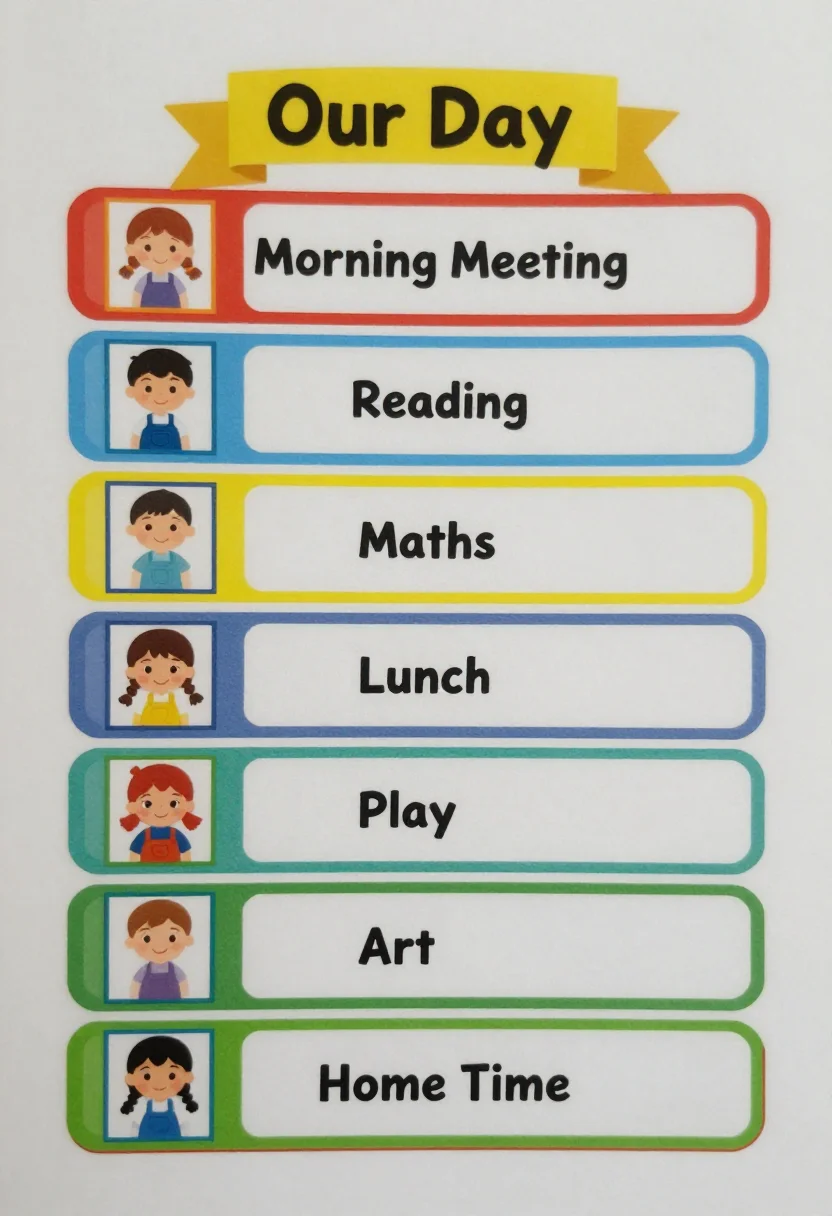
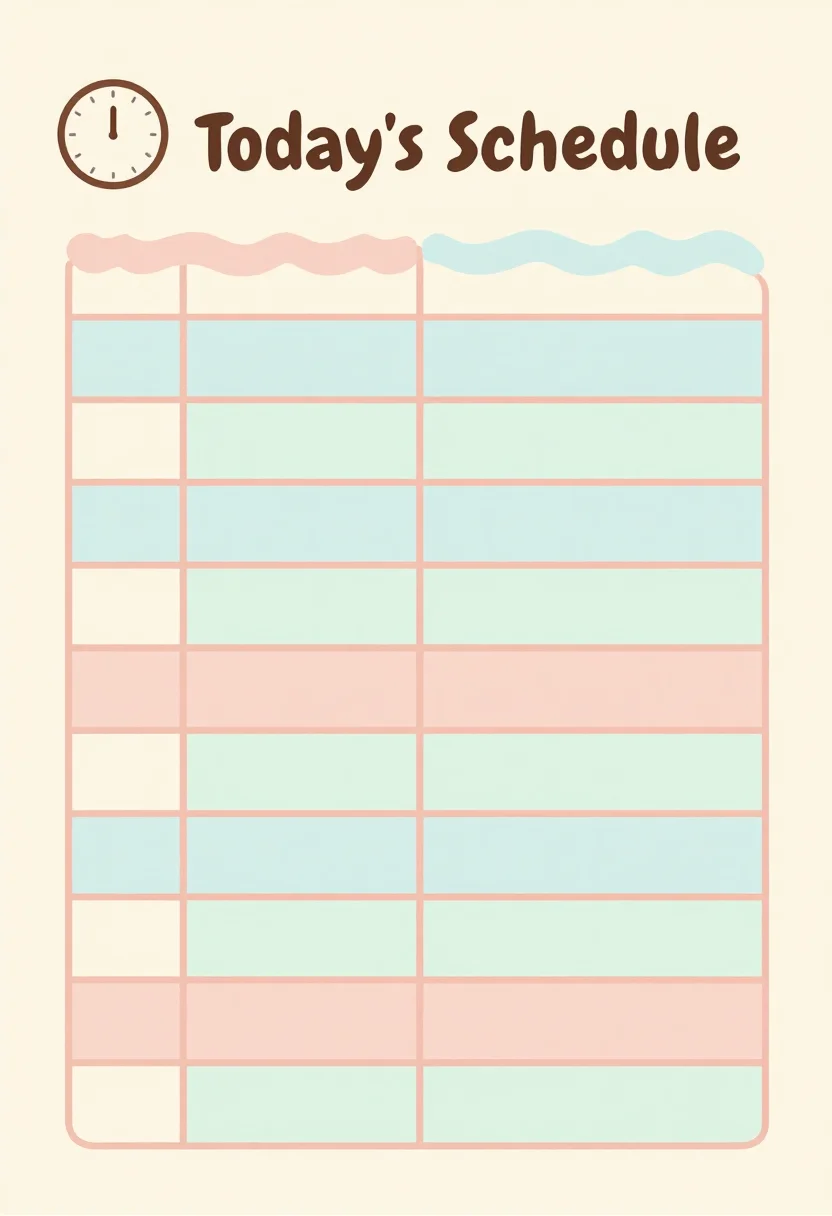
Teachers and parents of young children show the day's order as a visual schedule. Older pupils copy a weekly timetable into a grid. The three charts are a picture schedule with eight rows, a weekly timetable from Monday to Friday, and a blank daily schedule, each with places left to fill in. The styles are picture cards, minimal and soft pastel. Type a twist, such as clock faces, and the same chart can take it.
- a visual routine on the wall of a preschool
- a weekly timetable for a secondary pupil
- a blank daily plan for a homeschool day
Frequently asked questions
- Which rows are on the picture schedule?
- Eight rows, each with a picture card and a label: Morning Meeting, Reading, Snack, Maths, Lunch, Play, Art and Home Time.
- Is there room to fill in times?
- Yes. Each row of the picture schedule has an empty time box, the timetable has blank period rows and the daily schedule has an empty time column.
- Does the timetable cover the whole week?
- Yes. It has five columns, Monday to Friday, and a blank Lunch Break row across the middle.
- What is the difference between the styles?
- Picture cards uses flat illustrated cards, minimal uses thin grey lines and one accent rule, and soft pastel uses rounded tinted rows.
About toile
This page is a showcase and a starting point: nine samples already rendered, three readings of the pack crossed with three styles, each shown at the size and ratio it was made for. Take any of them further on the wall with a few words, or ask for all nine again under your own direction; a sign-in keeps what you make, and it is free while Toile is new. The recipe behind each sample — the subject, the style, the palette, the framing — travels with the image rather than staying private to the render: it is in the alt text of every sample and in the page's own structured data, so a search engine reads the same handles a person would.