/companion-planting-charts · home
Companion planting charts: good pairs, Three Sisters, good and avoid
Make your ownCompanion planting charts
Describe yours. We'll remake the whole pack your way.
More like this
the whole catalog →

every sample — three subjects, three styles ↓
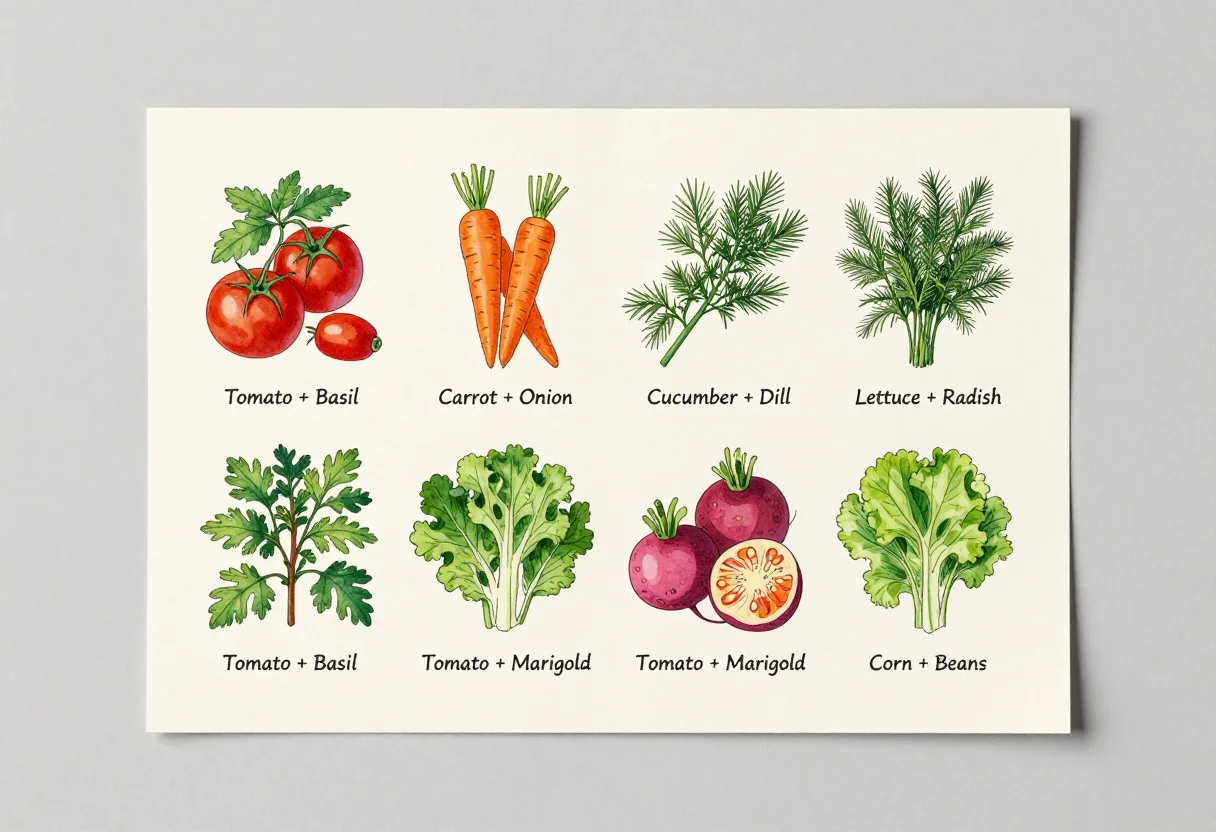
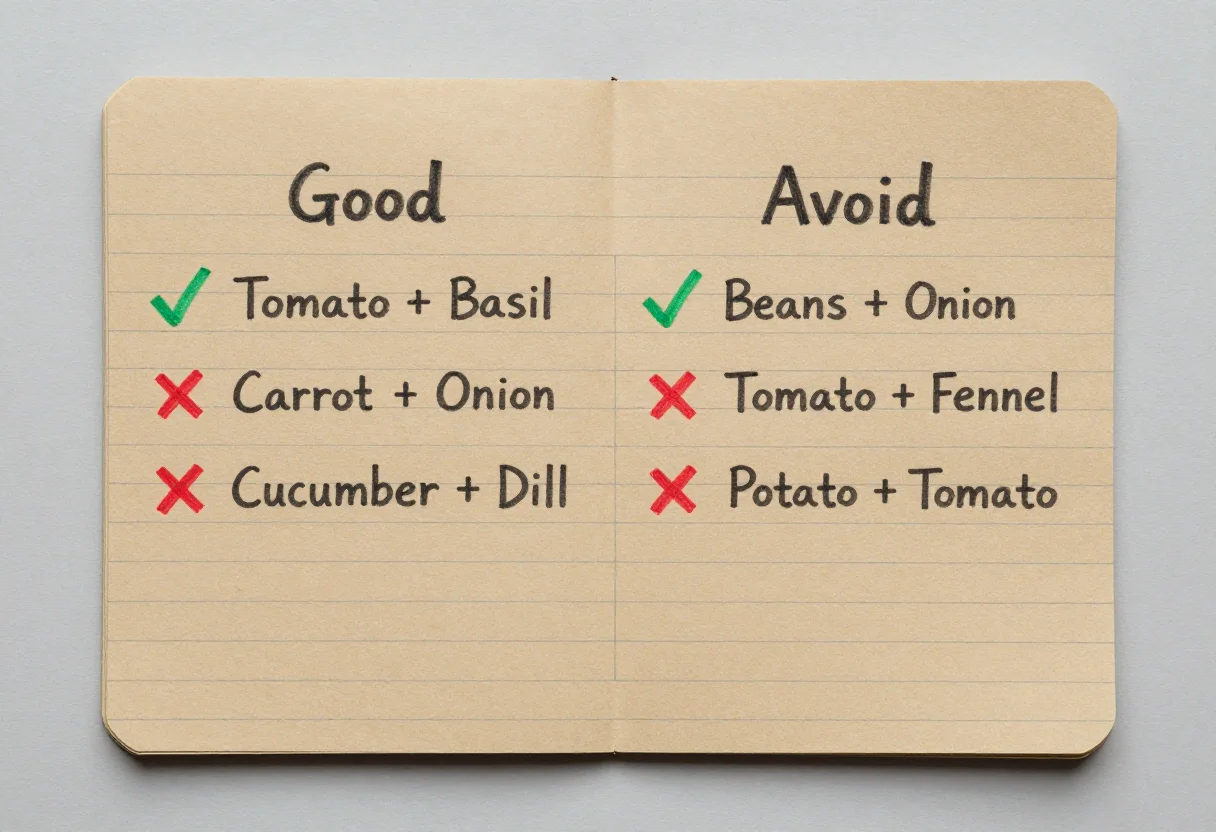
Vegetable gardeners plan which plants grow well side by side and which to keep apart. These nine landscape charts show six good pairs, such as tomato with basil and carrot with onion; the Three Sisters mound of corn, beans and squash; and a good-and-avoid table. Each comes in a botanical ink style, a flat vector style or a garden notebook page. You can also type a request, such as herb garden, to shape the chart.
- a planting plan pinned up in the shed
- a teaching chart for a school garden
- a reference for a raised bed
- a gift for a keen gardener
Frequently asked questions
- What is the Three Sisters planting?
- It is a mound where corn stands in the middle, beans climb its stalks and squash spreads over the ground.
- Do the pairings work in every garden?
- The charts show common pairings, not a guarantee. Soil, climate and variety change the result.
- What are the three styles?
- Botanical is ink and watercolour on cream, flat vector uses bold shapes in leaf green, soil brown and sunny yellow, and garden notebook is coloured pencil on lined kraft paper.
About toile
This page is a showcase and a starting point: nine samples already rendered, three readings of the pack crossed with three styles, each shown at the size and ratio it was made for. Take any of them further on the wall with a few words, or ask for all nine again under your own direction; a sign-in keeps what you make, and it is free while Toile is new. The recipe behind each sample — the subject, the style, the palette, the framing — travels with the image rather than staying private to the render: it is in the alt text of every sample and in the page's own structured data, so a search engine reads the same handles a person would.