/corner-rangoli · faith
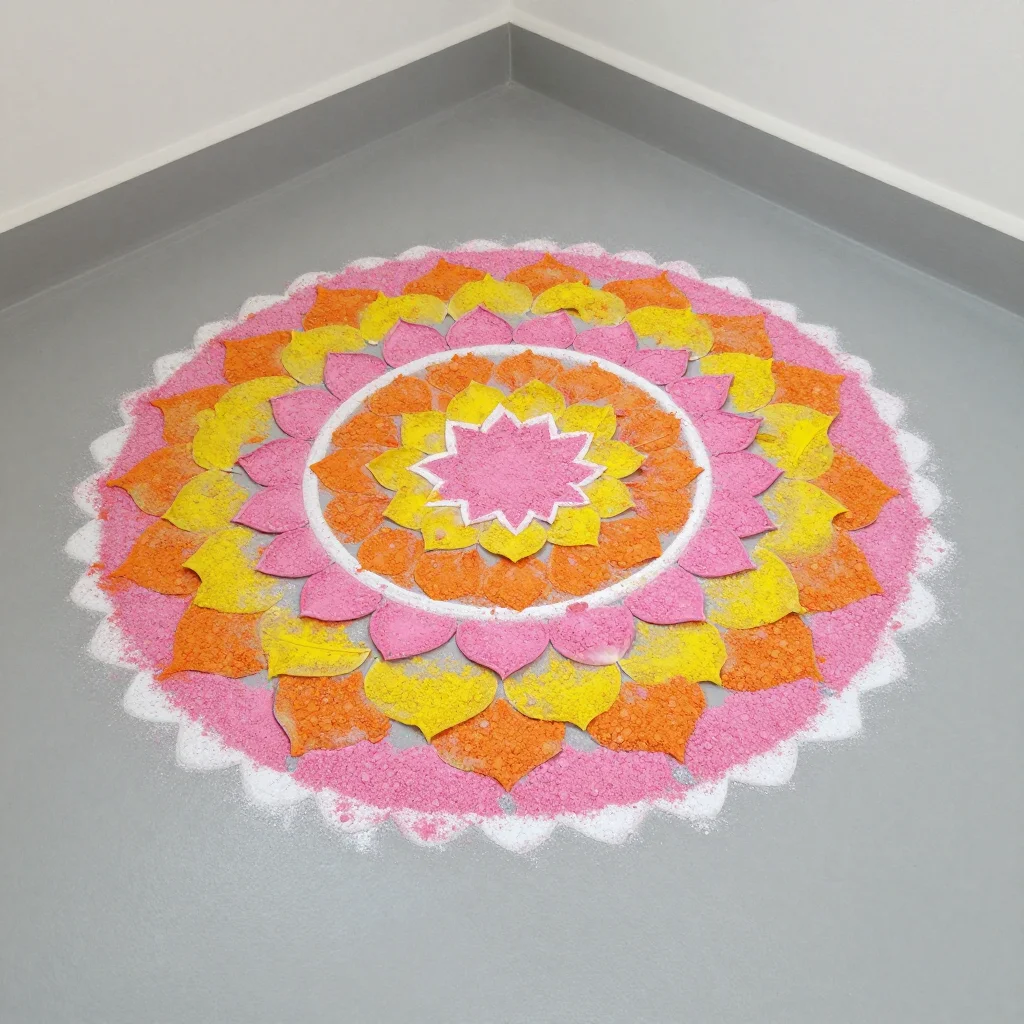
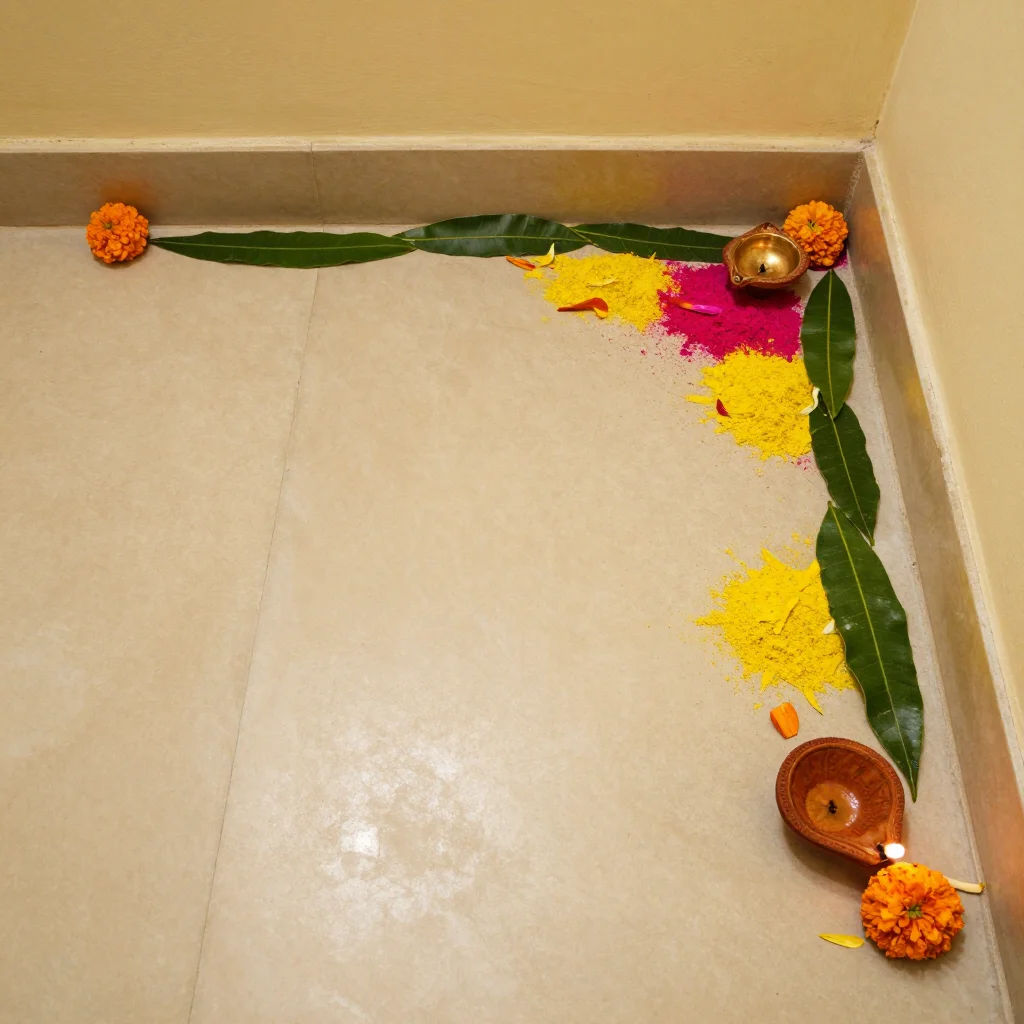
Corner rangoli: lotus fan, peacock feather, mango-leaf corner
Make your ownCorner rangoli
Describe yours. We'll remake the whole pack your way.
More like this
the whole catalog →

every sample — three subjects, three styles ↓
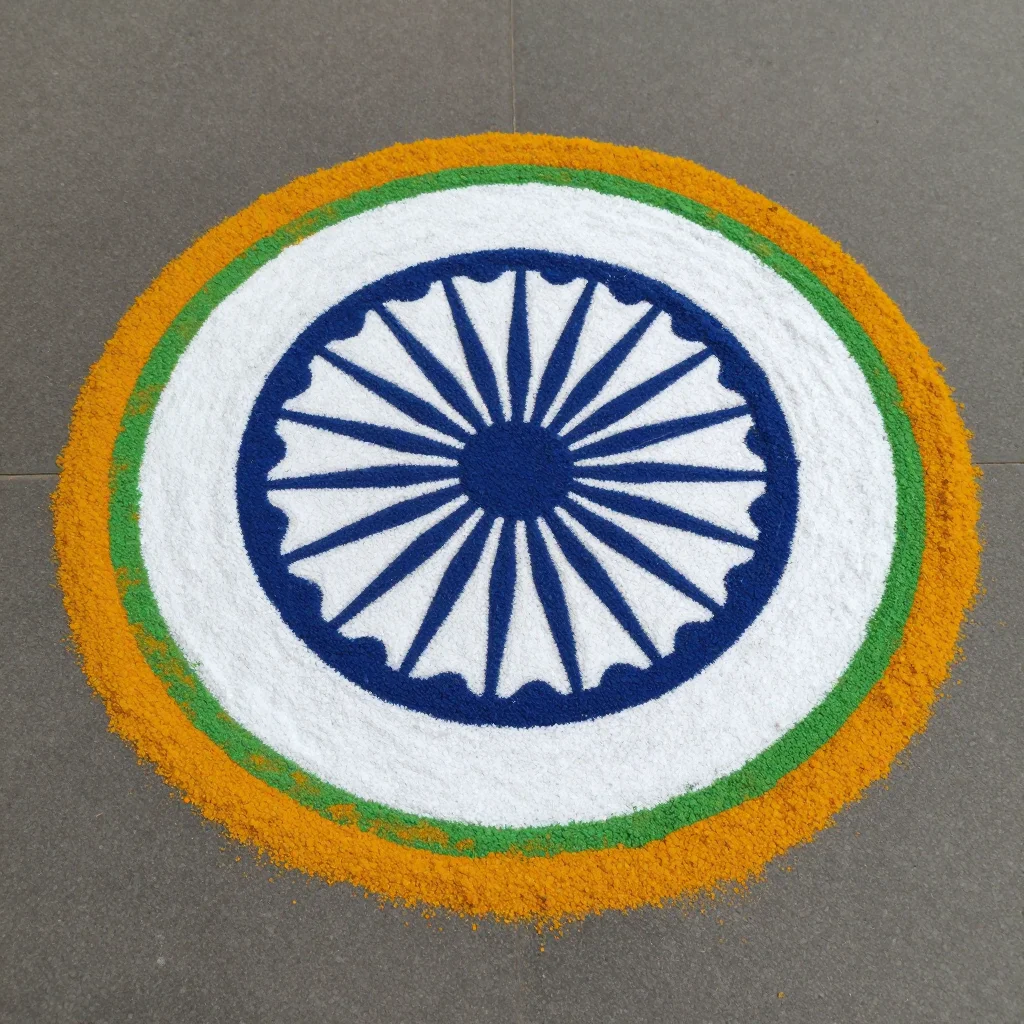
A corner rangoli fits where the floor meets two walls, in a room corner, a pooja space or a courtyard step, where a round design will not sit. These nine show three layouts: a quarter-circle lotus fan, a triangle of peacock feathers, and mango leaves with a diya. Each is a measured layout, an embroidered panel or a laid pooja corner. Type a twist, such as all white, to ask for it.
- a room corner by the door
- a pooja corner
- a courtyard step where two walls meet
Frequently asked questions
- What is the difference between the three styles?
- Quarter circle is a measured layout of petal rings on a pale floor; embroidery panel is a corner of jewel-toned silk; pooja corner is a bright powder corner laid beside a small brass lamp.
- Why do the two straight sides matter?
- They are set against the two walls, so the design fills the corner instead of floating in the middle of the floor.
- Can I copy one of these onto my own floor?
- Yes. Each picture is seen from directly above, so the layout and the order of the rings or feathers are visible to follow.
About toile
This page is a showcase and a starting point: nine samples already rendered, three readings of the pack crossed with three styles, each shown at the size and ratio it was made for. Take any of them further on the wall with a few words, or ask for all nine again under your own direction; a sign-in keeps what you make, and it is free while Toile is new. The recipe behind each sample — the subject, the style, the palette, the framing — travels with the image rather than staying private to the render: it is in the alt text of every sample and in the page's own structured data, so a search engine reads the same handles a person would.