/cuts-of-meat-charts · home
Cuts of meat charts: beef, pork and lamb cuts
Make your ownCuts of meat charts
Describe yours. We'll remake the whole pack your way.
More like this
the whole catalog →


every sample — three subjects, three styles ↓
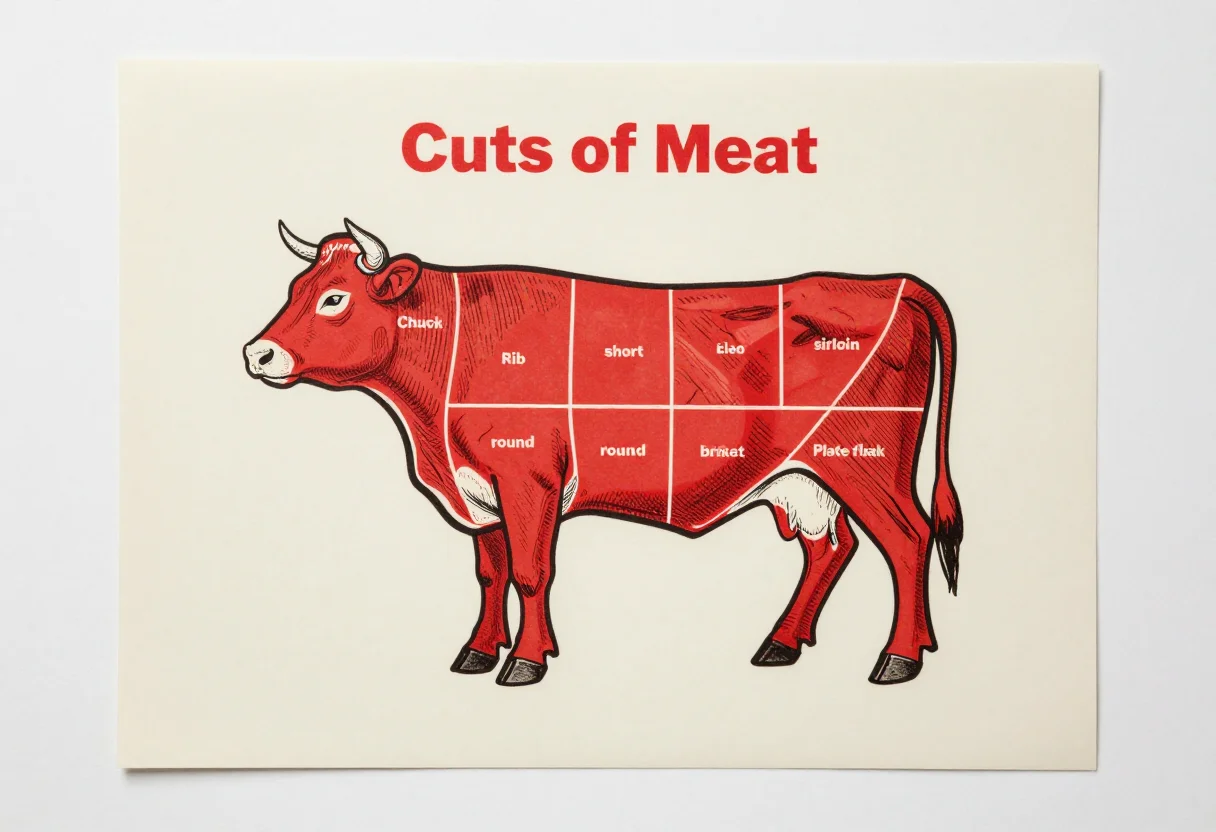
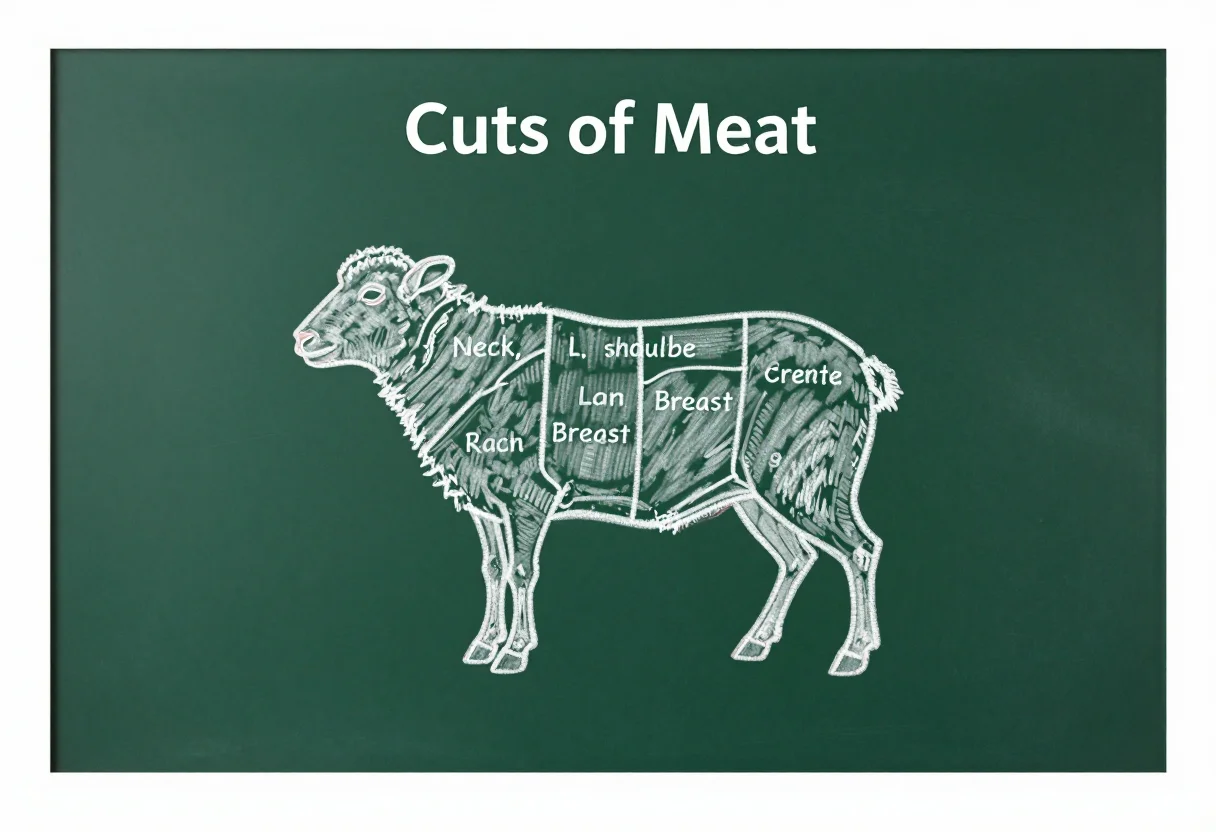
Butcher's cuts charts for a kitchen wall or a shop. Each picture shows the side outline of an animal divided into its named cuts: beef into chuck, rib, short loin, sirloin, round, brisket, plate and flank; pork into shoulder, loin, belly, ham, jowl and hock; and lamb into neck, shoulder, rack, loin, breast, leg and shank. Type a different subject, such as goat or venison, and the same three styles carry the request.
- a kitchen wall in a home
- a butcher shop display
- a barbecue cook's reference
- a class on butchery
Frequently asked questions
- Which animals are shown?
- A steer, a pig and a lamb, each in side view with its cuts named on the outline.
- Is the sheet landscape or portrait?
- The cuts charts are landscape pages, wider than they are tall, so they fit a wall or a shop board.
- Can I get a chart for another animal?
- Type the animal as a direction, such as goat or venison. It is a request, not a promised result.
- Which style suits a shop?
- The butcher shop style, with bold black outlines and hatched sections, reads like an old shop sign; infographic is the cleanest.
About toile
This page is a showcase and a starting point: nine samples already rendered, three readings of the pack crossed with three styles, each shown at the size and ratio it was made for. Take any of them further on the wall with a few words, or ask for all nine again under your own direction; a sign-in keeps what you make, and it is free while Toile is new. The recipe behind each sample — the subject, the style, the palette, the framing — travels with the image rather than staying private to the render: it is in the alt text of every sample and in the page's own structured data, so a search engine reads the same handles a person would.