/dancing-pose-references · illustration
Dancing pose reference: ballet, hip hop, Bharatanatyam
Make your ownDancing pose references
Describe yours. We'll remake the whole pack your way.
More like this
the whole catalog →

every sample — three subjects, three styles ↓
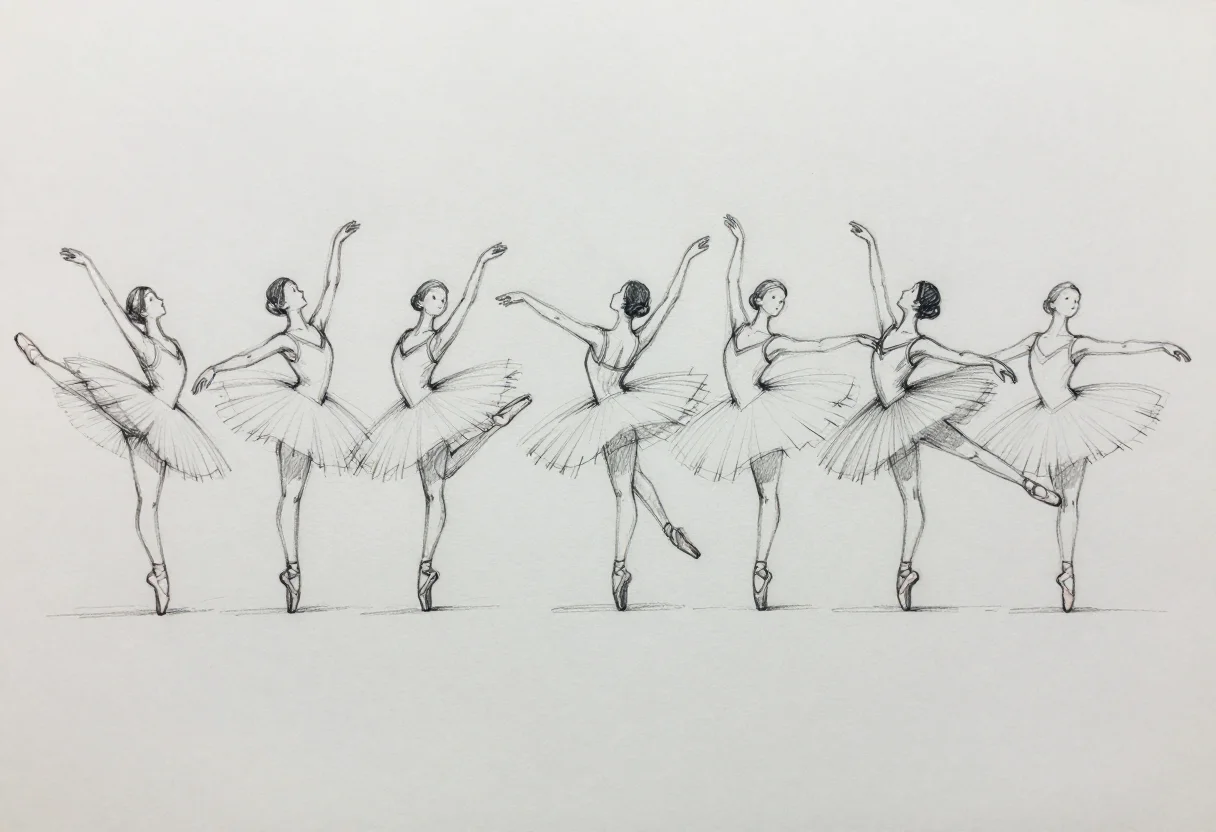
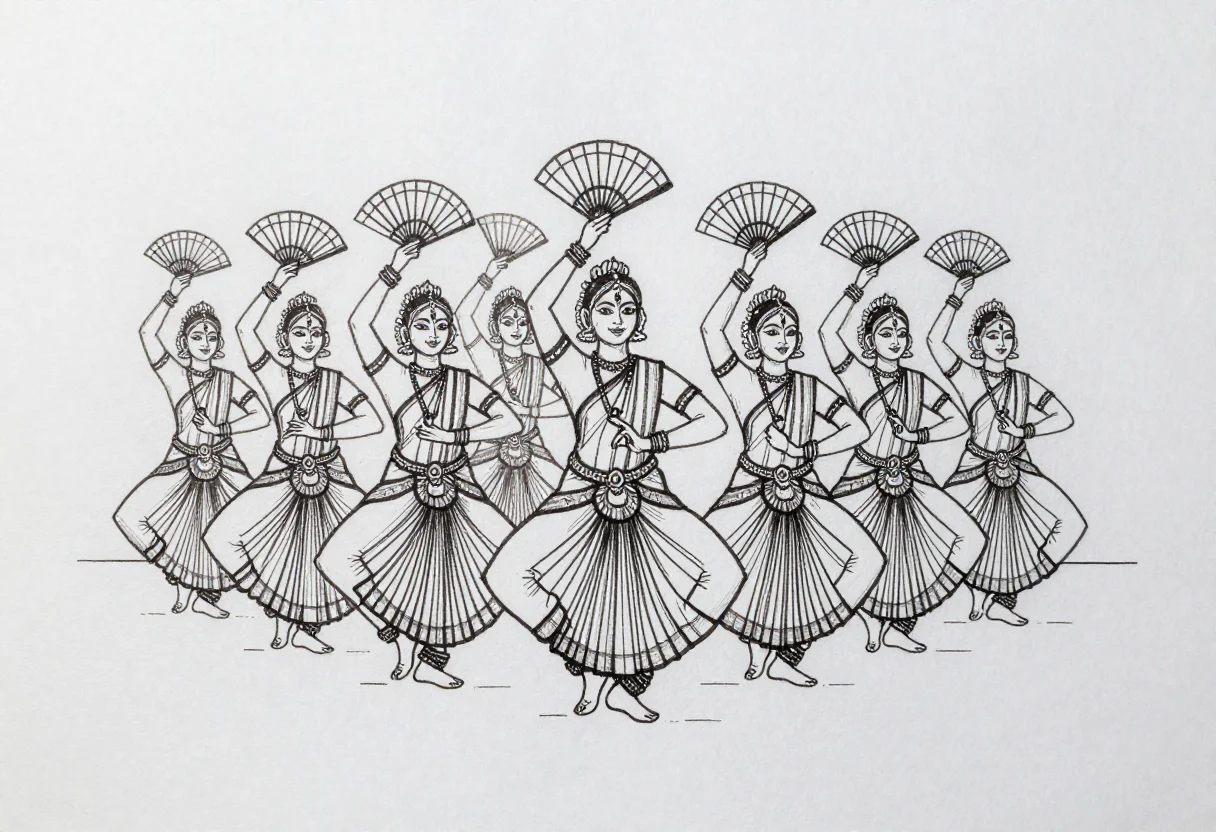
A dancer holds a shape only for a moment, so the line of the body has to be drawn quickly. These sheets show ballet in an arabesque, a leap and on pointe; hip hop in a freeze, a spin and a groove; and Bharatanatyam in a half-seated stance with hands in mudras. Each row comes in gesture, graphite, and clean contour. Type a different dance, such as salsa, and the same rows carry it.
- a figure in motion for a character sheet
- a reference for a dancer in an illustration
- a study of the line of the body in a leap
- a sketchbook page on dance poses
Frequently asked questions
- Which dances are shown?
- Ballet, hip hop and Bharatanatyam, one row of three poses for each.
- What is the difference between the three styles?
- Gesture is a loose sketch that keeps the movement, graphite has soft shading in the hollows, and clean contour is outlines only with no shading.
- Are these photographs?
- No. Each row is a flat drawing on a plain ground line with no stage.
- Can I ask for a different dance?
- Yes. Type a direction such as salsa or couple dancing, and it is a request for that, not a promised result.
About toile
This page is a showcase and a starting point: nine samples already rendered, three readings of the pack crossed with three styles, each shown at the size and ratio it was made for. Take any of them further on the wall with a few words, or ask for all nine again under your own direction; a sign-in keeps what you make, and it is free while Toile is new. The recipe behind each sample — the subject, the style, the palette, the framing — travels with the image rather than staying private to the render: it is in the alt text of every sample and in the page's own structured data, so a search engine reads the same handles a person would.