/days-of-the-week-posters · classroom
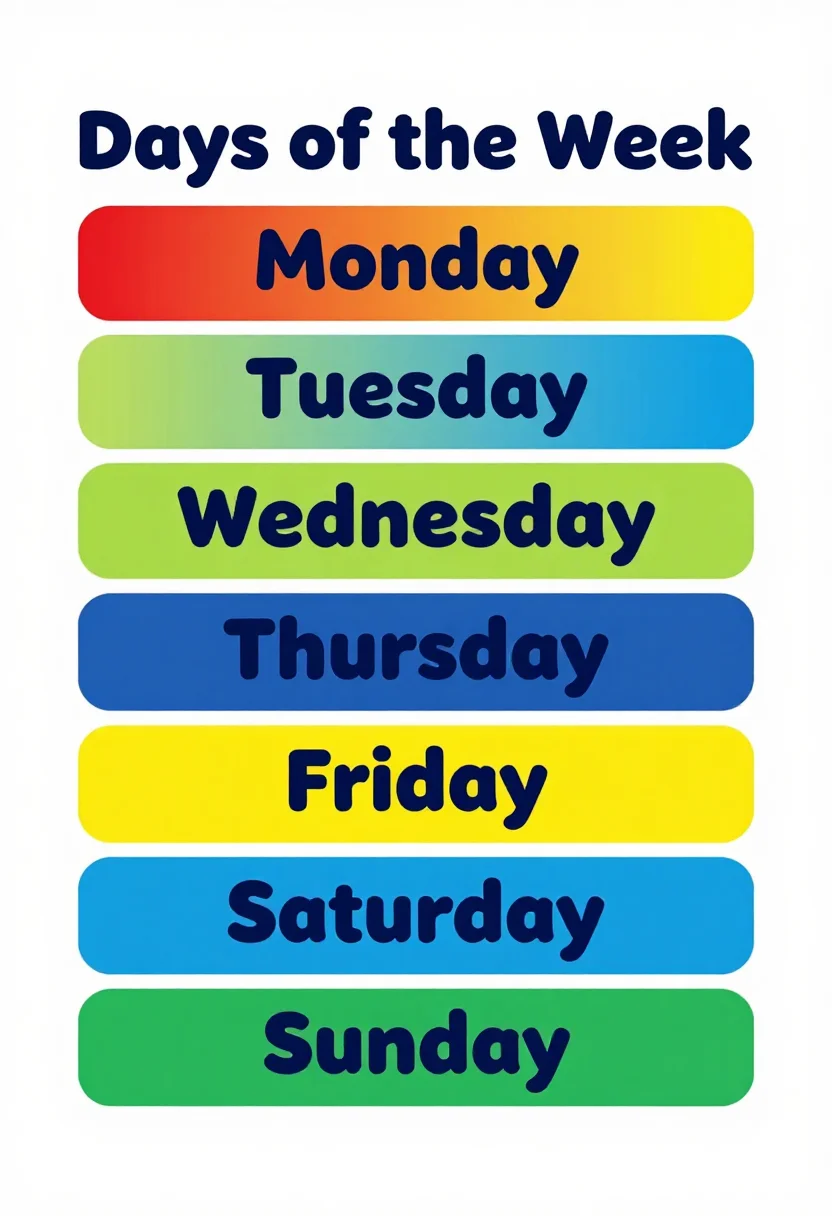
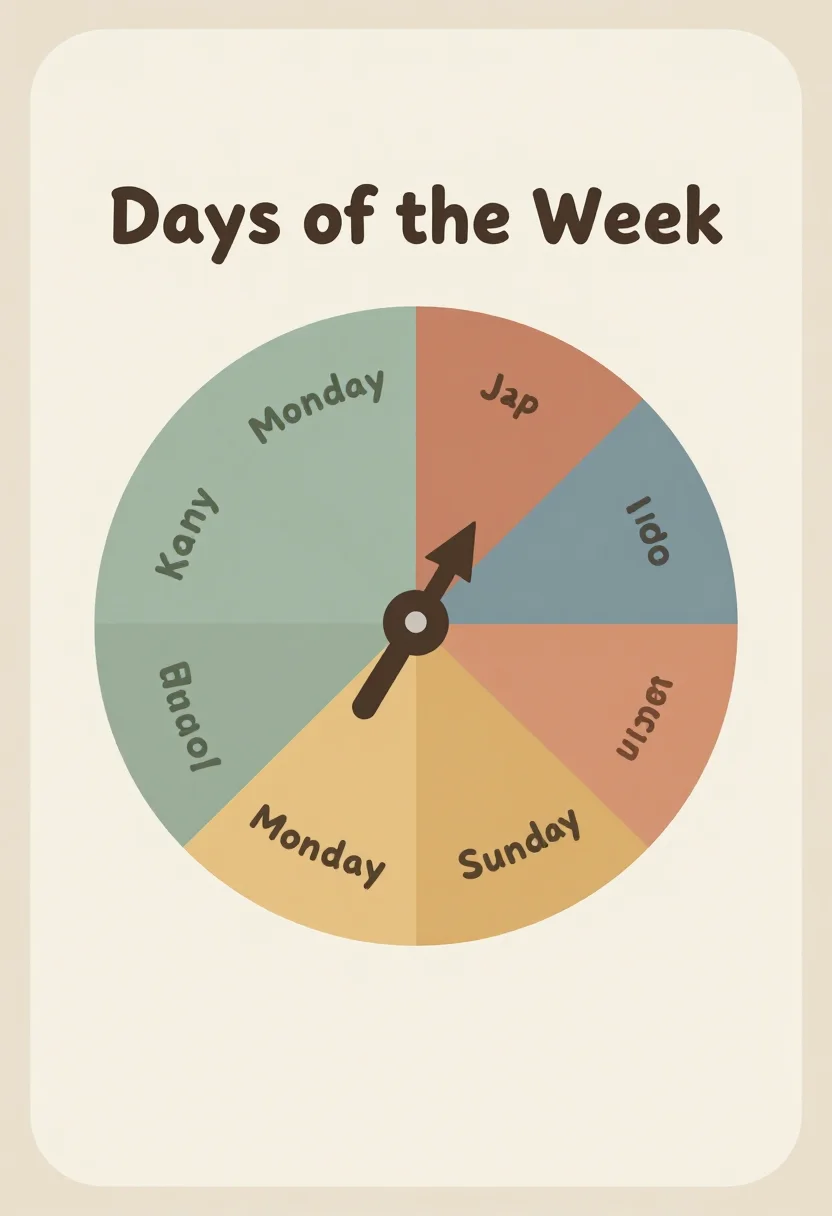
Days of the week chart: seven strips, today chart, week wheel
Make your ownDays of the week posters
Describe yours. We'll remake the whole pack your way.
More like this
the whole catalog →

every sample — three subjects, three styles ↓
Teachers use a days of the week chart in the morning calendar routine. The three charts are seven colored strips from Monday to Sunday, a yesterday, today and tomorrow chart with an empty space for a day card, and a week wheel with an arrow pointer. The styles are bright flat, crayon hand-drawn and boho pastel. Type a twist, such as days in Spanish, and the same chart can take it.
- a morning calendar corner
- a circle time routine
- a day board for home learning
Frequently asked questions
- Which days are on the strip chart?
- Monday to Sunday, each in its own color, with the weekend strips set slightly apart.
- What does the today chart do?
- It has three panels, yesterday was, today is and tomorrow will be, each with an empty space for a day card.
- What is the week wheel?
- A round printed chart with seven slices, one for each day, and an arrow pointer at the center.
- Can I get the days in another language?
- Type it as a direction, such as in Hindi. It is a request, so the sample may not be matched.
About toile
This page is a showcase and a starting point: nine samples already rendered, three readings of the pack crossed with three styles, each shown at the size and ratio it was made for. Take any of them further on the wall with a few words, or ask for all nine again under your own direction; a sign-in keeps what you make, and it is free while Toile is new. The recipe behind each sample — the subject, the style, the palette, the framing — travels with the image rather than staying private to the render: it is in the alt text of every sample and in the page's own structured data, so a search engine reads the same handles a person would.