/diwali-worksheets · faith
Diwali worksheets: count the diyas, five days, write about it
Make your ownDiwali worksheets
Describe yours. We'll remake the whole pack your way.
More like this
the whole catalog →
every sample — three subjects, three styles ↓
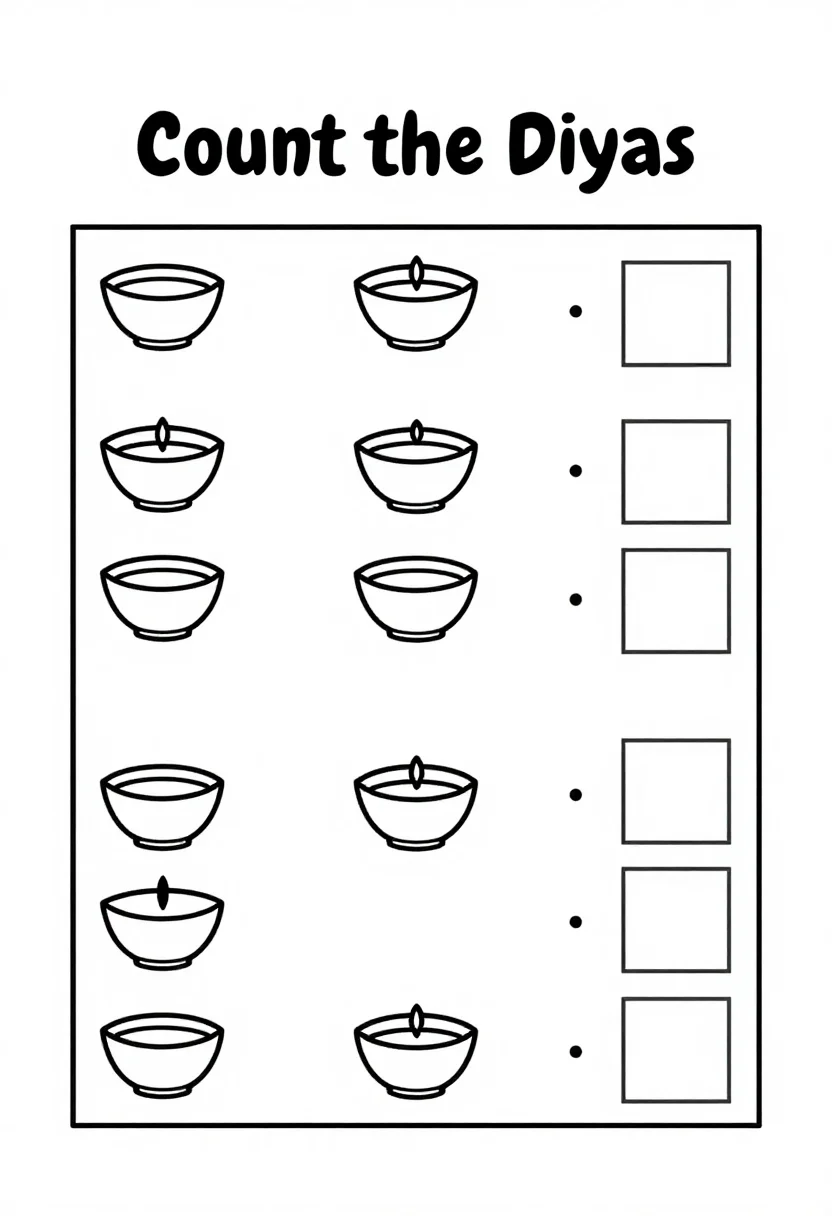
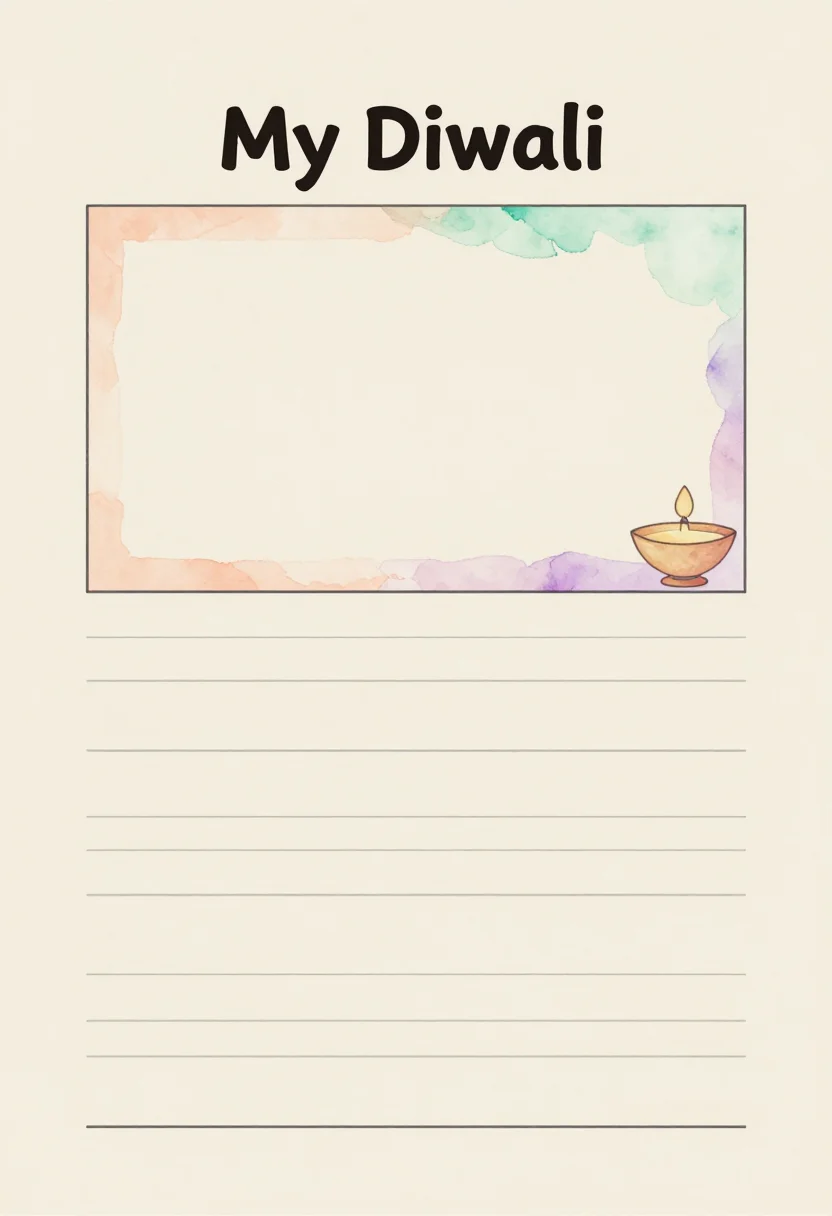
Classroom worksheets for the Diwali week: a counting sheet called Count the Diyas, a reading sheet on The Five Days of Diwali, and a writing sheet called My Diwali. The pages are usable as printed, with titles spelled exactly, numbered panels, answer boxes, and ruled lines where a child writes. Each comes as black ink line art, bright flat illustration or soft pastel.
- a Diwali week lesson in a primary class
- counting practice with diyas
- a reading task on the five days of the festival
- a writing task at home
Frequently asked questions
- Are the titles in English?
- Yes. The titles are written in English, spelled as shown, and the page stays usable as printed.
- What is on the reading sheet?
- Five numbered panels for Dhanteras, Choti Diwali, Lakshmi Puja, Govardhan Puja and Bhai Dooj, each with two blank lines.
- Do the pages suit a home printer?
- Each page is vertical, with clean margins and no mockup, so it can be printed as a single sheet.
- Can I ask for a different subject?
- Yes. The direction field takes a change such as Maths, a Hindi title or Grade 1. A direction you type is a request, not a promised result.
About toile
This page is a showcase and a starting point: nine samples already rendered, three readings of the pack crossed with three styles, each shown at the size and ratio it was made for. Take any of them further on the wall with a few words, or ask for all nine again under your own direction; a sign-in keeps what you make, and it is free while Toile is new. The recipe behind each sample — the subject, the style, the palette, the framing — travels with the image rather than staying private to the render: it is in the alt text of every sample and in the page's own structured data, so a search engine reads the same handles a person would.