/ear-drawing-references · illustration
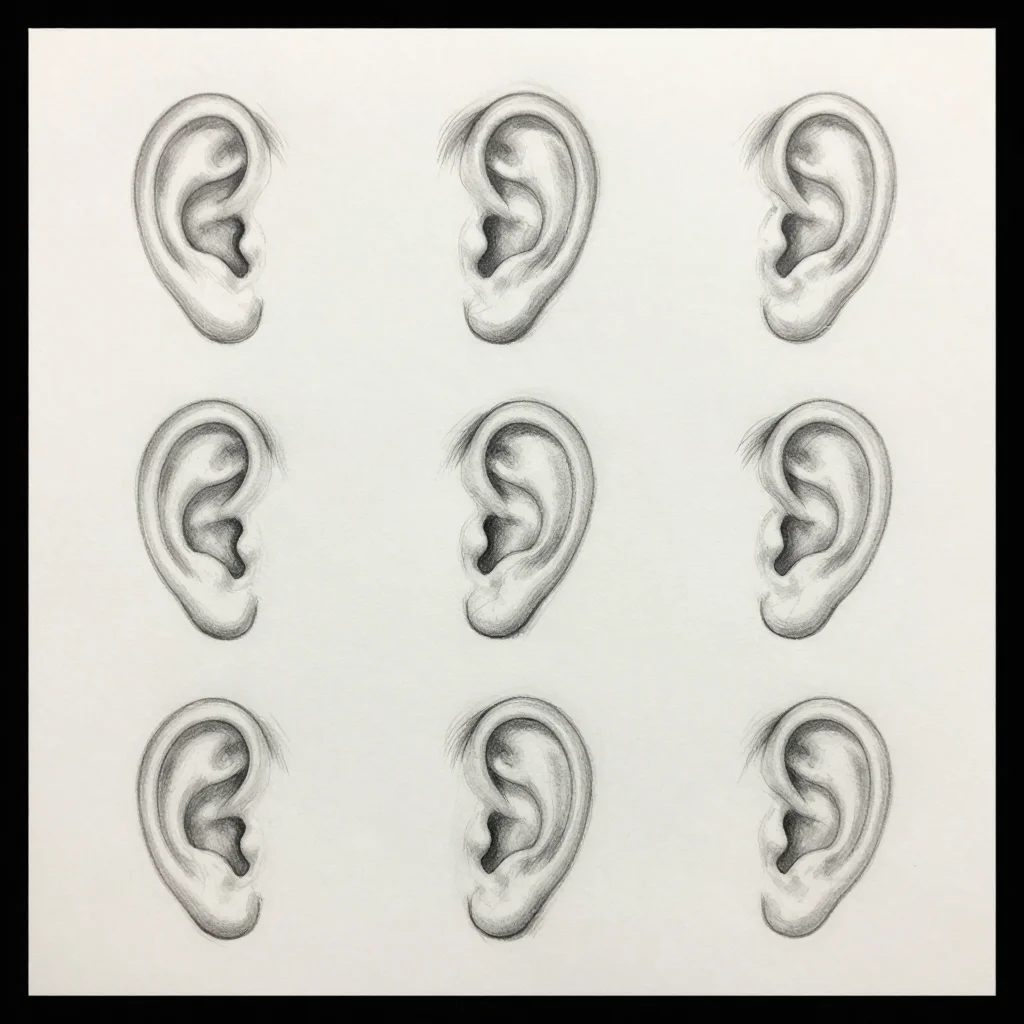
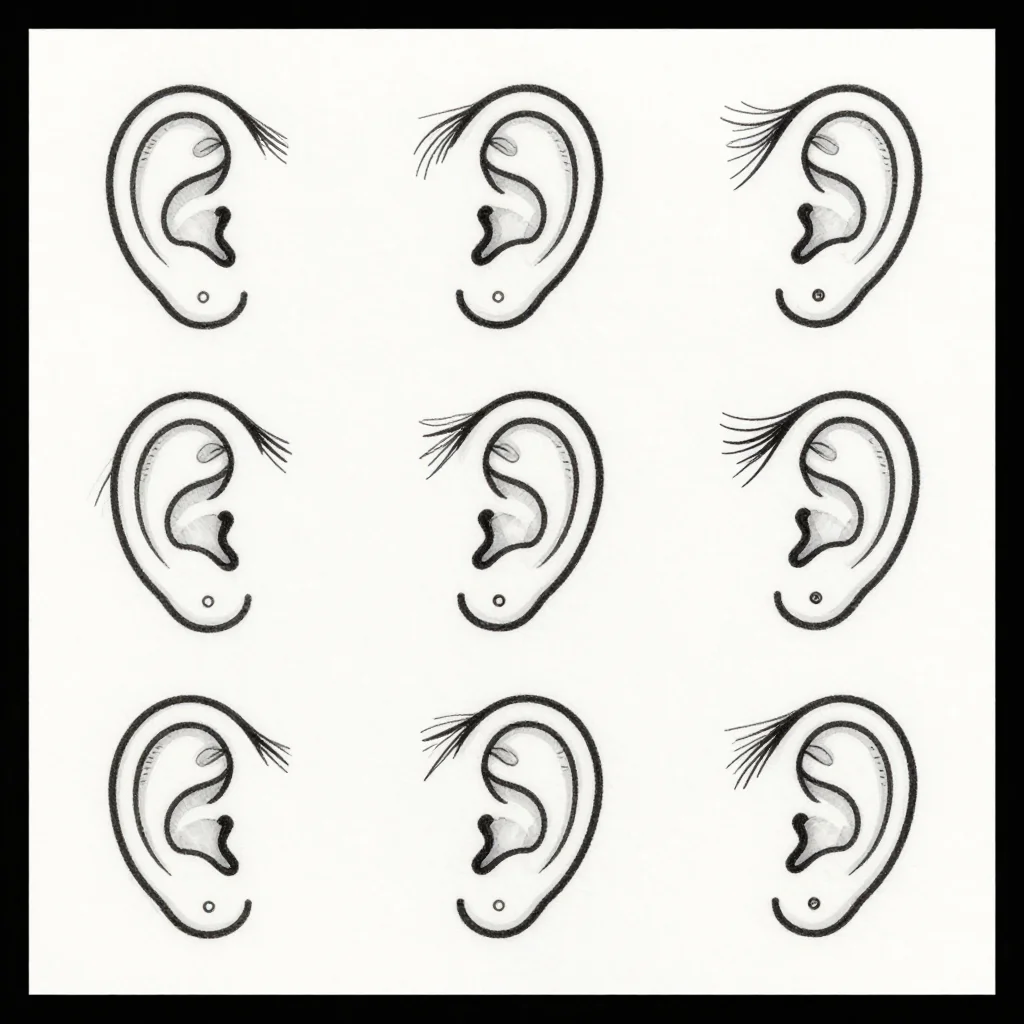
Ear drawing reference: ear angles, construction, ears with earrings
Make your ownEar drawing references
Describe yours. We'll remake the whole pack your way.
More like this
the whole catalog →


every sample — three subjects, three styles ↓
An ear that looks pasted on usually has the wrong angle or the wrong construction. These sheets show ears from the side, front, back and three-quarter, an ear built step by step from a C-shape and a Y-shape, and ears with hoops, studs and dangling earrings, some half covered by tucked hair. Each comes in graphite, pen and ink, and clean contour. Type a different ear, such as child ears or pointed ears, and the same readings carry it.
- a portrait practice page
- a study for ears that sit right on the head
- a reference for a character with earrings
- a sketchbook page on the shape of the ear
Frequently asked questions
- What is on the nine sheets?
- Three views of ears from different angles, three steps that build an ear from simple shapes, and three ears with earrings and hair.
- What is the difference between the three styles?
- Graphite has soft shading in the hollows, pen and ink uses crosshatching that follows the form, and clean contour is outlines only with no shading.
- Are these photographs?
- No. Each sheet is a flat drawing on a plain white page with a margin all round.
- Can I ask for a different kind of ear?
- Yes. Type a direction such as child ears or pointed ears, and it is a request for that, not a promised result.
About toile
This page is a showcase and a starting point: nine samples already rendered, three readings of the pack crossed with three styles, each shown at the size and ratio it was made for. Take any of them further on the wall with a few words, or ask for all nine again under your own direction; a sign-in keeps what you make, and it is free while Toile is new. The recipe behind each sample — the subject, the style, the palette, the framing — travels with the image rather than staying private to the render: it is in the alt text of every sample and in the page's own structured data, so a search engine reads the same handles a person would.