/folk-florals · pattern
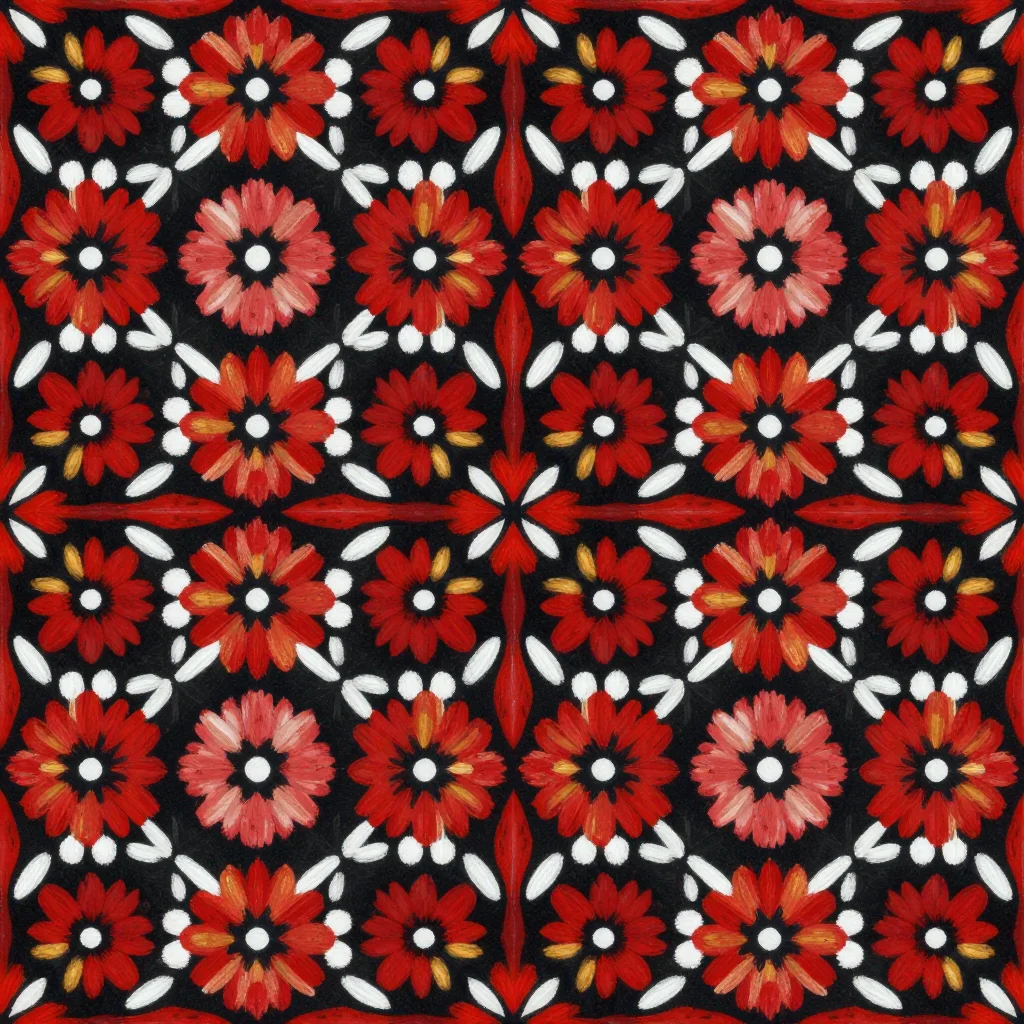
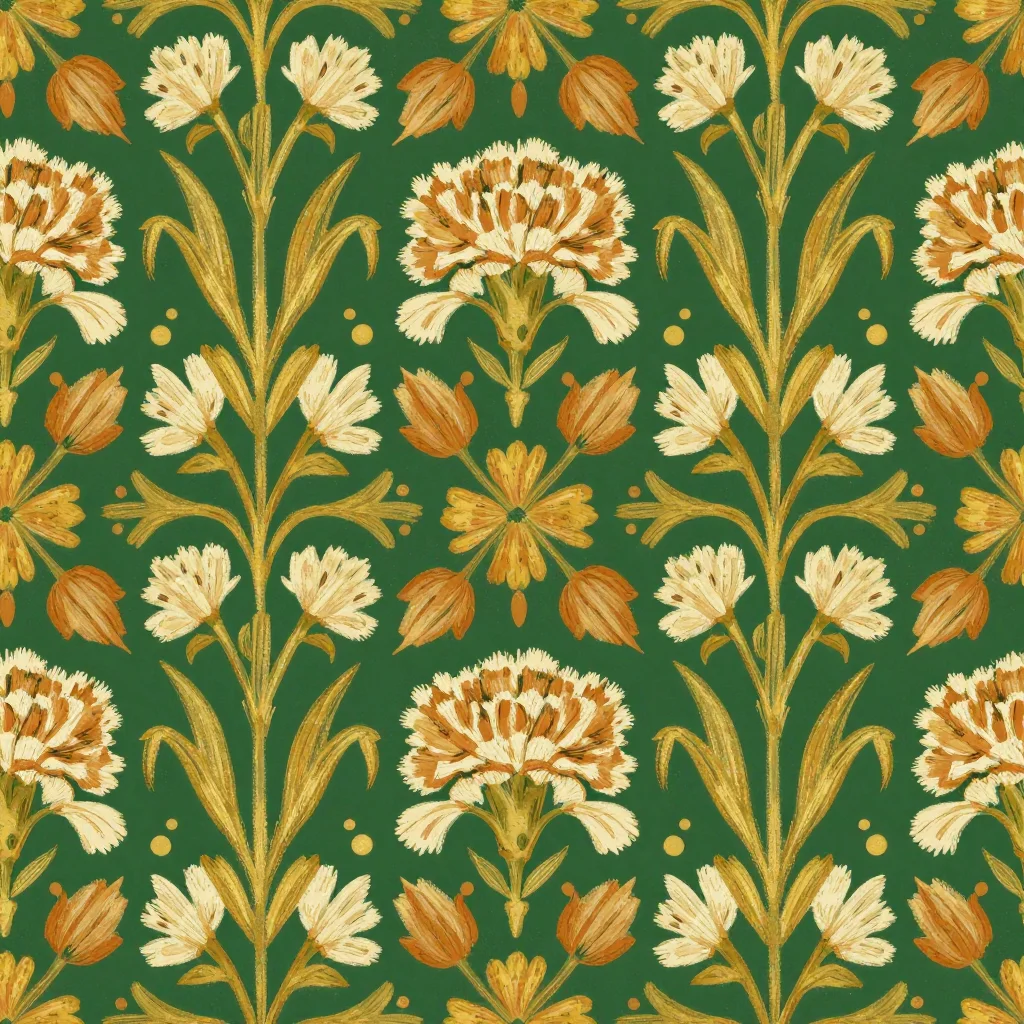
Folk floral print: tulip, carnation, rosette motifs
Make your ownFolk florals
Describe yours. We'll remake the whole pack your way.
More like this
the whole catalog →
every sample — three subjects, three styles ↓
Folk florals are painted, not observed: the tulip, the carnation and the eight-petalled rosette of Nordic rosemaling, Hungarian embroidery and Russian tray painting, every flower flat, mirrored and built from strokes a brush makes in one go. These nine render tulip, carnation and rosette motifs across three colourways. Ask for a different motif, like a stylised bird, and the same three colourways carry it.
- an embroidery or cross-stitch reference
- a painted tray or box design
- a fabric or wallpaper swatch
- a greetings card print
- a folk-craft classroom handout
Frequently asked questions
- What size and format do these print at?
- Each pattern is a seamless square tile at even resolution, so it repeats cleanly on fabric, a painted surface reference, or a wallpaper roll.
- Can I get a different motif, like a stylised bird?
- Yes — the direction field takes any single folk motif, and the same three colourways render it.
- What's the difference between the three motifs?
- Tulip is a simple mirrored bloom, carnation adds a fuller layered petal shape, and rosette centres on the eight-petalled disc common to Nordic and Central European folk painting.
- Does this reproduce a specific folk-art tradition or artist?
- It draws on the shared visual grammar of Nordic rosemaling, Hungarian embroidery motifs and Russian tray painting — flat, mirrored, brush-built florals — as a style reference, not a copy of any named painter's or region's specific work.
About toile
This page is a showcase and a starting point: nine samples already rendered, three readings of the pack crossed with three styles, each shown at the size and ratio it was made for. Take any of them further on the wall with a few words, or ask for all nine again under your own direction; a sign-in keeps what you make, and it is free while Toile is new. The recipe behind each sample — the subject, the style, the palette, the framing — travels with the image rather than staying private to the render: it is in the alt text of every sample and in the page's own structured data, so a search engine reads the same handles a person would.