/ganpati-makhar-designs · faith
Ganpati makhar designs: temple arch, flower makhar, paper mandap
Make your ownGanpati makhar designs
Describe yours. We'll remake the whole pack your way.
More like this
the whole catalog →

every sample — three subjects, three styles ↓
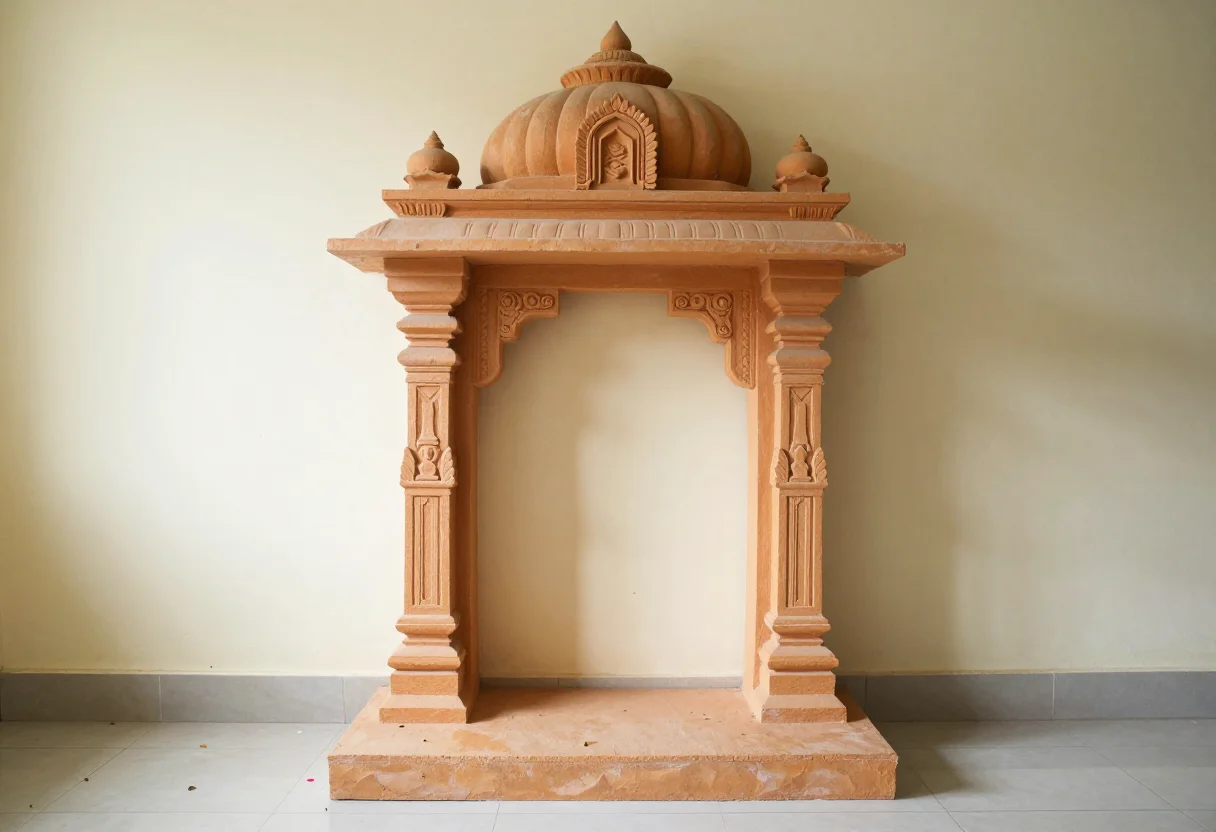
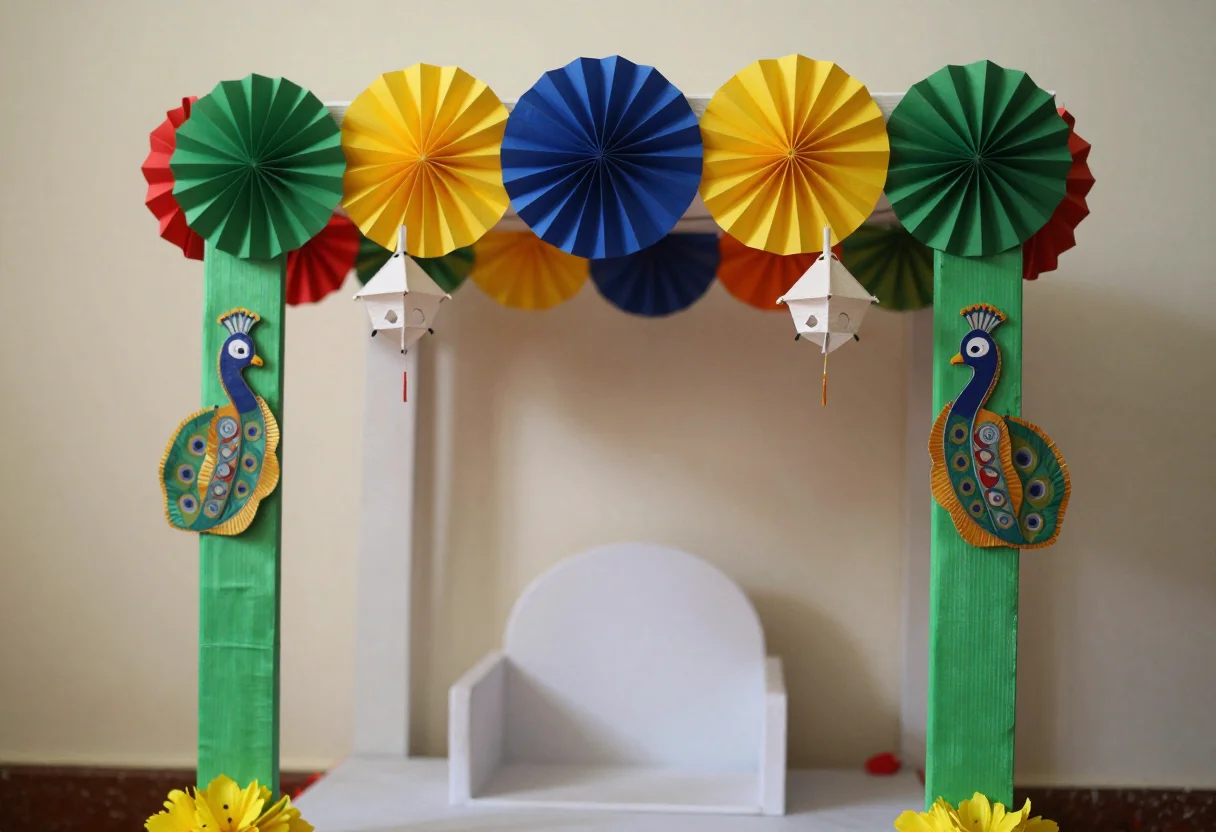
A makhar is the decorated frame a household builds to seat its Ganpati for the festival days. Many families make it from paper, cloth and flowers instead of thermocol. These nine images show three builds: a carved temple arch, a wall of marigold and chrysanthemum around a lotus, and a paper mandap with peacock motifs. They appear in daylight, at evening aarti and in close-up. Type a different idea, such as banana leaves, and the same three views carry it.
- a home plan for the Ganpati decoration
- an entry for a society or school decoration contest
- a reference for a paper or flower craft workshop
- a festival post or a wall print
Frequently asked questions
- Are these real photographs?
- They are photographic images of finished makhars with the seat left empty. They do not show any particular household's build, and no idol, statue or person appears in them.
- Can I ask for a different makhar?
- Yes. Type the idea in your own words, such as thermocol free or a small shelf. The result is a request, not a guaranteed match.
- What is the difference between the three styles?
- Daylight is an even view of the whole makhar in soft morning light. Aarti glow shows it at evening with diya lights below. Close-up looks at the canopy and one side with the background blurred.
- What shape are the images?
- Each is a landscape image, suited to a wall print, a card or a screen.
About toile
This page is a showcase and a starting point: nine samples already rendered, three readings of the pack crossed with three styles, each shown at the size and ratio it was made for. Take any of them further on the wall with a few words, or ask for all nine again under your own direction; a sign-in keeps what you make, and it is free while Toile is new. The recipe behind each sample — the subject, the style, the palette, the framing — travels with the image rather than staying private to the render: it is in the alt text of every sample and in the page's own structured data, so a search engine reads the same handles a person would.