/halloween-bingo-cards · season
Halloween bingo cards: picture, word and calling sheet in three styles
Make your ownHalloween bingo cards
Describe yours. We'll remake the whole pack your way.
More like this
the whole catalog →
every sample — three subjects, three styles ↓
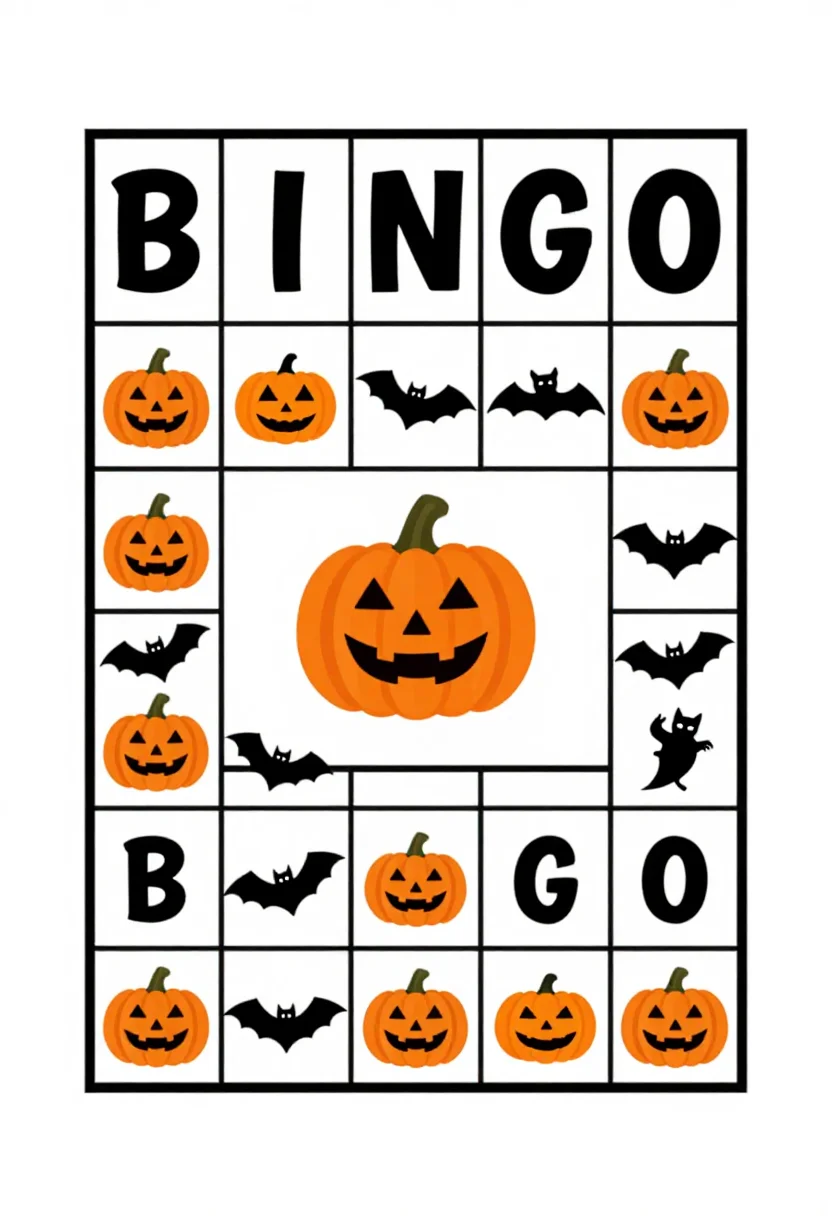
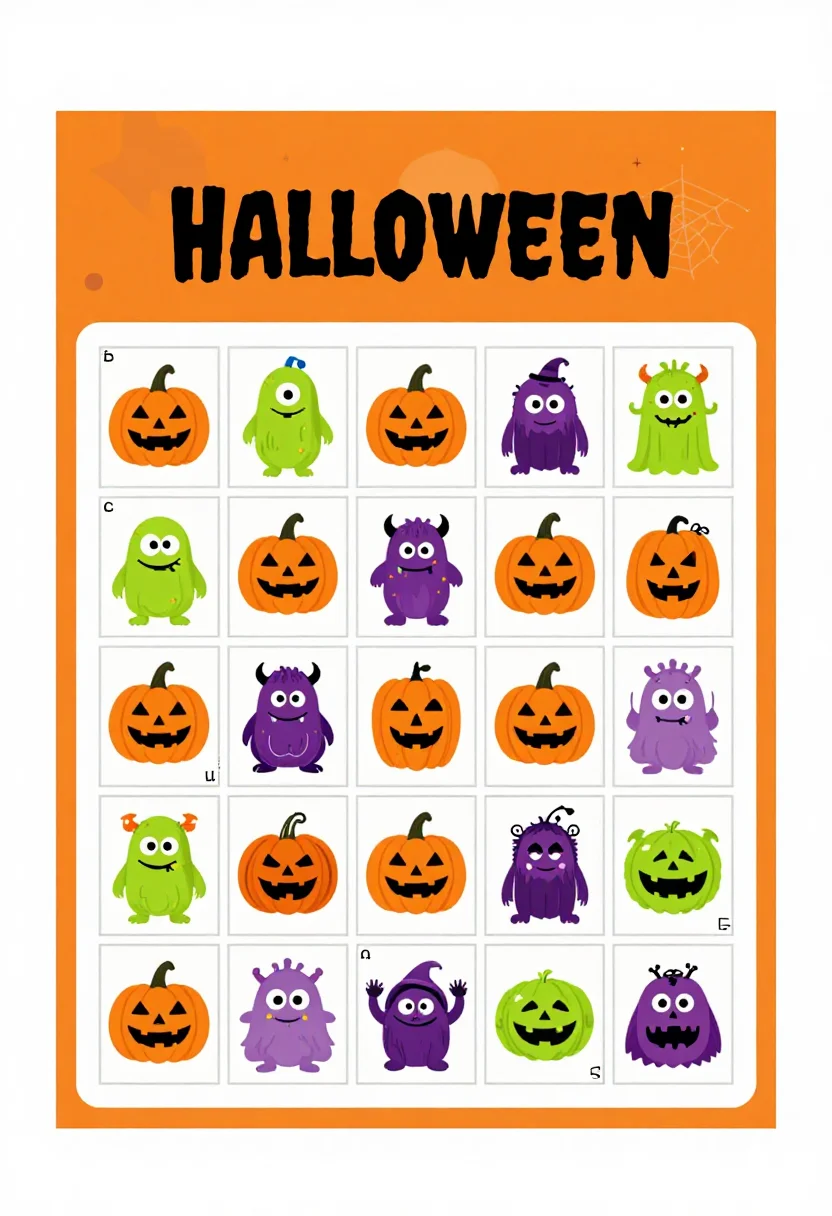
A Halloween bingo night needs three sheets: the picture card for littler players, the word card for readers, and the caller's list to run the game. These nine are drawn as a matched set — a classic orange-and-black grid, a gothic filigree deck for the grown-ups' party, and a bright cartoon set for the kids' table. The free space sits dead centre on every card. Type a different animal or color and the set redraws.
- a classroom or family Halloween party game
- a printable bingo night for a Halloween gathering
- a caller's sheet to run the game
- a Halloween party favor bundle
Frequently asked questions
- What size do these print at?
- Each card is drawn at portrait A4 proportions with an even margin, so it prints clean on standard paper or card stock — cut along the border and you're set.
- Can I get the pictures in a different theme?
- Yes — type a direction like 'with cats instead of bats' or 'in green and black' and the set redraws in the same three styles.
- Is the free space marked the same on every card?
- Yes — the centre square is always the free space, lettered or pictured to match its own card's style, so the game plays the same across the set.
- Is there a version for adults, not just kids?
- The gothic set is built for a grown-up party — filigree frames and elegant lettering — while the kids' set stays bright and playful and classic sits in between.
About toile
This page is a showcase and a starting point: nine samples already rendered, three readings of the pack crossed with three styles, each shown at the size and ratio it was made for. Take any of them further on the wall with a few words, or ask for all nine again under your own direction; a sign-in keeps what you make, and it is free while Toile is new. The recipe behind each sample — the subject, the style, the palette, the framing — travels with the image rather than staying private to the render: it is in the alt text of every sample and in the page's own structured data, so a search engine reads the same handles a person would.