/kalamkari-art-prints · wall-art
Kalamkari art prints: peacocks, flowering vine and lotus pond
Make your ownKalamkari art prints
Describe yours. We'll remake the whole pack your way.
More like this
the whole catalog →


every sample — three subjects, three styles ↓
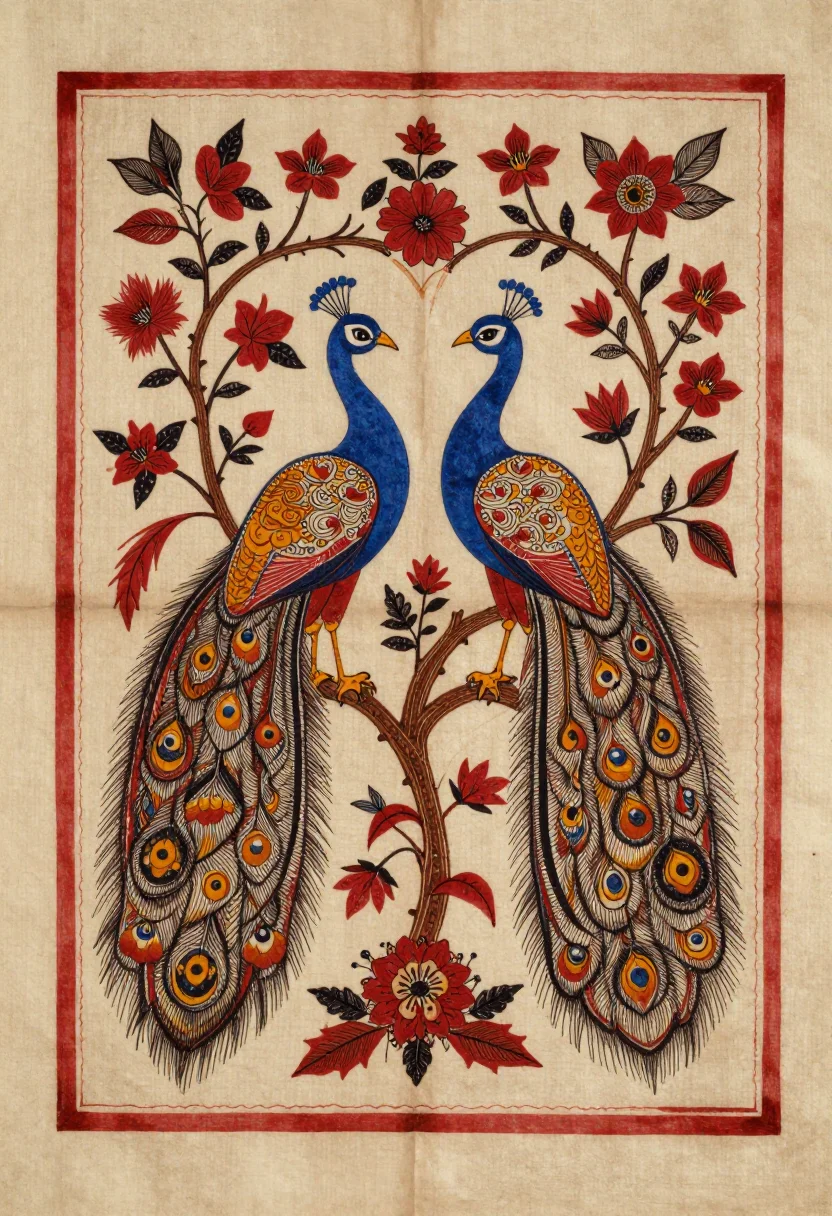
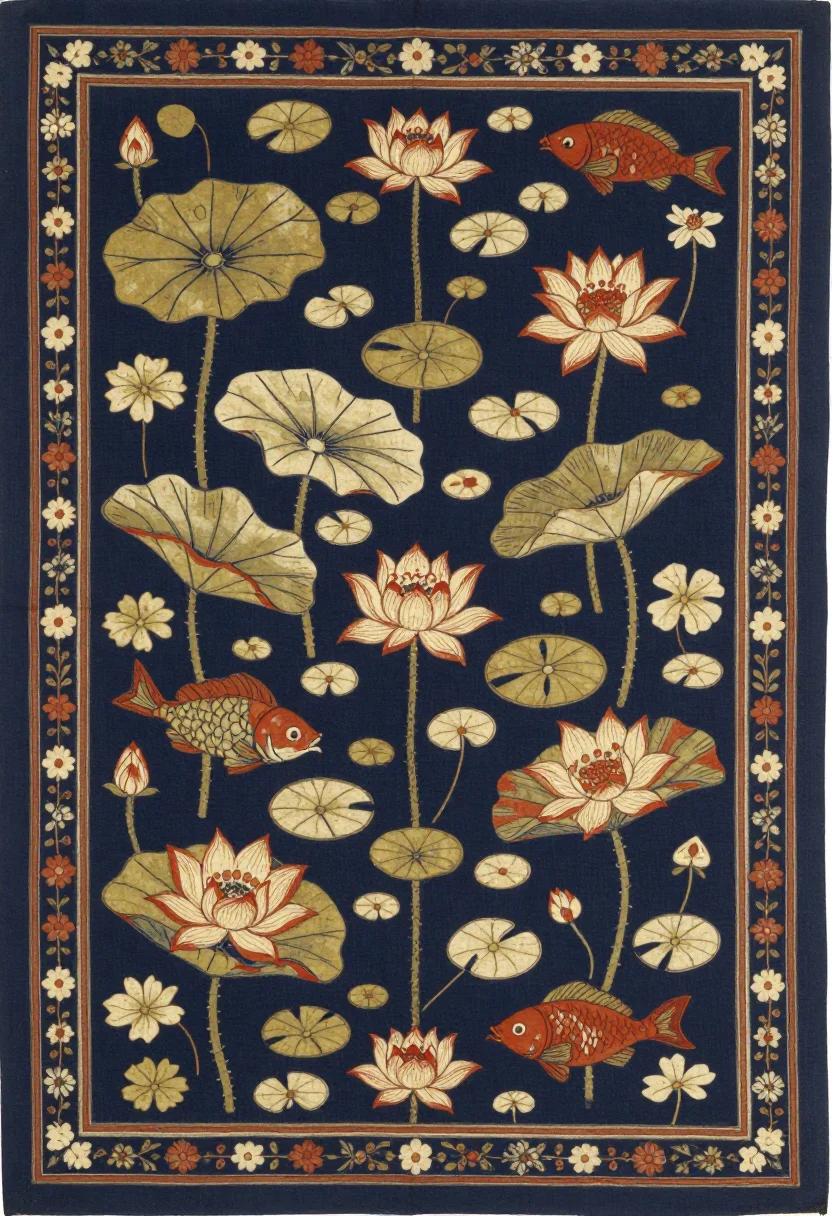
Kalamkari is hand-drawn and block-printed cotton from Andhra Pradesh, vegetable-dyed in madder red, indigo, mustard and black. The scenes are two peacocks on a flowering branch, a vine climbing from a vase with small parrots, and a lotus pond seen from above. Each is shown as a pen-drawn panel on unbleached cotton, as a block-printed cloth of repeated motifs, and as a panel on deep indigo. The direction field takes another subject, such as elephants, as a request.
- a wall for a lover of Indian textiles
- a room in madder red and indigo
- a gift for a collector of textiles
Frequently asked questions
- What is Kalamkari?
- A hand-drawn and block-printed cloth tradition of Andhra Pradesh, dyed with natural colours.
- What is the difference between the three styles?
- The pen-drawn style has fine black outlines and dense patterning. The block-printed style has repeated carved motifs in deep red, dark indigo and olive. The dark-ground style has cream and rust motifs on deep indigo.
- Can I ask for a different subject?
- Yes. Type it in the direction field, such as elephants or a tree panel; it is a request, not a promised match.
- Are these photographs of cloth?
- No. They are rendered pictures in the Kalamkari styles described.
About toile
This page is a showcase and a starting point: nine samples already rendered, three readings of the pack crossed with three styles, each shown at the size and ratio it was made for. Take any of them further on the wall with a few words, or ask for all nine again under your own direction; a sign-in keeps what you make, and it is free while Toile is new. The recipe behind each sample — the subject, the style, the palette, the framing — travels with the image rather than staying private to the render: it is in the alt text of every sample and in the page's own structured data, so a search engine reads the same handles a person would.