/krishna-art-prints · wall-art
Krishna art prints: Shrinathji Pichwai, Radha and Krishna, child Krishna with butter
Make your ownKrishna art prints
Describe yours. We'll remake the whole pack your way.
More like this
the whole catalog →


every sample — three subjects, three styles ↓
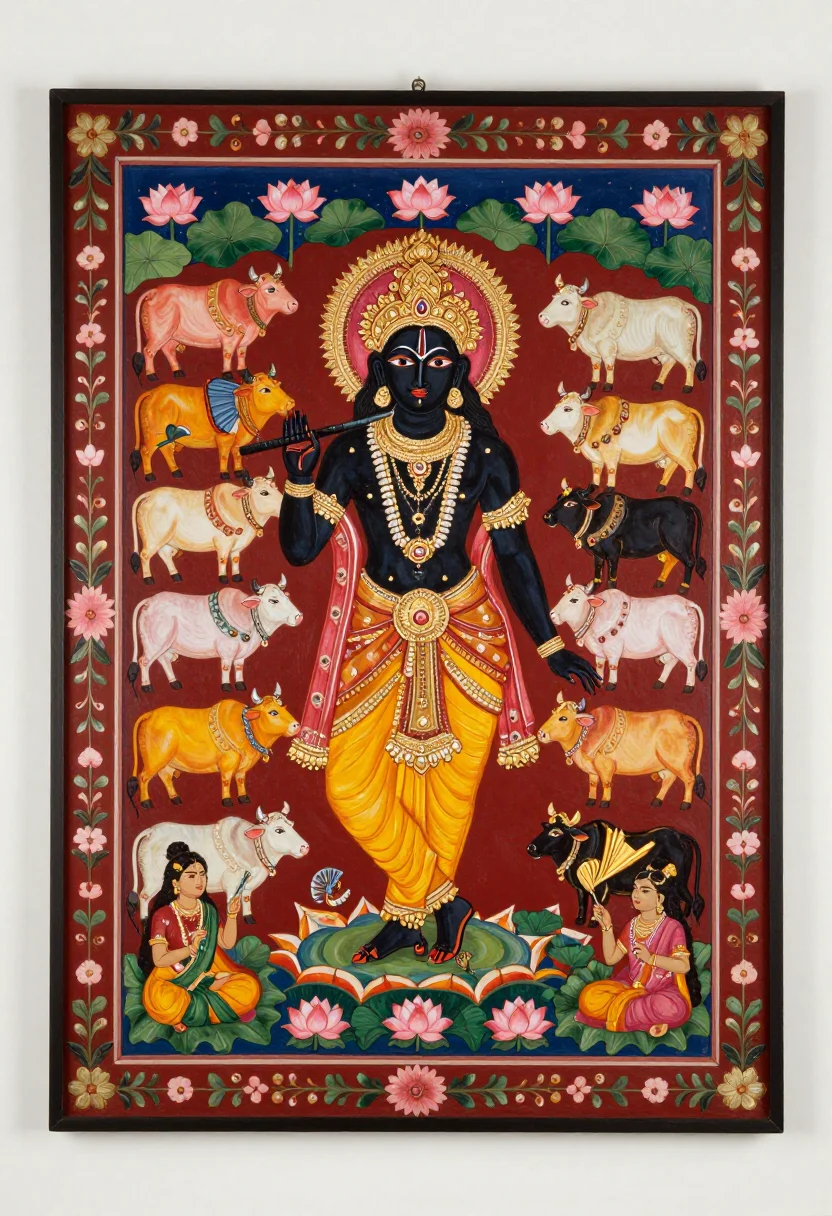
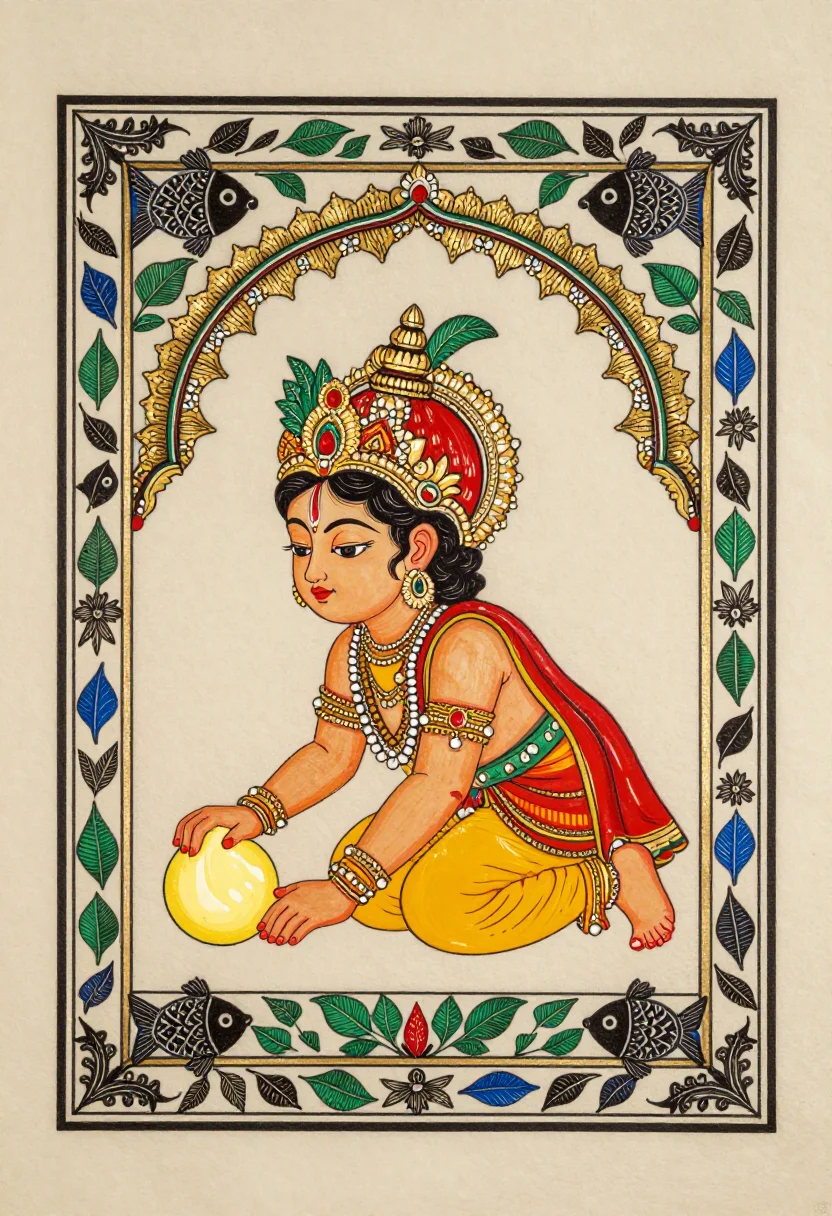
For a home shrine or a living room: Shrinathji in black with his arm raised, in a Pichwai hanging of cows and pink lotuses; Radha and Krishna under a flowering kadamba tree, in a Rajput miniature; and the child Krishna with a ball of butter, in Tanjore style. Each is shown as a temple-gold devotional print, as a soft gouache pastel, and in Madhubani folk style. The direction field takes another subject, such as Ganesha, as a request.
- a home shrine
- a living room wall
- a gift for a devotee
Frequently asked questions
- Which traditions are in the pack?
- Pichwai, Rajput miniature and Tanjore: three painting traditions in which Krishna is shown. Each scene is shown in three styles.
- What is the difference between the three styles?
- Temple gold is a devotional painting in flat mineral colours with burnished gold and a floral border. Soft pastel is gouache in powder blue, blush pink and cream. Madhubani is double black outlines filled with fine hatching on ivory paper.
- Can I ask for a different subject?
- Yes. Type it in the direction field, such as Ganesha or Holi colours; it is a request, not a promised match.
- Are these reproductions of old paintings?
- No. They are new rendered pictures in the traditions described, not photographs or scans.
About toile
This page is a showcase and a starting point: nine samples already rendered, three readings of the pack crossed with three styles, each shown at the size and ratio it was made for. Take any of them further on the wall with a few words, or ask for all nine again under your own direction; a sign-in keeps what you make, and it is free while Toile is new. The recipe behind each sample — the subject, the style, the palette, the framing — travels with the image rather than staying private to the render: it is in the alt text of every sample and in the page's own structured data, so a search engine reads the same handles a person would.