/lohri-posters · faith
Lohri posters: bonfire night, wheat fields, dhol and phulkari

Make your ownLohri posters
Describe yours. We'll remake the whole pack your way.
More like this
the whole catalog →


every sample — three subjects, three styles ↓
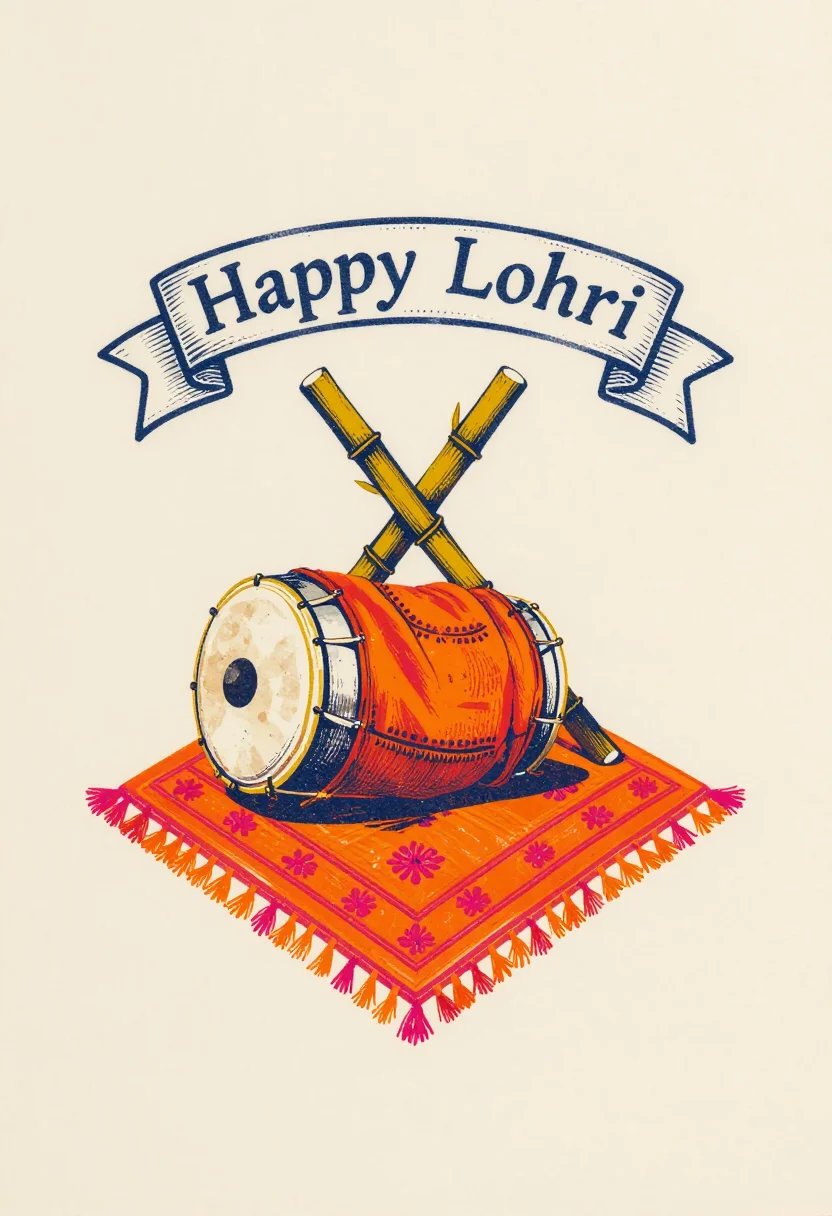
Posters for a Lohri night in a Punjabi neighbourhood, a gurdwara hall, a school or a society courtyard. They show the bonfire on the night of 13 January, the winter fields of Punjab at dusk, and the dhol, sugarcane, peanuts and phulkari cloth of the evening. Each poster carries the greeting in lettering. Type a different subject or twist, such as a kite or red and gold, and the poster is made to that request.
- a notice for a society courtyard Lohri night
- a school or gurdwara hall event poster
- a share image for the morning of Lohri
- a classroom display on Punjab's winter festival
Frequently asked questions
- Do the posters include a date or a venue?
- No. The only lettering is the greeting, so add the date and the venue with your own text.
- What size are the posters?
- They are portrait format, close to the A-series paper sizes, so an A4 or A3 print is the usual choice.
- What is the difference between the three styles?
- Flat vector uses bold shapes in deep blue, orange and yellow; paper cut uses layered sheets with shadows between them; screen print uses three inks on cream paper.
- Can I change the subject?
- Yes. Type a different subject or twist and the poster is made to that request; the nine samples stay as shown.
About toile
This page is a showcase and a starting point: nine samples already rendered, three readings of the pack crossed with three styles, each shown at the size and ratio it was made for. Take any of them further on the wall with a few words, or ask for all nine again under your own direction; a sign-in keeps what you make, and it is free while Toile is new. The recipe behind each sample — the subject, the style, the palette, the framing — travels with the image rather than staying private to the render: it is in the alt text of every sample and in the page's own structured data, so a search engine reads the same handles a person would.