/magic-shop-price-lists · tabletop
Magic shop price lists: potion list, arms list, blank list
Make your ownMagic shop price lists
Describe yours. We'll remake the whole pack your way.
More like this
the whole catalog →
every sample — three subjects, three styles ↓
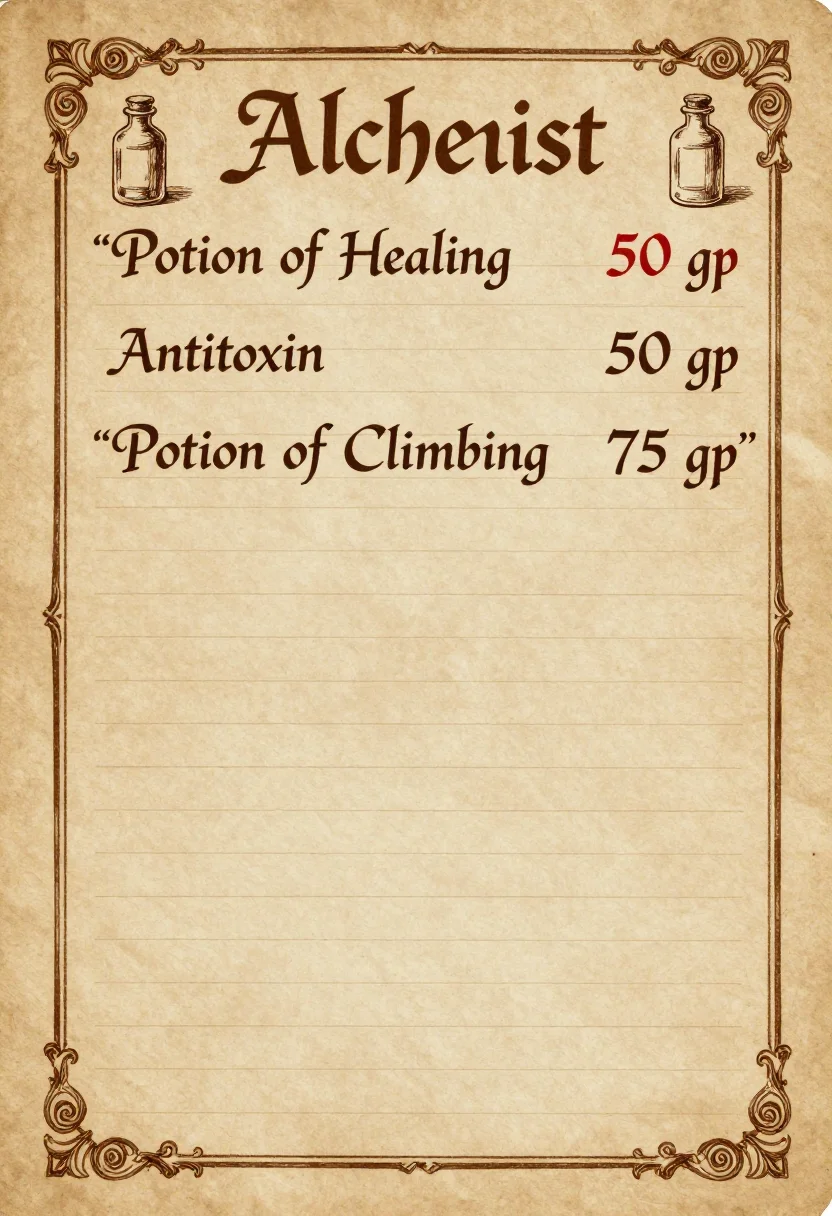
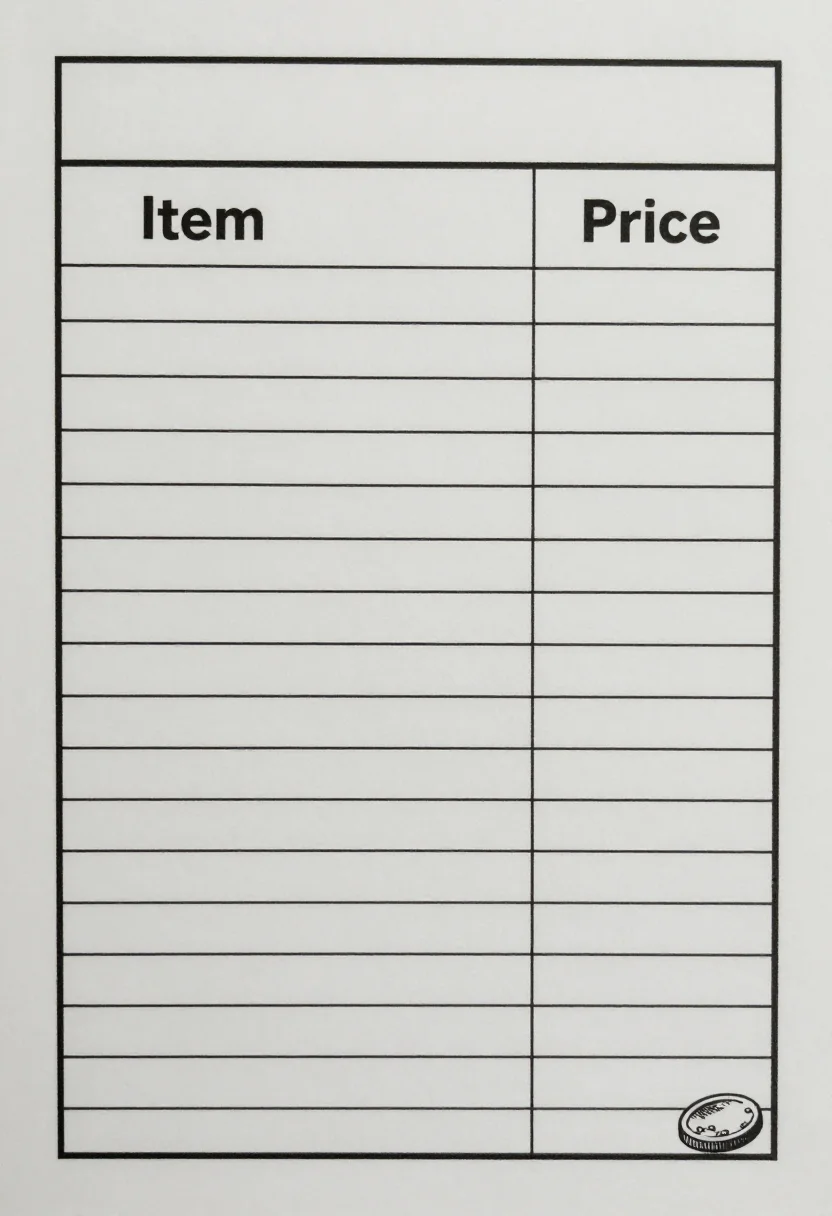
A shop price list is laid on the table when the party walks into a shop, so players can read what is for sale. This pack shows an alchemist's potion list, a weapons and armour list, and a blank list with empty item and price columns. Each comes as parchment, chalkboard or plain ink line. Type a shop, such as a blacksmith, a bakery or a bookshop, and the list keeps its columns.
- a menu for a shop the party enters
- a list handed to a player at a market stall
- a blank list for your own shop and prices
- a chalkboard-style prop for a village scene
Frequently asked questions
- What do the nine pictures show?
- Three readings in three styles: an alchemist's potion list, a weapons and armour list, and a blank shop list with ruled columns.
- Can I change the prices?
- Yes. The prices on the sample lists are examples; the blank list has ruled rows for your own items and prices.
- Which style suits a shop?
- Chalkboard is white chalk lettering on dark slate, the look of a shop wall. Parchment is an aged, hand-inked list. Ink line is plain black rules with no fills.
- Can I type a different shop?
- Yes. A blacksmith, a bakery or a bookshop can be asked for, and the list keeps its item and price columns; the result is a request, not a promised picture.
About toile
This page is a showcase and a starting point: nine samples already rendered, three readings of the pack crossed with three styles, each shown at the size and ratio it was made for. Take any of them further on the wall with a few words, or ask for all nine again under your own direction; a sign-in keeps what you make, and it is free while Toile is new. The recipe behind each sample — the subject, the style, the palette, the framing — travels with the image rather than staying private to the render: it is in the alt text of every sample and in the page's own structured data, so a search engine reads the same handles a person would.