/math-vocabulary-posters · classroom
Math vocabulary posters: operation words and place value chart
Make your ownMath vocabulary posters
Describe yours. We'll remake the whole pack your way.
More like this
the whole catalog →

every sample — three subjects, three styles ↓
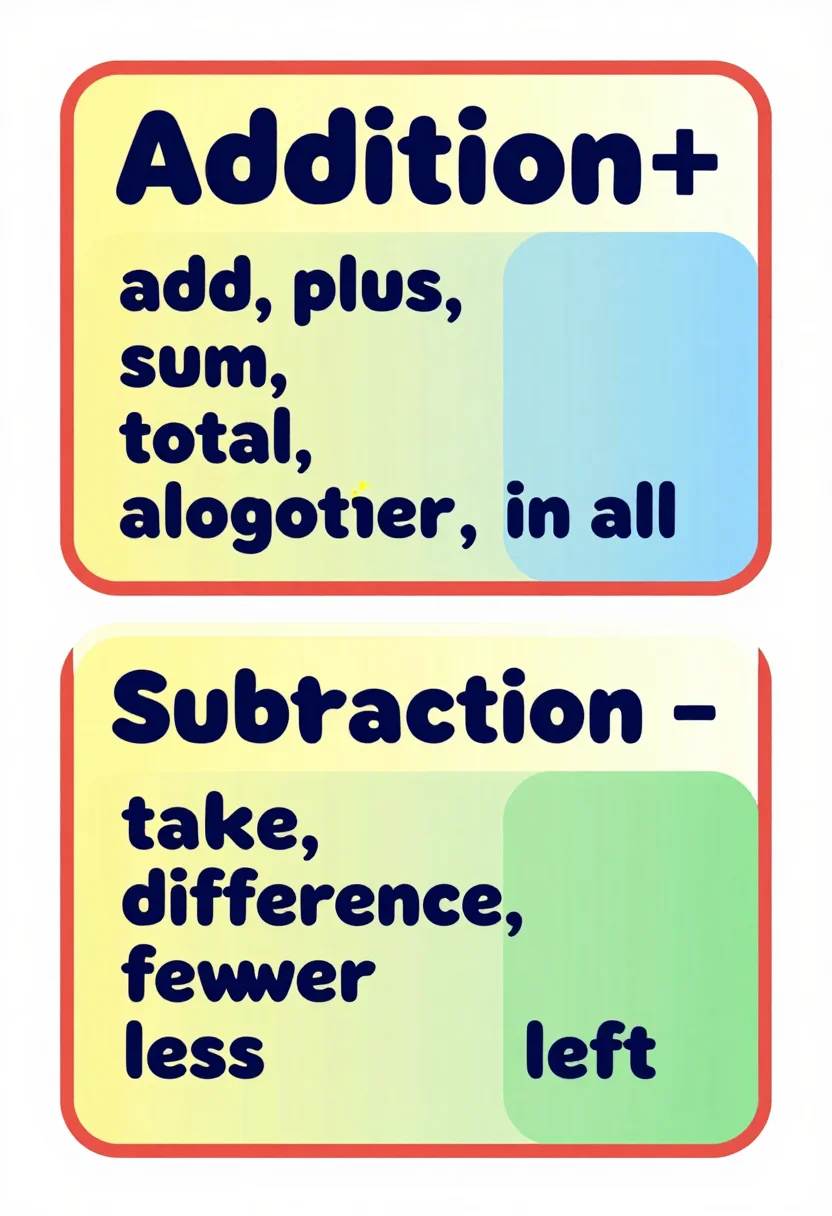
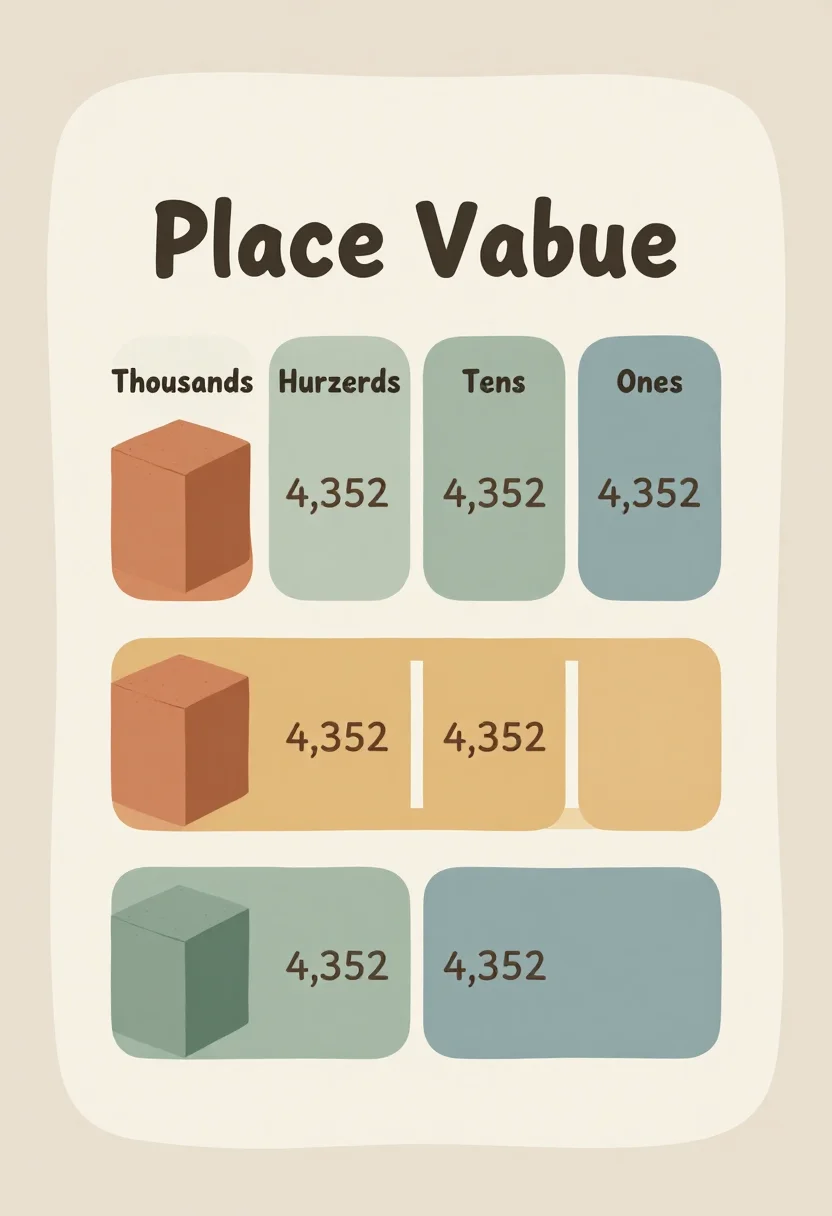
Maths teachers put up vocabulary posters so pupils can tell which operation a word problem asks for. The three posters are the words for adding and taking away, the words for multiplying and dividing, and a place value chart with thousands, hundreds, tens and ones. The styles are bright flat, crayon hand-drawn and boho pastel. Type a twist, such as fractions, and the same poster can take it.
- a math word wall
- a reference poster for word problems
- a place value display for a number lesson
Frequently asked questions
- Which words are on the addition side?
- Add, plus, sum, total, altogether and in all.
- What does the place value chart show?
- Four colored columns, thousands, hundreds, tens and ones, with a block picture at the top of each and the example 4,352 across them.
- Does it list the division words?
- Yes. Divide, share, quotient, equal groups and half are on the division side.
- Can I get fraction words?
- Type it as a direction. It is a request, so the poster can differ from the sample.
About toile
This page is a showcase and a starting point: nine samples already rendered, three readings of the pack crossed with three styles, each shown at the size and ratio it was made for. Take any of them further on the wall with a few words, or ask for all nine again under your own direction; a sign-in keeps what you make, and it is free while Toile is new. The recipe behind each sample — the subject, the style, the palette, the framing — travels with the image rather than staying private to the render: it is in the alt text of every sample and in the page's own structured data, so a search engine reads the same handles a person would.