/measurement-conversion-charts · home
Measurement conversion charts: length, weight, volume
Make your ownMeasurement conversion charts
Describe yours. We'll remake the whole pack your way.
More like this
the whole catalog →


every sample — three subjects, three styles ↓
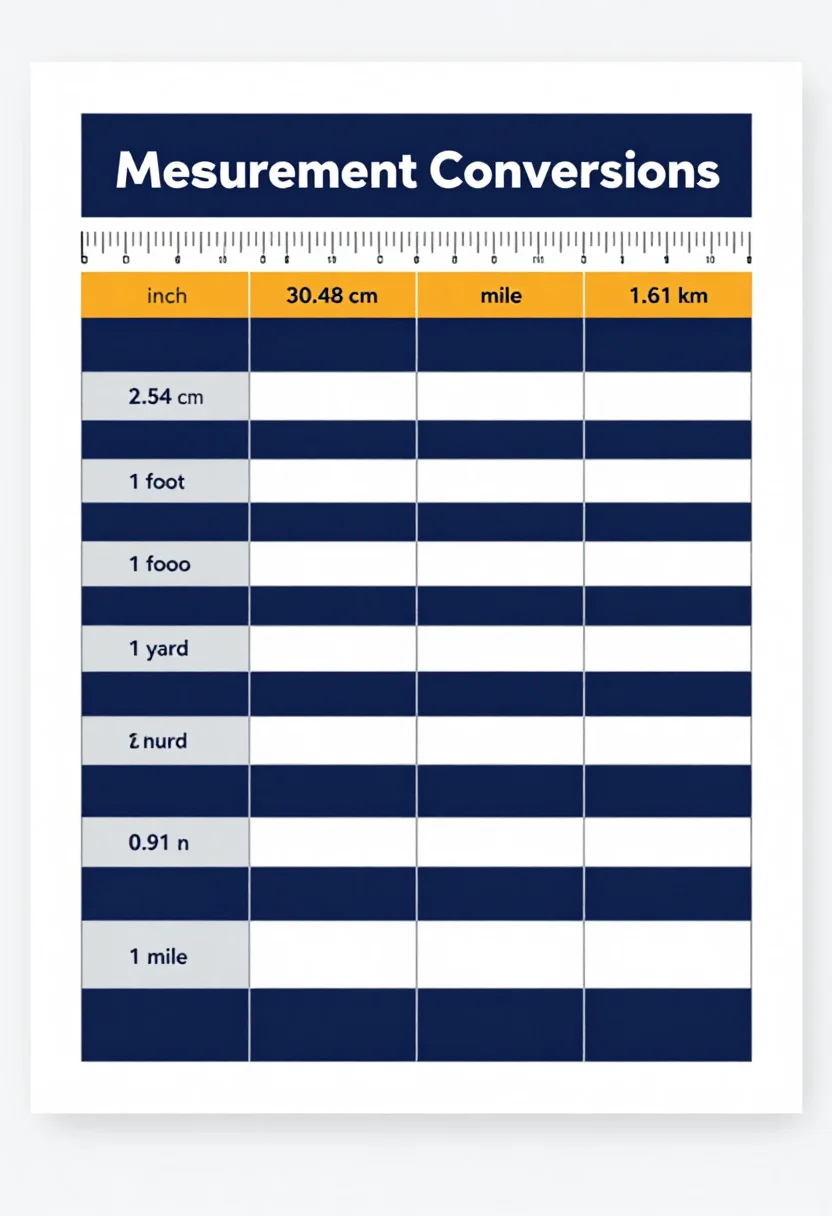
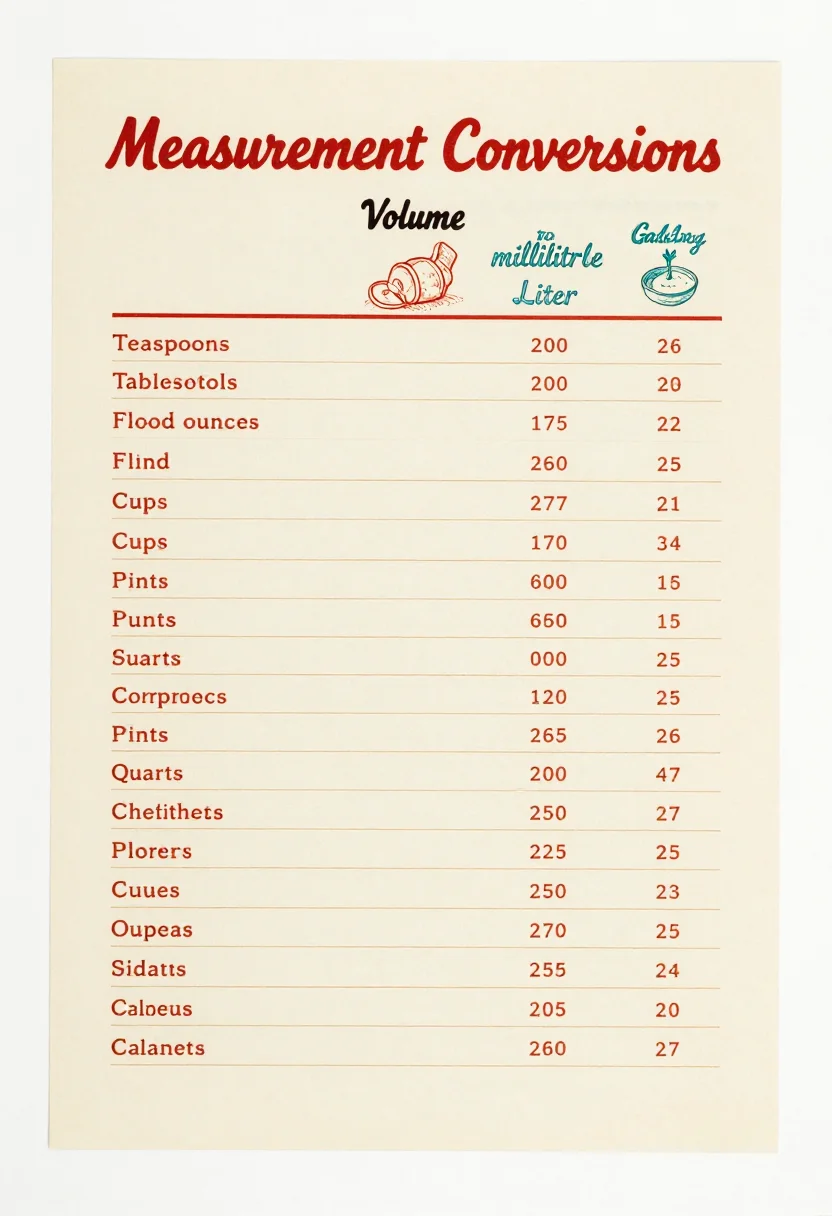
Printable charts that turn inches into centimetres, ounces into grams and cups into millilitres. Cooks, students and makers tape one inside a cupboard or keep it by the workbench. The nine pictures cover length, weight and volume, metric and imperial, one unit per row. Type a different subject, such as a for-kids version or large print, and the same three styles carry the request.
- inside a kitchen cupboard
- a workbench or craft table
- a classroom wall for units
- a reference card in a recipe binder
Frequently asked questions
- What is on the nine pictures?
- Three conversion tables each for length, weight and volume, with the metric and imperial values paired row by row.
- What is the difference between the three styles?
- Infographic uses navy and orange with thin rules, blueprint is white lines on blue like a technical drawing, and vintage cookbook is hand-lettered on cream paper.
- Are the figures the standard conversions?
- Yes, the charts use the usual factors, such as 1 inch = 2.54 cm and 1 oz = 28 g, and the figures are shown as written.
- Can I ask for a different version?
- Yes. Type a direction such as for kids or large print; it is a request, not a promised result.
About toile
This page is a showcase and a starting point: nine samples already rendered, three readings of the pack crossed with three styles, each shown at the size and ratio it was made for. Take any of them further on the wall with a few words, or ask for all nine again under your own direction; a sign-in keeps what you make, and it is free while Toile is new. The recipe behind each sample — the subject, the style, the palette, the framing — travels with the image rather than staying private to the render: it is in the alt text of every sample and in the page's own structured data, so a search engine reads the same handles a person would.