/wine-pairing-charts · home
Wine pairing charts: wine with food, grape varieties, serving temperatures
Make your ownWine pairing charts
Describe yours. We'll remake the whole pack your way.
More like this
the whole catalog →
every sample — three subjects, three styles ↓
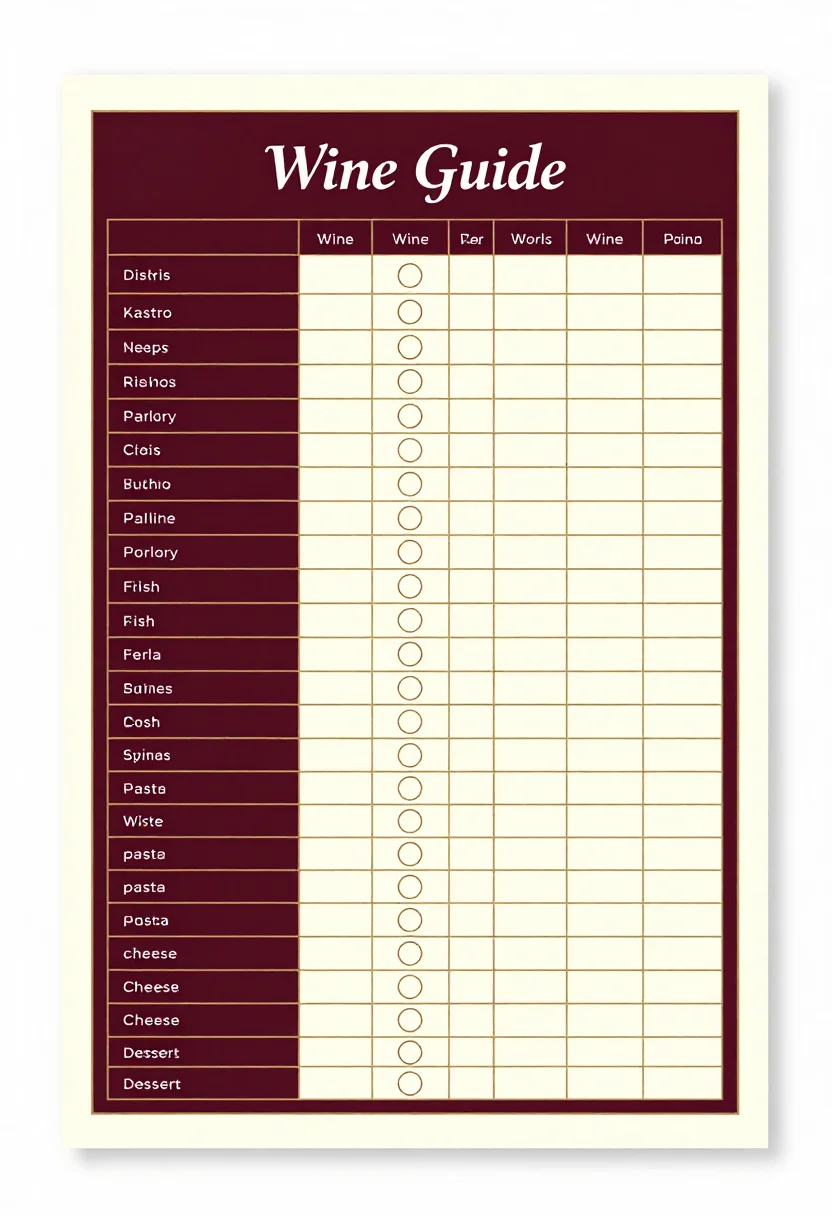
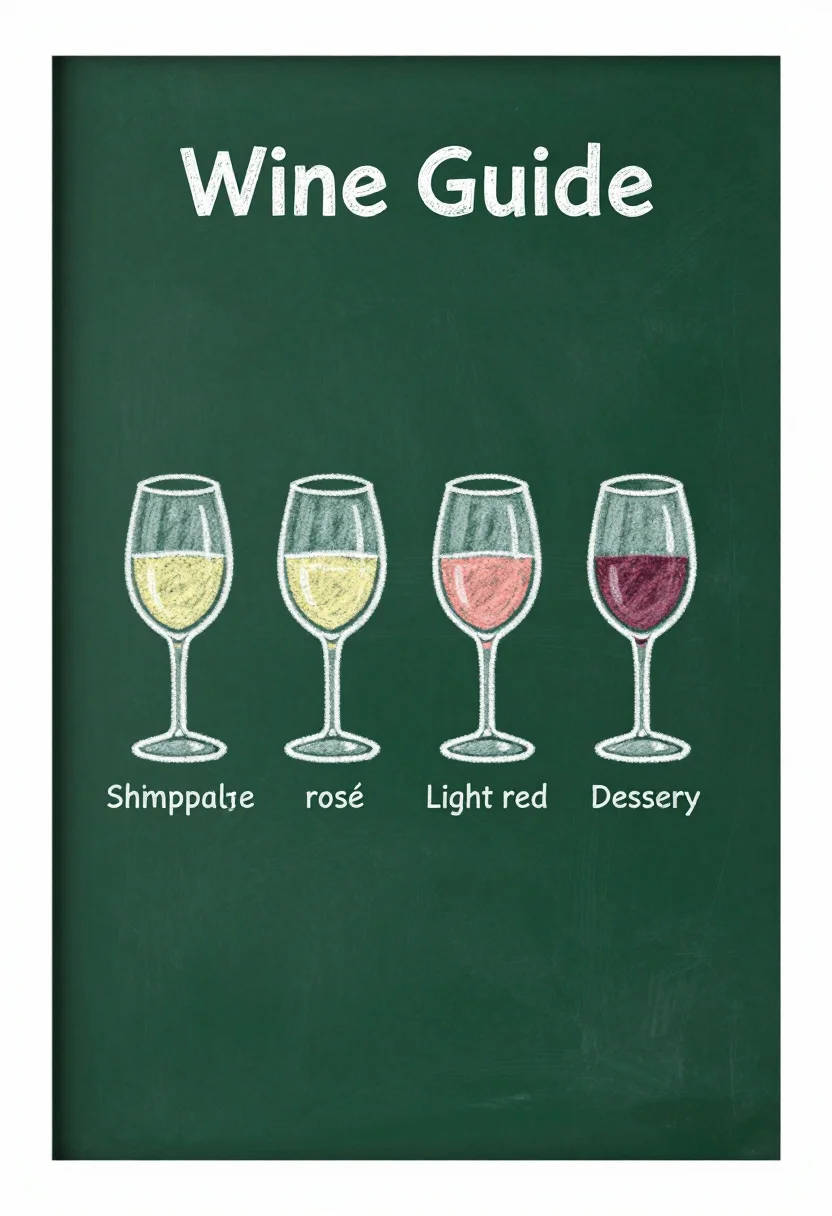
Wine pairing charts for choosing a bottle for a dinner. The pictures match red meat, poultry, fish, pasta, cheese and dessert to wine styles, sort the main grape varieties from light to full-bodied, and show six glasses with the serving temperature under each. Type a different subject, such as red only, sparkling or a Christmas dinner, and the same three styles carry the request.
- a dinner party menu card
- beside the wine rack
- a restaurant table card
- a guide for a wine shop shelf
Frequently asked questions
- Which grapes are shown?
- Whites from sauvignon blanc to chardonnay, and reds from pinot noir to cabernet sauvignon, each sorted by body.
- Is this a list of specific bottles?
- No. The charts match wine styles and grape varieties to food, not brands or vintages.
- How are the serving temperatures shown?
- Each of the six glasses, sparkling, white, rosé, light red, full red and dessert, has its serving temperature written under it.
- What is the difference between the styles?
- Wine list is a burgundy and cream page with gold rules, watercolour is soft washes, and chalkboard is the classic board look.
About toile
This page is a showcase and a starting point: nine samples already rendered, three readings of the pack crossed with three styles, each shown at the size and ratio it was made for. Take any of them further on the wall with a few words, or ask for all nine again under your own direction; a sign-in keeps what you make, and it is free while Toile is new. The recipe behind each sample — the subject, the style, the palette, the framing — travels with the image rather than staying private to the render: it is in the alt text of every sample and in the page's own structured data, so a search engine reads the same handles a person would.