/mehndi-favor-tags · occasions
Mehndi favor tags: thank you, sweet thanks, bangles for you
Make your ownMehndi favor tags
Describe yours. We'll remake the whole pack your way.
More like this
the whole catalog →

every sample — three subjects, three styles ↓
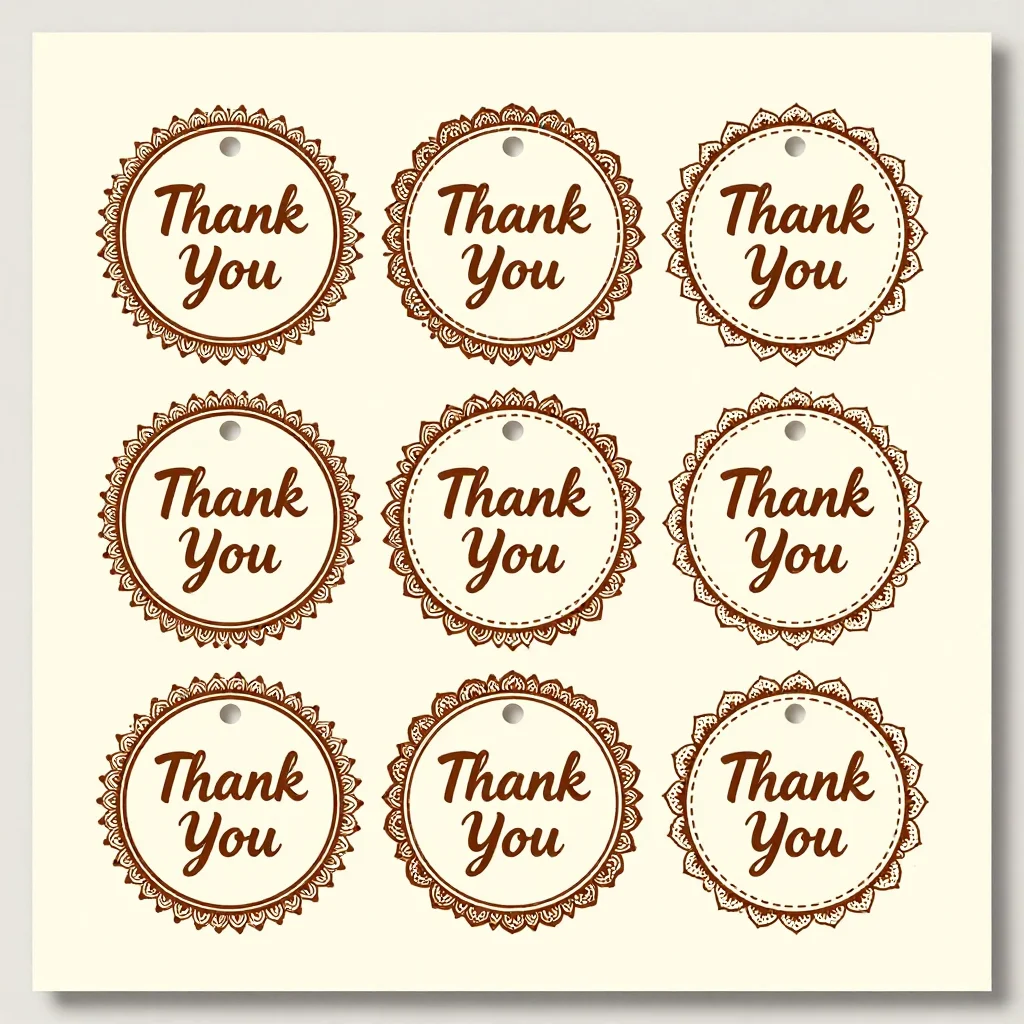
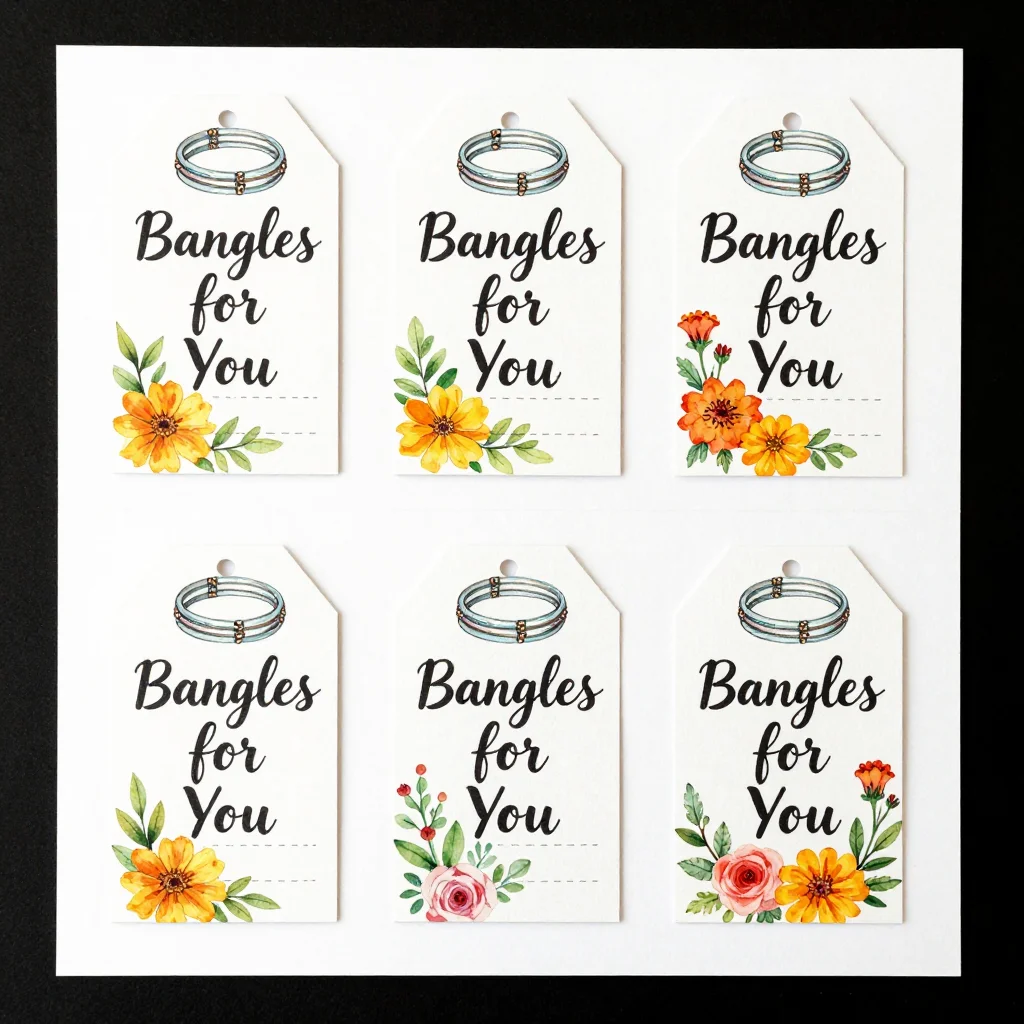
Printable tags for the gifts guests take home from the mehndi: a box of mithai, a set of bangles, a henna cone. Each page is a sheet of six tags with dashed cut lines, and every tag carries one short line. The tags read Thank You, Sweet Thanks or Bangles for You. Type a different line in the direction field and the same sheet carries it.
- a tag tied to a gift bag at the mehndi
- a thank you tag for a box of sweets
- a tag on a set of bangles
- a label for a favour at a family party
Frequently asked questions
- How many tags are on a sheet?
- Each sheet has six tags in a grid of two by three, with dashed lines between them to cut along.
- Can I print these at home?
- Yes. Each page is square and print-ready, with a clean margin.
- Can I change the words?
- Yes. The direction field takes a different line of wording, and the sheet layout stays the same.
- What are the three styles?
- Henna line is fine brown ink on cream, flat colour is bold shapes in green, orange and pink, and watercolor is soft washes on white.
About toile
This page is a showcase and a starting point: nine samples already rendered, three readings of the pack crossed with three styles, each shown at the size and ratio it was made for. Take any of them further on the wall with a few words, or ask for all nine again under your own direction; a sign-in keeps what you make, and it is free while Toile is new. The recipe behind each sample — the subject, the style, the palette, the framing — travels with the image rather than staying private to the render: it is in the alt text of every sample and in the page's own structured data, so a search engine reads the same handles a person would.